
Traditional Indian Diwali Sweets From Different States: A Delicious Journey Across India

Diwali is a time for lights, celebrations, family gatherings and, of course, delicious sweets. While laddoos, kaju katli and gulab jamun are popular across the country, every Indian state has its own traditional Diwali sweets that make the festival even more special. From Bengal's soft, syrup-soaked treats to Maharashtra's festive karanji, these regional delicacies reflect India's rich culinary heritage.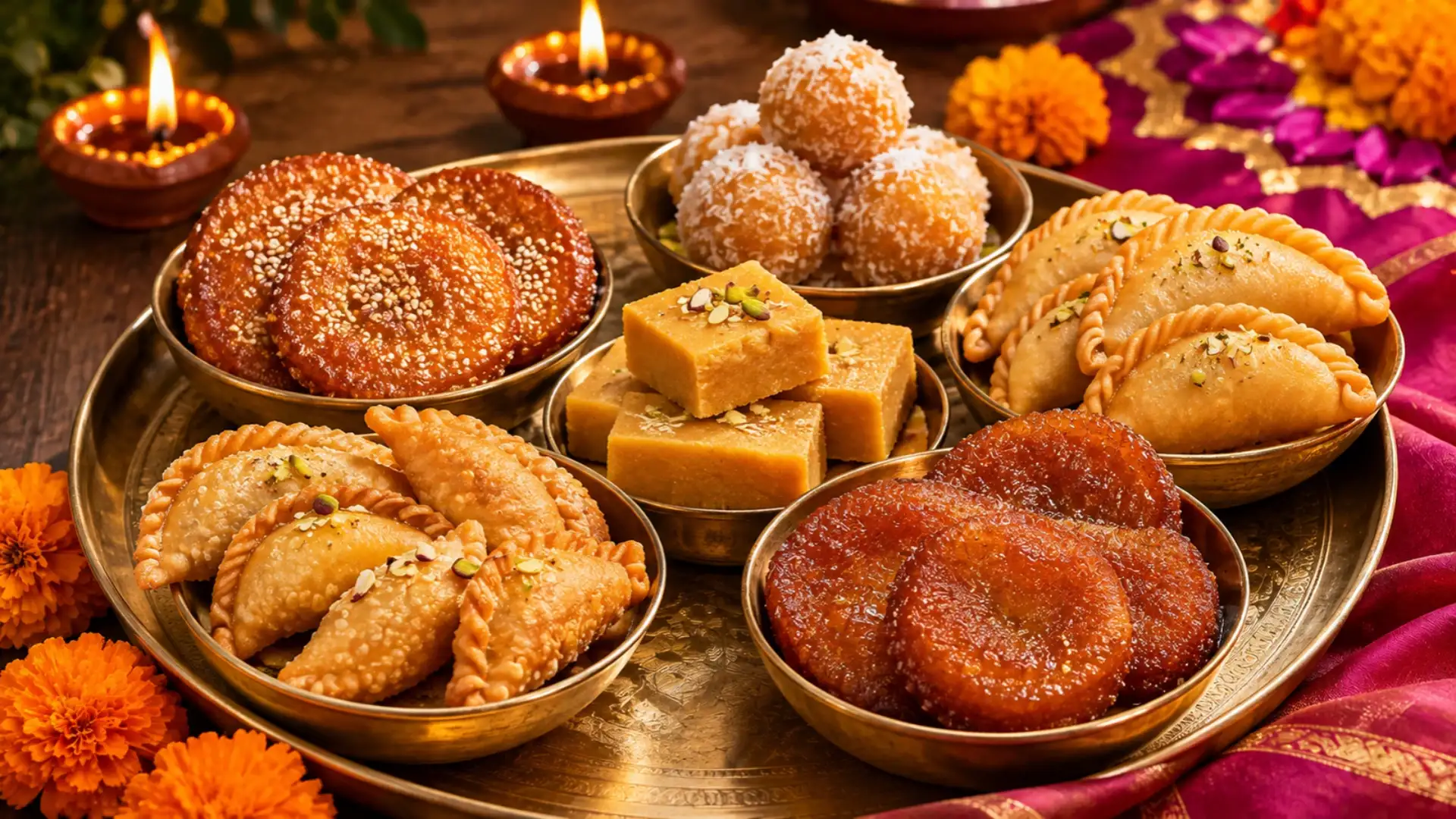
If you're looking to explore traditional Indian sweets beyond the usual festive favourites, here are some popular Diwali desserts from different states that deserve a place on your celebration menu.
This crescent-shaped pastry is made with a crisp outer layer and filled with khoya, sugar, nuts and cardamom. It is usually deep-fried until golden and sometimes dipped in sugar syrup. Its rich filling and crunchy texture make it a much-loved addition to festive celebrations.
The dough is shaped into small discs, coated with sesame seeds and fried until crisp. Anarsa requires some preparation time, as the rice is soaked and dried before being ground into flour. Despite the effort involved, its distinctive taste makes it a festive favourite in many families.
These discs are deep-fried until they develop a rich brown colour. Adhirasam has a soft, slightly chewy centre and a deep sweetness from the jaggery. Its traditional preparation and distinctive flavour make it an important part of festive food in many Tamil households.
The grated coconut is cooked with jaggery or sugar until the mixture thickens. It is then shaped into small round balls while still warm. Simple yet flavourful, Narkel Naru brings together the sweetness of coconut and the richness of traditional Bengali cooking.
The pastry is folded into a crescent shape, sealed along the edges and deep-fried until golden. Karanji is a staple in many Maharashtrian households during Diwali and is often included in the traditional faral, a collection of festive snacks and sweets prepared for the occasion.
The ingredients are cooked together until the mixture reaches the right consistency and is then set into blocks. Depending on how it is prepared, Mysore Pak can have either a soft, melt-in-the-mouth texture or a firmer, slightly porous bite. Its rich flavour makes it a festive favourite across South India.
The mixture is cooked until it thickens and is then shaped into small, round or flattened pieces. Some varieties are garnished with nuts or edible silver leaf. Peda is commonly offered during religious occasions and celebrations, making it a familiar choice for Diwali festivities as well.
Prepared using wheat flour, jaggery, ghee and sometimes coconut, the dough is shaped into small patterned discs and deep-fried until crisp. Thekua has a mildly sweet, crunchy texture and can be stored for several days, making it a convenient treat to prepare ahead of festive celebrations.
The pastry is deep-fried until crisp and is usually dusted with powdered sugar. Its light, crunchy texture and sweet finish make it a delightful addition to festive celebrations. Chirote is often prepared for special occasions, including Diwali.
Exploring these traditional Indian Diwali sweets is also a wonderful way to discover the country's diverse food culture. This Diwali, you could add a regional favourite to your festive menu and enjoy a taste of celebrations from another part of India.
If you're looking to explore traditional Indian sweets beyond the usual festive favourites, here are some popular Diwali desserts from different states that deserve a place on your celebration menu.
1. Gujiya, Uttar Pradesh and Rajasthan
Gujiya is one of the most recognisable festive sweets in North India, particularly in Uttar Pradesh and Rajasthan. Although it is strongly associated with Holi, it is also enjoyed during Diwali in many households.This crescent-shaped pastry is made with a crisp outer layer and filled with khoya, sugar, nuts and cardamom. It is usually deep-fried until golden and sometimes dipped in sugar syrup. Its rich filling and crunchy texture make it a much-loved addition to festive celebrations.
2. Anarsa, Maharashtra and Bihar
Anarsa is a traditional sweet prepared during festivals, especially Diwali, in Maharashtra and Bihar. Made primarily with rice flour and jaggery or sugar, this delicacy is known for its slightly crunchy exterior and soft texture.The dough is shaped into small discs, coated with sesame seeds and fried until crisp. Anarsa requires some preparation time, as the rice is soaked and dried before being ground into flour. Despite the effort involved, its distinctive taste makes it a festive favourite in many families.
3. Adhirasam, Tamil Nadu
In Tamil Nadu, Adhirasam is a traditional sweet often prepared for Diwali and other important celebrations. It is made using rice flour and jaggery, which are combined to form a dough and then shaped into small discs.These discs are deep-fried until they develop a rich brown colour. Adhirasam has a soft, slightly chewy centre and a deep sweetness from the jaggery. Its traditional preparation and distinctive flavour make it an important part of festive food in many Tamil households.
4. Narkel Naru, West Bengal
Narkel Naru, also known as coconut laddoo, is a popular Bengali sweet made with grated coconut and jaggery or sugar. It is especially enjoyed during festive occasions and is often prepared at home during Diwali and Kali Puja celebrations.The grated coconut is cooked with jaggery or sugar until the mixture thickens. It is then shaped into small round balls while still warm. Simple yet flavourful, Narkel Naru brings together the sweetness of coconut and the richness of traditional Bengali cooking.
5. Karanji, Maharashtra
Karanji is a classic Maharashtrian Diwali sweet that looks similar to gujiya but has its own regional preparation and filling. It is made using a thin, crisp pastry shell stuffed with a mixture of grated coconut, sugar, poppy seeds, cardamom and dry fruits.The pastry is folded into a crescent shape, sealed along the edges and deep-fried until golden. Karanji is a staple in many Maharashtrian households during Diwali and is often included in the traditional faral, a collection of festive snacks and sweets prepared for the occasion.
6. Mysore Pak, Karnataka
Mysore Pak is one of Karnataka's most famous traditional sweets and is a popular choice during Diwali. Originating in the royal kitchens of Mysore, this rich dessert is made using gram flour, sugar and generous amounts of ghee.The ingredients are cooked together until the mixture reaches the right consistency and is then set into blocks. Depending on how it is prepared, Mysore Pak can have either a soft, melt-in-the-mouth texture or a firmer, slightly porous bite. Its rich flavour makes it a festive favourite across South India.
You may also like
- Sikhs Celebrate Diwali & How 52 Kings Were Freed from Gwalior Fort
- Naraka Chaturdashi 2026: Why Pre-Sunrise Abhyanga Snan Wards Off Sins & Untimely Death
- Why Childless Couples Flock to Mathura on Ahoi Ashtami for the Blessing of Progeny
- Why Mothers Draw Eight Sacred Squares and Syahu's Seven Sons for Children's Longevity
- Radha Kund Ahoi Ashtami: Myth, Miracle & Why Couples Seek Radharani's Blessing
7. Peda, Uttar Pradesh
Peda is a popular Indian sweet closely associated with Mathura in Uttar Pradesh. Made from khoya, sugar and cardamom, it has a rich, milky flavour and a soft, slightly grainy texture.The mixture is cooked until it thickens and is then shaped into small, round or flattened pieces. Some varieties are garnished with nuts or edible silver leaf. Peda is commonly offered during religious occasions and celebrations, making it a familiar choice for Diwali festivities as well.
8. Thekua, Bihar
Thekua is a traditional sweet from Bihar, Jharkhand and parts of eastern Uttar Pradesh. Although it is particularly associated with Chhath Puja, it is also enjoyed as a festive homemade treat.Prepared using wheat flour, jaggery, ghee and sometimes coconut, the dough is shaped into small patterned discs and deep-fried until crisp. Thekua has a mildly sweet, crunchy texture and can be stored for several days, making it a convenient treat to prepare ahead of festive celebrations.
9. Chirote, Maharashtra and Karnataka
Chirote is a delicate, layered sweet popular in parts of Maharashtra and Karnataka. It is made from refined flour, ghee and sugar, with the dough carefully folded to create thin, flaky layers.The pastry is deep-fried until crisp and is usually dusted with powdered sugar. Its light, crunchy texture and sweet finish make it a delightful addition to festive celebrations. Chirote is often prepared for special occasions, including Diwali.
Celebrate Diwali With India's Traditional Sweets
Diwali celebrations may look different across India's states, but sweets remain a common part of the festivities. From coconut-filled Narkel Naru in Bengal to crispy Karanji in Maharashtra and rich Mysore Pak in Karnataka, every regional delicacy brings its own flavour and tradition to the festival.Exploring these traditional Indian Diwali sweets is also a wonderful way to discover the country's diverse food culture. This Diwali, you could add a regional favourite to your festive menu and enjoy a taste of celebrations from another part of India.






Loving Newspoint? Download the app now
