
Pitru Paksha 2026: Why Do People Feed Crows During Shraddha?

Pitru Paksha 2026 will be observed from 27 September to 10 October, ending with Sarva Pitru Amavasya . During this period, many Hindu families perform Shraddha rituals and make food and water offerings in remembrance of their ancestors.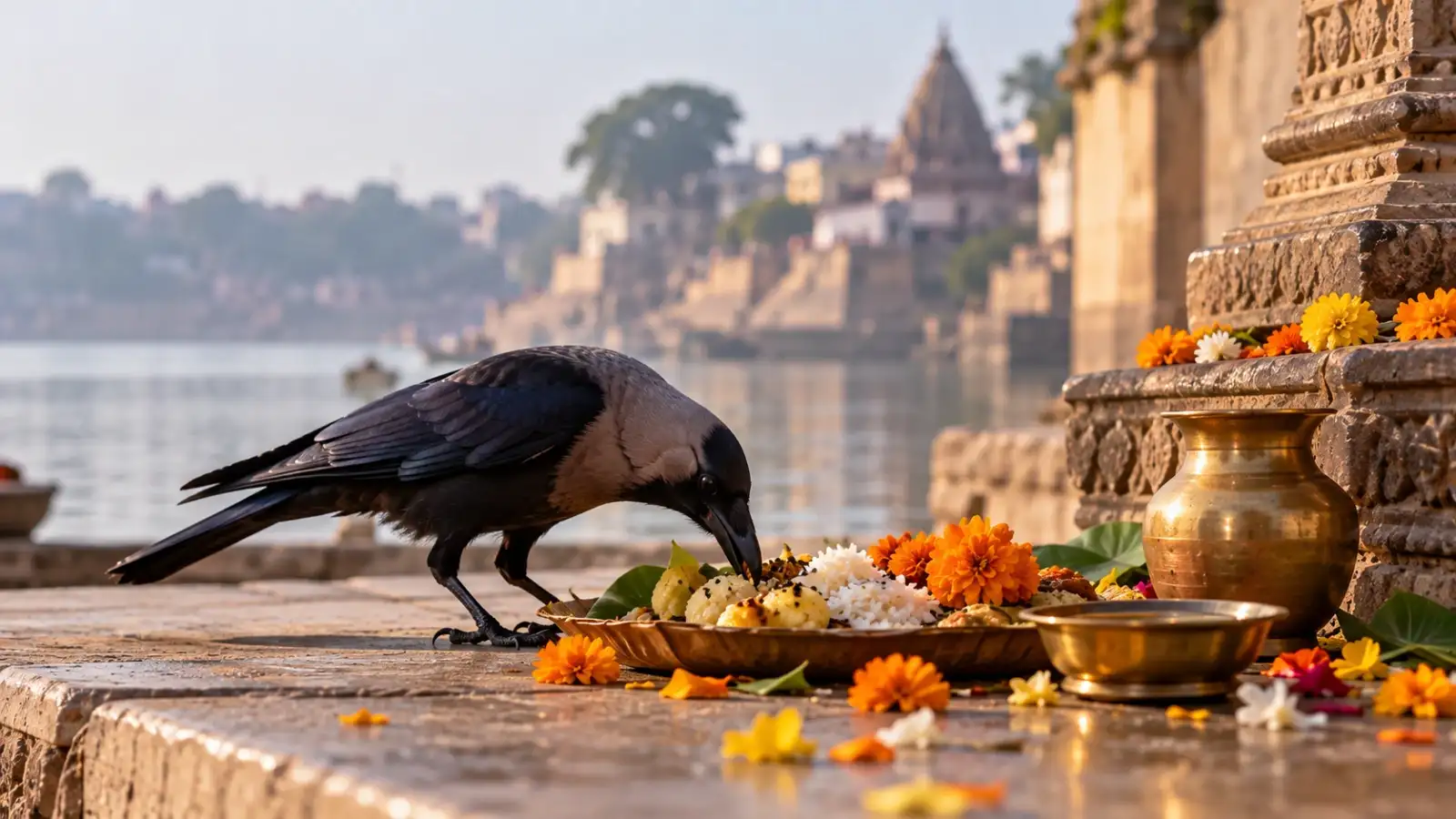
One familiar tradition during Pitru Paksha is feeding crows. In Hindu customs, crows have a symbolic connection with ancestors, which is why families may offer cooked food to them during Shraddha. The practice is rooted in traditional beliefs and is particularly common in several parts of India.
This belief is connected with the idea that offerings made during Shraddha can reach one's ancestors through a symbolic intermediary. The crow is not generally understood as literally being the deceased person, but as an important part of the ritual tradition.
Families may prepare food as part of their Shraddha observance and place a portion outside for crows. If a crow eats the offering, it is traditionally viewed by some families as an auspicious sign indicating that the offering has been accepted.
This interpretation is a matter of religious belief rather than something that can be scientifically established.
References to crows and their association with ancestors can also be found in Hindu religious traditions and stories. Over time, feeding crows became incorporated into various ancestral observances.
The specific significance can differ between regions and family traditions.
The food may include items prepared for the Shraddha meal. Some traditions also involve offerings of water.
Families generally follow the customs passed down through their household or community rather than using one universal menu or procedure.
Birds respond to their surroundings, food availability, noise and the presence of people. If a crow does not eat the offering, families can simply follow their customary ritual without treating the event as a definite indication of whether the Shraddha was successful.
The spiritual significance of Shraddha traditionally lies in the intention and observance of the ritual, rather than in the behaviour of a particular bird.
Shraddha can involve several elements, including prayers, Tarpan, Pind Daan, food offerings and charity. The exact rituals vary according to family customs, regional practices and the particular Shraddha Tithi.
The crow offering therefore forms part of a broader ancestral remembrance tradition.
In some households, feeding crows is considered an important part of the day's observance. Others may focus more heavily on Tarpan, Pind Daan, feeding Brahmins, charity or temple rituals.
These differences reflect the diverse regional and family traditions associated with Pitru Paksha.
Offering food to animals and birds has historically been part of several Indian religious practices. Such customs can combine spiritual symbolism with an act of sharing food beyond the human household.
However, people should avoid giving birds food that is unsafe for them and should keep feeding areas clean.
The tradition of feeding crows is one of the visible customs associated with this period, but it represents only one aspect of a much broader set of ancestral practices.
For those who follow the tradition, offering food to a crow can serve as a symbolic expression of respect for departed family members and a reminder of the connection between generations.
Pitru Paksha 2026 will conclude on 10 October with Sarva Pitru Amavasya. For families observing the period, the rituals provide an opportunity to remember departed relatives through prayers, offerings, charity and other traditional practices.
One familiar tradition during Pitru Paksha is feeding crows. In Hindu customs, crows have a symbolic connection with ancestors, which is why families may offer cooked food to them during Shraddha. The practice is rooted in traditional beliefs and is particularly common in several parts of India.
Why Are Crows Associated With Ancestors?
In traditional Hindu belief, crows are sometimes regarded as representatives or messengers of departed ancestors. Offering food to a crow is therefore considered a symbolic way of offering food to the Pitrs.This belief is connected with the idea that offerings made during Shraddha can reach one's ancestors through a symbolic intermediary. The crow is not generally understood as literally being the deceased person, but as an important part of the ritual tradition.
What Does Feeding a Crow Symbolise?
Feeding a crow during Pitru Paksha is traditionally associated with respect, remembrance and gratitude towards ancestors.Families may prepare food as part of their Shraddha observance and place a portion outside for crows. If a crow eats the offering, it is traditionally viewed by some families as an auspicious sign indicating that the offering has been accepted.
This interpretation is a matter of religious belief rather than something that can be scientifically established.
Why Are Crows Specifically Chosen?
Crows have a long-standing presence in Indian religious and cultural traditions. They are also familiar birds in towns and villages, making them easily accessible when food offerings are made.References to crows and their association with ancestors can also be found in Hindu religious traditions and stories. Over time, feeding crows became incorporated into various ancestral observances.
The specific significance can differ between regions and family traditions.
How Is Food Offered to Crows?
The practice differs from one household to another. After completing the relevant Shraddha rituals, a family may place a small portion of prepared food in a clean location where crows can reach it.The food may include items prepared for the Shraddha meal. Some traditions also involve offerings of water.
Families generally follow the customs passed down through their household or community rather than using one universal menu or procedure.
What If a Crow Does Not Eat the Food?
A crow may not immediately approach an offering, and this does not necessarily have to be interpreted as a religious sign.Birds respond to their surroundings, food availability, noise and the presence of people. If a crow does not eat the offering, families can simply follow their customary ritual without treating the event as a definite indication of whether the Shraddha was successful.
The spiritual significance of Shraddha traditionally lies in the intention and observance of the ritual, rather than in the behaviour of a particular bird.
Is Feeding Crows the Same as Shraddha?
No. Feeding crows is only one practice associated with some Pitru Paksha traditions.Shraddha can involve several elements, including prayers, Tarpan, Pind Daan, food offerings and charity. The exact rituals vary according to family customs, regional practices and the particular Shraddha Tithi.
The crow offering therefore forms part of a broader ancestral remembrance tradition.
Is the Practice Followed Across India?
The tradition is widespread but is not identical everywhere. Different communities have their own methods of observing Pitru Paksha.In some households, feeding crows is considered an important part of the day's observance. Others may focus more heavily on Tarpan, Pind Daan, feeding Brahmins, charity or temple rituals.
These differences reflect the diverse regional and family traditions associated with Pitru Paksha.
The Connection Between Crows and Nature
There is also a practical aspect to the tradition. Crows are omnivorous birds that commonly live close to human settlements and consume a wide range of food.Offering food to animals and birds has historically been part of several Indian religious practices. Such customs can combine spiritual symbolism with an act of sharing food beyond the human household.
However, people should avoid giving birds food that is unsafe for them and should keep feeding areas clean.
What Is the Main Purpose of Pitru Paksha?
At its heart, Pitru Paksha is a period dedicated to remembering and honouring ancestors. Families use the fortnight to perform rituals and express gratitude towards previous generations.The tradition of feeding crows is one of the visible customs associated with this period, but it represents only one aspect of a much broader set of ancestral practices.
For those who follow the tradition, offering food to a crow can serve as a symbolic expression of respect for departed family members and a reminder of the connection between generations.
A Tradition Rooted in Ancestral Remembrance
Feeding crows during Pitru Paksha is based primarily on Hindu religious and cultural beliefs about the relationship between crows and ancestors. The practice is traditionally seen as a symbolic way of presenting food to the Pitrs.Pitru Paksha 2026 will conclude on 10 October with Sarva Pitru Amavasya. For families observing the period, the rituals provide an opportunity to remember departed relatives through prayers, offerings, charity and other traditional practices.
Next Story