
Why Was Karna Cursed by Parashurama? The Story Behind the Mahabharata Legend

Karna’s life in the Mahabharata was marked by extraordinary courage, generosity and repeated struggles against fate. One of the most significant episodes in his life was the curse he received from his teacher, Parashurama. The curse became particularly important in popular retellings of the Kurukshetra war, as it was believed to prevent Karna from using his knowledge of divine weapons at a crucial moment.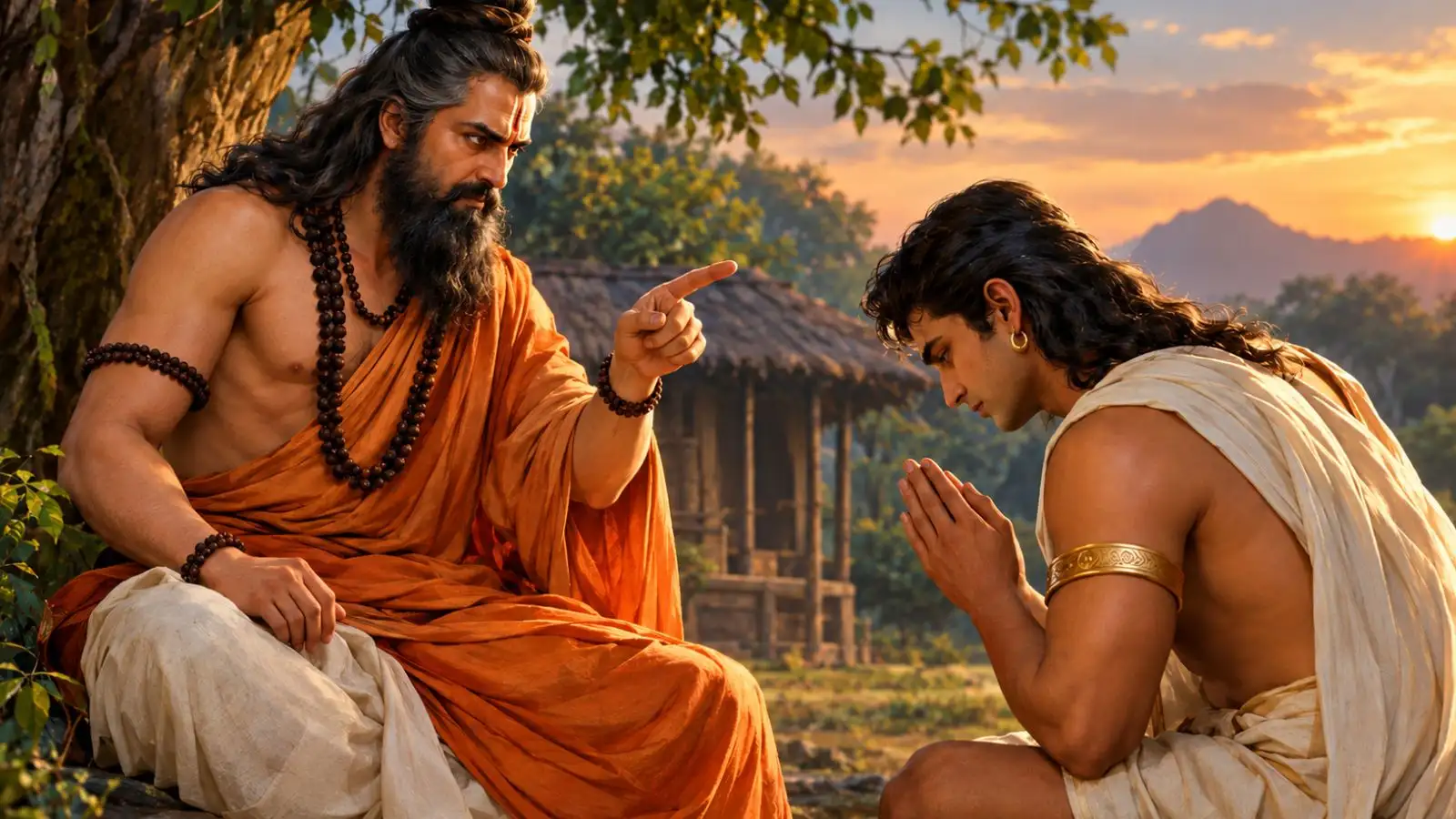
The story revolves around Karna’s desire to master advanced warfare, the secret he kept from his guru and the incident that exposed his deception. It also highlights the complicated relationship between a devoted student and a teacher who felt betrayed.
Despite his talent, he faced repeated rejection and humiliation because of his perceived social background. He wanted to learn the most powerful techniques of warfare, including the knowledge associated with divine weapons.
Karna approached Dronacharya for advanced training, but he did not receive the instruction he sought. He then turned to Parashurama, the legendary warrior-sage known for his mastery of weapons.
However, Parashurama was traditionally associated with teaching Brahmins rather than Kshatriyas, the warrior class. Fearing that his true identity would prevent him from receiving the training, Karna presented himself as a Brahmin and became Parashurama's disciple.
 Karna proved himself to be a dedicated student and learnt the techniques taught by his guru. For a time, Parashurama remained unaware of the deception.
The turning point came when Parashurama was resting with his head in Karna's lap. While his teacher slept, a painful insect, often described as a large worm or a bee in different retellings, pierced Karna's thigh.
Karna endured the intense pain without moving, afraid that disturbing his sleeping guru would show disrespect. The insect continued to bite him, and blood began to flow from the wound.
When Parashurama awoke, he noticed the blood and the severity of Karna's injury. He was astonished that his student had endured such pain without crying out or moving.
Parashurama concluded that Karna's extraordinary endurance was characteristic of a Kshatriya warrior rather than the Brahmin identity he had claimed. He questioned Karna, who eventually revealed the truth about his background and the reason he had concealed it.
Parashurama felt deceived because Karna had gained his trust and received advanced instruction under a false identity.
In the widely known version of the story, Parashurama declared that Karna would forget the knowledge or incantation required to invoke a powerful divine weapon precisely when he needed it most. The curse is commonly associated with the Brahmastra, a formidable celestial weapon.
The curse was especially devastating because Karna had sought Parashurama's guidance to become a formidable warrior. Although he had mastered advanced techniques through his training, he would be unable to recall the necessary knowledge at the most critical moment.
Karna pleaded with his guru and explained why he had hidden his identity. However, Parashurama did not withdraw the curse.
Some traditional accounts also describe Parashurama acknowledging Karna's exceptional abilities and granting him his personal bow, Vijaya. Details of the exchange vary across retellings of the Mahabharata.
 The curse is often connected to Karna's final confrontation with Arjuna during the Kurukshetra war. The two warriors fought on opposite sides, with Karna fighting for the Kauravas and Arjuna fighting for the Pandavas.
Their battle became one of the defining confrontations of the epic. Karna possessed remarkable skill, but his final moments were shaped by several misfortunes in traditional accounts of the story.
During the encounter, Karna's chariot wheel became stuck in the ground. As he attempted to deal with the situation, he faced a critical disadvantage. Popular retellings describe him struggling to recall the invocation of a divine weapon because of Parashurama's curse.
Another curse, attributed to a Brahmin whose cow Karna had accidentally killed, is traditionally associated with the incident involving his chariot wheel. These are two separate curses and should not be confused with each other.
With Karna vulnerable, Krishna urged Arjuna to act, and Arjuna struck Karna down. The episode is remembered as one of the most tragic moments of the Mahabharata, although the precise details and presentation of these events differ across versions of the epic.
At the same time, the episode reflects the difficulties Karna faced throughout his life. Despite his talent and determination, he repeatedly encountered barriers that influenced his choices and shaped his destiny.
Parashurama's curse remains a memorable part of Karna's legend because it connects a decision made during his training with the hardships he later faced as a warrior.
Ultimately, Parashurama cursed Karna because he believed his student had deceived him about his identity. In the widely known traditional account, the curse meant that Karna would forget the knowledge needed to use a powerful divine weapon at the moment he needed it most, adding another layer of tragedy to his fate in the Mahabharata.
Disclaimer:This article is based on traditional accounts of the Mahabharata. Details may vary across different versions and retellings of the epic.
The story revolves around Karna’s desire to master advanced warfare, the secret he kept from his guru and the incident that exposed his deception. It also highlights the complicated relationship between a devoted student and a teacher who felt betrayed.
Why Did Karna Approach Parashurama?
Karna was born to Kunti and the Sun God, Surya, before Kunti's marriage. However, she set the infant afloat in a river, where he was found and raised by Adhiratha, a charioteer, and his wife Radha. As he grew up, Karna developed exceptional skills in archery and aspired to become a warrior of great renown.Despite his talent, he faced repeated rejection and humiliation because of his perceived social background. He wanted to learn the most powerful techniques of warfare, including the knowledge associated with divine weapons.
Karna approached Dronacharya for advanced training, but he did not receive the instruction he sought. He then turned to Parashurama, the legendary warrior-sage known for his mastery of weapons.
However, Parashurama was traditionally associated with teaching Brahmins rather than Kshatriyas, the warrior class. Fearing that his true identity would prevent him from receiving the training, Karna presented himself as a Brahmin and became Parashurama's disciple.
How Did Parashurama Discover Karna's Secret
The turning point came when Parashurama was resting with his head in Karna's lap. While his teacher slept, a painful insect, often described as a large worm or a bee in different retellings, pierced Karna's thigh.
Karna endured the intense pain without moving, afraid that disturbing his sleeping guru would show disrespect. The insect continued to bite him, and blood began to flow from the wound.
When Parashurama awoke, he noticed the blood and the severity of Karna's injury. He was astonished that his student had endured such pain without crying out or moving.
Parashurama concluded that Karna's extraordinary endurance was characteristic of a Kshatriya warrior rather than the Brahmin identity he had claimed. He questioned Karna, who eventually revealed the truth about his background and the reason he had concealed it.
Parashurama felt deceived because Karna had gained his trust and received advanced instruction under a false identity.
What Curse Did Parashurama Give Karna?
After discovering the truth, Parashurama cursed Karna for having deceived him.In the widely known version of the story, Parashurama declared that Karna would forget the knowledge or incantation required to invoke a powerful divine weapon precisely when he needed it most. The curse is commonly associated with the Brahmastra, a formidable celestial weapon.
The curse was especially devastating because Karna had sought Parashurama's guidance to become a formidable warrior. Although he had mastered advanced techniques through his training, he would be unable to recall the necessary knowledge at the most critical moment.
Karna pleaded with his guru and explained why he had hidden his identity. However, Parashurama did not withdraw the curse.
Some traditional accounts also describe Parashurama acknowledging Karna's exceptional abilities and granting him his personal bow, Vijaya. Details of the exchange vary across retellings of the Mahabharata.
How Did the Curse Affect Karna During the Kurukshetra War?
Their battle became one of the defining confrontations of the epic. Karna possessed remarkable skill, but his final moments were shaped by several misfortunes in traditional accounts of the story.
During the encounter, Karna's chariot wheel became stuck in the ground. As he attempted to deal with the situation, he faced a critical disadvantage. Popular retellings describe him struggling to recall the invocation of a divine weapon because of Parashurama's curse.
Another curse, attributed to a Brahmin whose cow Karna had accidentally killed, is traditionally associated with the incident involving his chariot wheel. These are two separate curses and should not be confused with each other.
With Karna vulnerable, Krishna urged Arjuna to act, and Arjuna struck Karna down. The episode is remembered as one of the most tragic moments of the Mahabharata, although the precise details and presentation of these events differ across versions of the epic.
What Does Karna's Curse Teach Us?
Karna's story presents a conflict between ambition, truth and the consequences of deception. He concealed his identity because he feared that his social background would prevent him from receiving the education he desired. His decision helped him gain access to exceptional training, but it also damaged the trust between him and his guru.At the same time, the episode reflects the difficulties Karna faced throughout his life. Despite his talent and determination, he repeatedly encountered barriers that influenced his choices and shaped his destiny.
Parashurama's curse remains a memorable part of Karna's legend because it connects a decision made during his training with the hardships he later faced as a warrior.
Ultimately, Parashurama cursed Karna because he believed his student had deceived him about his identity. In the widely known traditional account, the curse meant that Karna would forget the knowledge needed to use a powerful divine weapon at the moment he needed it most, adding another layer of tragedy to his fate in the Mahabharata.
Disclaimer:This article is based on traditional accounts of the Mahabharata. Details may vary across different versions and retellings of the epic.
Next Story