
10 Types of Dismissals in Cricket Every Fan Should Know

Cricket's Laws, maintained by the Marylebone Cricket Club, list exactly ten ways a batter can be dismissed. Most matches end with only a handful of them in play, but every one of the ten is live from the first ball. Knowing what each dismissal is, and the condition that must be met for it to count, changes how you watch the game.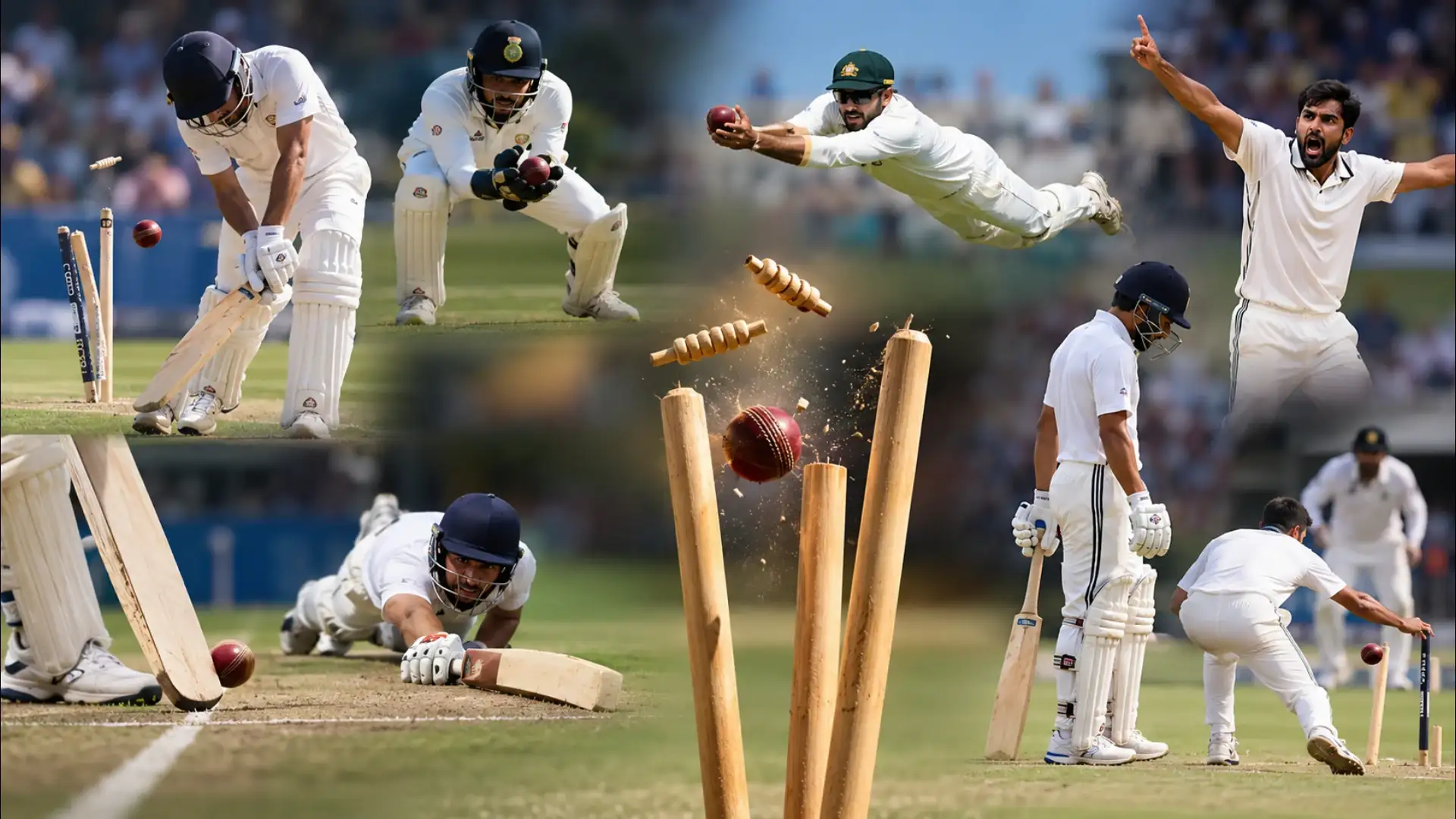
Each dismissal covers a different gap: the ball hitting the stumps directly, the body blocking what the ball would have done, a fielder completing a catch or a run-out, the batter breaking their own stumps, or the batter stepping outside their ground. Together the ten modes close every route by which a batter might otherwise survive. The Laws did not invent them all at once, several were added over centuries as the game found situations its existing rules could not resolve. That accumulation is visible in the list itself.
Bowled
The simplest dismissal in the game. The bowled ball hits the stumps and dislodges at least one bail. It does not matter whether the ball touched the bat, the glove, or the batter's body on the way through. If the stumps are broken by the ball, the batter is out. The only exception: if the bail had already been knocked off earlier in the delivery, the stumps must be struck hard enough that they would have dislodged a bail had one been sitting there.Timed Out
When a wicket falls, the next batter must be ready to face the first ball, or at least be at the crease and prepared, within three minutes. If they are not, the fielding side can appeal and the umpire can give the incoming batter out. It is the rarest dismissal in top-level cricket and has almost never been invoked in a Test match, but it is in the Laws and it has appeared in international cricket at least once.Caught
A fielder, including the wicketkeeper, catches the ball after it has come off the bat or the glove holding the bat, before it touches the ground. The fielder must have complete control of the ball and must not step over the boundary while taking the catch. A catch off a no-ball does not count as a dismissal. Caught is the most common way a batter is dismissed in professional cricket across all formats.Handled the Ball and Obstructing the Field
These two were separate dismissals for most of cricket's history. In 2017, the Laws merged them into a single mode: obstructing the field. A batter is out if they wilfully obstruct or distract the fielding side by word or action. The most common application is a batter deliberately using a hand to stop a ball hitting the stumps, the old handled the ball. Accidental contact is not enough; the act must be deliberate.You may also like
- Dropped Vaibhav Sooryavanshi, brought back Ishan Kishan: Team India's call backfires
- Glenn Phillips scripts history, unleashes mayhem as New Zealand smash highest-ever T20I total vs India
- Phillips smashed a century in 46 balls; Bracewell also roared, setting India a target of 260 in the fourth T20.
- Jemimah Rodrigues: Cleared after three‑month rehab, but will she reclaim her spot?
- 'We need to win both': Gautam Gambhir asks team India to win 'every match' of series
Hit the Ball Twice
A batter may play the ball a second time only to defend their stumps. If they hit it a second time for any other reason, to gain runs, to keep it away from a fielder, they are out. The fielding side must appeal, and the umpire decides whether the second hit was legitimate defence or something else. This dismissal is extraordinarily rare in professional cricket.Hit Wicket
The batter breaks their own stumps with their bat, body, or equipment while playing a shot or setting off for a first run immediately after playing the shot. Dislodging a bail while taking guard, backing up between deliveries, or avoiding a throw does not count. The action must happen in the act of playing the ball or beginning that first run.Leg Before Wicket
LBW is the most argued dismissal in cricket. The ball must pitch in line with the stumps or on the off side, strike the batter's body, usually the pad, before touching the bat, and be hitting the stumps. If the ball pitches outside leg stump, the batter cannot be out LBW regardless of where it would have gone. If the batter played a genuine shot and the ball hit the pad outside the line of off stump, they are also not out. Every condition must be met simultaneously, which is why LBW decisions are so frequently reviewed.Run Out
A batter is run out when they are outside their crease, attempting a run or for any other reason, and the fielding side breaks the stumps with the ball before the batter grounds their bat or body behind the line. Both batters can be run out on the same delivery; the one who is short of their ground when the stumps are broken is dismissed. If both are in the same crease and the striker's end is broken, the striker is out. If the non-striker's end is broken, the non-striker is out.Stumped
Stumped applies only to the wicketkeeper and only to the batter on strike. The batter moves outside the crease to play a ball, typically a spin delivery they have stepped out to, misses it, and the keeper collects the ball and breaks the stumps before the batter regains their ground. A stumping cannot happen off a no-ball. It cannot happen if the ball has touched another fielder before reaching the keeper. The batter must have moved out voluntarily, not been pushed out by the ball.Retired Out
A batter who retires without the umpire's permission, or retires with permission but does not return when able, is recorded as retired out. It is distinct from retired hurt or retired ill, where the batter leaves due to injury or illness and may return. Retired out counts as a dismissal in the scorecard. It is used occasionally in exhibition matches and has appeared in domestic cricket, but it remains unusual at the highest level.Each dismissal covers a different gap: the ball hitting the stumps directly, the body blocking what the ball would have done, a fielder completing a catch or a run-out, the batter breaking their own stumps, or the batter stepping outside their ground. Together the ten modes close every route by which a batter might otherwise survive. The Laws did not invent them all at once, several were added over centuries as the game found situations its existing rules could not resolve. That accumulation is visible in the list itself.






Loving Newspoint? Download the app now
