
"It was really a wake-up call to the meaning of what New York is": Why Jets owner Woody Johnson took his entire team to the 9/11 museum days before the 25th anniversary


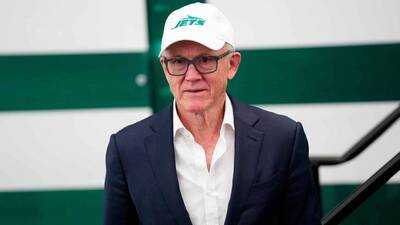
New York Jets owner Woody Johnson lost close friends on September 11, 2001. Twenty-five years later, he is still showing up. On September 9, 2026, Johnson brought current Jets players, including Geno Smith, Demario Davis, and Harrison Phillips, to the 9/11 Memorial and Museum ahead of the 25th anniversary. The visit was tied to the opening of a new exhibit, In Their Honor. What nobody quite expected was that Johnson himself would be the one who broke down inside.
Why did Woody Johnson bring Jets players to the 9/11 Memorial and Museum in 2026?For a franchise owner who personally lost friends in the attacks and stood at the smoldering pit days after they happened, the 25th anniversary was never going to be just another date on a calendar. Johnson wanted the players who wear the Jets uniform today to understand what that means in a city like New York.
"I think for the young guys that hadn't seen it before, it was really a wake-up call to the meaning of what New York is, what being a New Yorker is," he said. "And just how important New York is to the world."
That context matters. Several players in that group were children when the towers fell, or not yet born into the realities of what that morning actually cost New York. Johnson's decision to take them there was less about ceremony and more about grounding them in the identity of the city they represent every Sunday.
What happened to Woody Johnson inside the 9/11 museum?Johnson is a founding trustee of the 9/11 Memorial and Museum. He has been to the site many times. Yet one room on this visit caught him completely off guard.
"There's a room, I'd never been in it before, and it's just a dark room with benches and it scrolls through names of people who died, and then there's video of the relatives talking about them, and it really got to me. I didn't think it would, but yeah, it really got to me," he said.
That admission carries weight precisely because it is so unguarded. There is no prepared statement in that moment. Just a man sitting in a dark room, watching families speak about the people they lost, and feeling the full weight of it hit him again.
"I think it had a profound impact on the players. You go in that room, but you come out a different person," he added.
What role did Vinny Testaverde play in canceling Jets games after 9/11?In the immediate aftermath of the attacks, Johnson recalls a conversation that settled the question of whether the Jets would play that week. Quarterback Vinny Testaverde made the case directly, and Johnson backed him without hesitation.
"Vinny really brought it home for the commissioner and me," Johnson said. "He goes, 'I've lost 25 first responders, firemen and policeman friends today, and I'm not playing on Sunday.' And we canceled before we even knew that flights would be shut down. It was the right decision."
That moment from 2001 is still something former Jets players speak proudly about. Testaverde, reflecting on it 25 years later, said he remains proud of everyone involved for getting it right.
How has Woody Johnson supported 9/11 first responders and their families over the years?Beyond the museum, Johnson has been a consistent supporter of the Tunnel to Towers Foundation, which was built to serve the families of first responders and veterans. His involvement goes back to 2014 when he donated $1 million to the organization's Building for America's Bravest program, which constructs smart homes for severely injured servicemembers.
"Frank Siller started this amazing, amazing foundation for first responders," Johnson said. "Now it does things like pay off mortgages for those wounded or widows. If you have the means to give back as an American, you have to do it. You really do."
In recognition of more than a decade of partnership, Tunnel to Towers will honor Johnson at their annual gala in December with the Follow the Footsteps Award.
For Johnson, none of it is disconnected from that morning 25 years ago, or from the West Side Highway lined with 18-wheelers full of donations from across the country, or from standing at Ground Zero beside Jets players in the heat and smoke.
"The first responders were heroes, but the average citizens were also heroes," he said. "It showed our resilience. It was a horrific terrorist attack, there's no question about it, but we can take some good out of it too."
Why did Woody Johnson bring Jets players to the 9/11 Memorial and Museum in 2026?For a franchise owner who personally lost friends in the attacks and stood at the smoldering pit days after they happened, the 25th anniversary was never going to be just another date on a calendar. Johnson wanted the players who wear the Jets uniform today to understand what that means in a city like New York.
"I think for the young guys that hadn't seen it before, it was really a wake-up call to the meaning of what New York is, what being a New Yorker is," he said. "And just how important New York is to the world."
That context matters. Several players in that group were children when the towers fell, or not yet born into the realities of what that morning actually cost New York. Johnson's decision to take them there was less about ceremony and more about grounding them in the identity of the city they represent every Sunday.
What happened to Woody Johnson inside the 9/11 museum?Johnson is a founding trustee of the 9/11 Memorial and Museum. He has been to the site many times. Yet one room on this visit caught him completely off guard.
"There's a room, I'd never been in it before, and it's just a dark room with benches and it scrolls through names of people who died, and then there's video of the relatives talking about them, and it really got to me. I didn't think it would, but yeah, it really got to me," he said.
That admission carries weight precisely because it is so unguarded. There is no prepared statement in that moment. Just a man sitting in a dark room, watching families speak about the people they lost, and feeling the full weight of it hit him again.
"I think it had a profound impact on the players. You go in that room, but you come out a different person," he added.
What role did Vinny Testaverde play in canceling Jets games after 9/11?In the immediate aftermath of the attacks, Johnson recalls a conversation that settled the question of whether the Jets would play that week. Quarterback Vinny Testaverde made the case directly, and Johnson backed him without hesitation.
"Vinny really brought it home for the commissioner and me," Johnson said. "He goes, 'I've lost 25 first responders, firemen and policeman friends today, and I'm not playing on Sunday.' And we canceled before we even knew that flights would be shut down. It was the right decision."
That moment from 2001 is still something former Jets players speak proudly about. Testaverde, reflecting on it 25 years later, said he remains proud of everyone involved for getting it right.
How has Woody Johnson supported 9/11 first responders and their families over the years?Beyond the museum, Johnson has been a consistent supporter of the Tunnel to Towers Foundation, which was built to serve the families of first responders and veterans. His involvement goes back to 2014 when he donated $1 million to the organization's Building for America's Bravest program, which constructs smart homes for severely injured servicemembers.
"Frank Siller started this amazing, amazing foundation for first responders," Johnson said. "Now it does things like pay off mortgages for those wounded or widows. If you have the means to give back as an American, you have to do it. You really do."
In recognition of more than a decade of partnership, Tunnel to Towers will honor Johnson at their annual gala in December with the Follow the Footsteps Award.
For Johnson, none of it is disconnected from that morning 25 years ago, or from the West Side Highway lined with 18-wheelers full of donations from across the country, or from standing at Ground Zero beside Jets players in the heat and smoke.
"The first responders were heroes, but the average citizens were also heroes," he said. "It showed our resilience. It was a horrific terrorist attack, there's no question about it, but we can take some good out of it too."
Next Story