
Neck pillows, no screen time and changing lights: How shooters are tackling conditions at Quaint


TimesofIndia in Nagoya: There’s a running joke among members of the Indian shooting contingent that the bus ride from their hotel in central Nagoya to the Aichi Prefectural General Shooting Gallery feels like a journey through the bends and turns leading up to Ooty in the Nilgiris.
The range, about 75km from their hotel, is the farthest the shooters say, they have had to travel to a venue at an international event. The journey takes close to two hours.
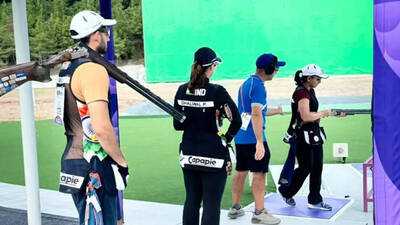
“The organisers told us the travel time would be 70 minutes, but it’s about two hours. Given how punctual the Japanese are, we took it at face value. We wish they had told us the actual travel time. We would have been mentally prepared for it,” said Manoj Kumar Ohlyan, chief coach of the 50m rifle team .
The shooters, coaches and support staff have since put a few coping mechanisms in place. Most use travel neck pillows to stay comfortable on the winding roads, while screen time is strictly prohibited.
“Screen time during such long travel can cause motion sickness , so we tell the shooters they can use their mobiles only to listen to music and not watch anything,” Ohlyan said.
Elavenil Valarivan , who suffered a disc bulge in her neck a few years ago, is taking no chances. After winning two silver medals on Sunday, she said, “It’s a long ride to the range and, given my history with the neck, I ensure I travel here with a neck pillow.”
The distance, however, is not the only challenge. Ohlyan said the altitude (sitting at an elevation of 670m or nearly 2,200 feet) at the relatively compact range has little bearing on the shooters, but changing light conditions could prove tricky.
“The lighting can sometimes be tricky because it is mostly cloudy now. But when there is brighter light, there is a likelihood of a mirage forming when the 50m rifle shooters are in action. So we have discussed the scenarios and made adjustments accordingly,” he said.
Team high-performance manager and former shooter Ronak Pandit explained that a change in weather can also affect the shooters psychologically.
“Unfortunately, on the day of the match, if we have sunny conditions, the calibration of the rifle changes. Also, here the athletes are trained to shoot in the wind. What could happen is that when you are under pressure and the conditions also go against you, it impacts you psychologically,” Pandit said.
“That said, all the shooters are experienced, well-travelled and well-coached. So hopefully, we will be least affected if the conditions change,” he added.
The range, about 75km from their hotel, is the farthest the shooters say, they have had to travel to a venue at an international event. The journey takes close to two hours.
“The organisers told us the travel time would be 70 minutes, but it’s about two hours. Given how punctual the Japanese are, we took it at face value. We wish they had told us the actual travel time. We would have been mentally prepared for it,” said Manoj Kumar Ohlyan, chief coach of the 50m rifle team .
The shooters, coaches and support staff have since put a few coping mechanisms in place. Most use travel neck pillows to stay comfortable on the winding roads, while screen time is strictly prohibited.
“Screen time during such long travel can cause motion sickness , so we tell the shooters they can use their mobiles only to listen to music and not watch anything,” Ohlyan said.
Elavenil Valarivan , who suffered a disc bulge in her neck a few years ago, is taking no chances. After winning two silver medals on Sunday, she said, “It’s a long ride to the range and, given my history with the neck, I ensure I travel here with a neck pillow.”
The distance, however, is not the only challenge. Ohlyan said the altitude (sitting at an elevation of 670m or nearly 2,200 feet) at the relatively compact range has little bearing on the shooters, but changing light conditions could prove tricky.
“The lighting can sometimes be tricky because it is mostly cloudy now. But when there is brighter light, there is a likelihood of a mirage forming when the 50m rifle shooters are in action. So we have discussed the scenarios and made adjustments accordingly,” he said.
Team high-performance manager and former shooter Ronak Pandit explained that a change in weather can also affect the shooters psychologically.
“Unfortunately, on the day of the match, if we have sunny conditions, the calibration of the rifle changes. Also, here the athletes are trained to shoot in the wind. What could happen is that when you are under pressure and the conditions also go against you, it impacts you psychologically,” Pandit said.
“That said, all the shooters are experienced, well-travelled and well-coached. So hopefully, we will be least affected if the conditions change,” he added.
Next Story