
Why the Olympic Rings Have Five Colours

The Olympic rings are so familiar that nobody stops to ask what they actually mean. Five loops, five colours, five continents, and a backstory that turns out to be more interesting than the symbol itself.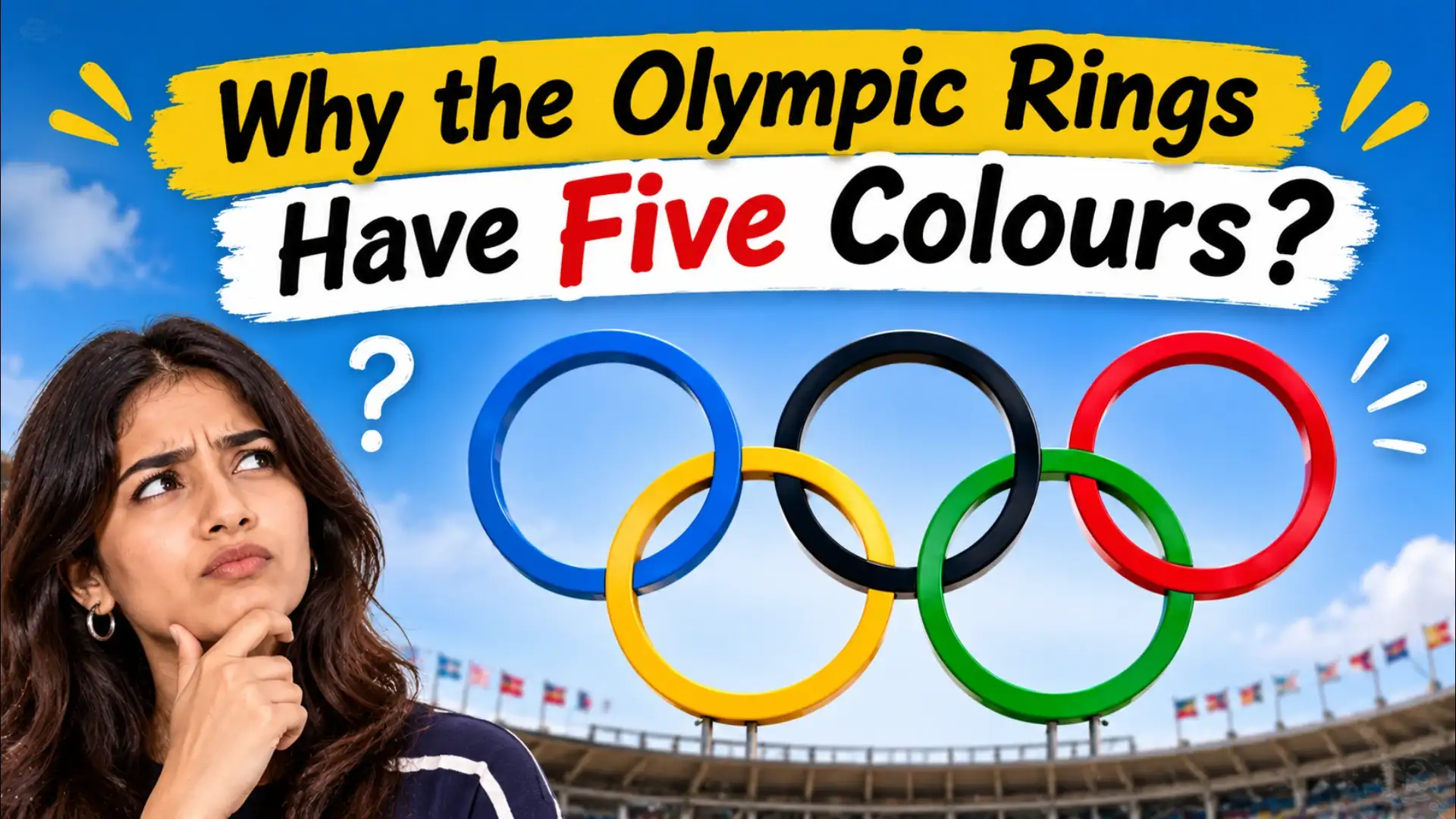
The sixth colour in the design is white, the background of the flag itself. Together, the six colours, blue, yellow, black, green, red, and white, were chosen because at least one of them appeared in the flag of every nation competing at the time. That was the practical logic: any country's flag could be reproduced using colours already present in the Olympic palette.

The rings as a set represent the five continents. The colours as a set cover the world's flags. The one-to-one mapping was invented later, spread widely, and proved impossible to kill. It is the kind of story that sounds true because it is tidy. The actual design logic is simpler and, in its own way, more elegant: every nation on earth could find itself somewhere in those six colours.
The ancient-Greece origin story died with that discovery, but it had already circulated widely enough to shape how people thought about the rings' age and meaning. The symbol was modern, deliberate, and designed at a desk in Paris. That is the less romantic version, and the accurate one.
Five was also a number that worked visually: the rings interlock in a single horizontal row, alternating between upper and lower positions, so each ring touches the two beside it. The pattern is stable, readable at any size, and impossible to mistake for anything else. Whether Coubertin chose five for the visual logic or the continental count first is not recorded. Both reasons held, and both still do.
The emblem itself has not changed. What has changed is the myth layered on top of it, continent-colour assignments, ancient origins, hidden meanings, none of which Coubertin put there. Strip those away and what remains is a French educator in 1913, a clean geometric idea, and a flag that turned out to be exactly the right thing to carry into a stadium full of people who had come from everywhere.
Pierre de Coubertin and the First Design
The rings were drawn in 1913 by Pierre de Coubertin, the French educator who revived the modern Olympic Games. He designed the emblem for the International Olympic Committee's twentieth anniversary and presented it in 1914. The five rings, he wrote, represent the five parts of the world that had answered the Olympic call and were ready to accept its competition: Africa, the Americas, Asia, Europe, and Oceania.The sixth colour in the design is white, the background of the flag itself. Together, the six colours, blue, yellow, black, green, red, and white, were chosen because at least one of them appeared in the flag of every nation competing at the time. That was the practical logic: any country's flag could be reproduced using colours already present in the Olympic palette.
What the Colours Do Not Mean
A persistent belief assigns each colour to a specific continent: blue for Europe, yellow for Asia, black for Africa, green for Oceania, red for the Americas. It is clean, memorable, and wrong. Coubertin never made that assignment. The IOC has stated clearly that no individual colour corresponds to any individual continent.The rings as a set represent the five continents. The colours as a set cover the world's flags. The one-to-one mapping was invented later, spread widely, and proved impossible to kill. It is the kind of story that sounds true because it is tidy. The actual design logic is simpler and, in its own way, more elegant: every nation on earth could find itself somewhere in those six colours.
The Printing Story That Changed the Symbol
There is a second layer of history that most accounts skip. In 1936, the Berlin Olympics used a version of the rings in promotional material that arranged the colours differently from Coubertin's original. A document found at a castle in Delphi in 1934 appeared to show an ancient Greek version of the rings, which briefly gave the symbol a false antiquity. The document was later shown to be a piece of IOC stationery from 1913, not an ancient artefact.The ancient-Greece origin story died with that discovery, but it had already circulated widely enough to shape how people thought about the rings' age and meaning. The symbol was modern, deliberate, and designed at a desk in Paris. That is the less romantic version, and the accurate one.
Why Five Rings and Not Six or Seven
Coubertin counted five inhabited continental regions, not seven continents in the geographical sense. Antarctica had no Olympic programme. North America and South America were grouped as one. Australia and the Pacific islands became Oceania. The count was about participation, not geography.Five was also a number that worked visually: the rings interlock in a single horizontal row, alternating between upper and lower positions, so each ring touches the two beside it. The pattern is stable, readable at any size, and impossible to mistake for anything else. Whether Coubertin chose five for the visual logic or the continental count first is not recorded. Both reasons held, and both still do.
The Symbol After Coubertin
The rings became the official emblem of the Olympic Movement in 1915, when the IOC formally adopted the flag. They survived two world wars, a century of Games across dozens of host cities, and every redesign of every sport within the programme. The flag has been carried into every opening ceremony since Antwerp in 1920.The emblem itself has not changed. What has changed is the myth layered on top of it, continent-colour assignments, ancient origins, hidden meanings, none of which Coubertin put there. Strip those away and what remains is a French educator in 1913, a clean geometric idea, and a flag that turned out to be exactly the right thing to carry into a stadium full of people who had come from everywhere.
Next Story