
Why a Shuttlecock Always Flies Cork First, No Matter How You Hit It

A shuttlecock is one of the most aerodynamically clever objects in sport. It weighs almost nothing, it is made of feathers or plastic, and yet it self-corrects mid-air with a reliability that no amount of spin or mis-hit can defeat. The reason sits in the physics of drag, centre of mass, and rotational stability, three forces working together so quietly that most players never think to ask why.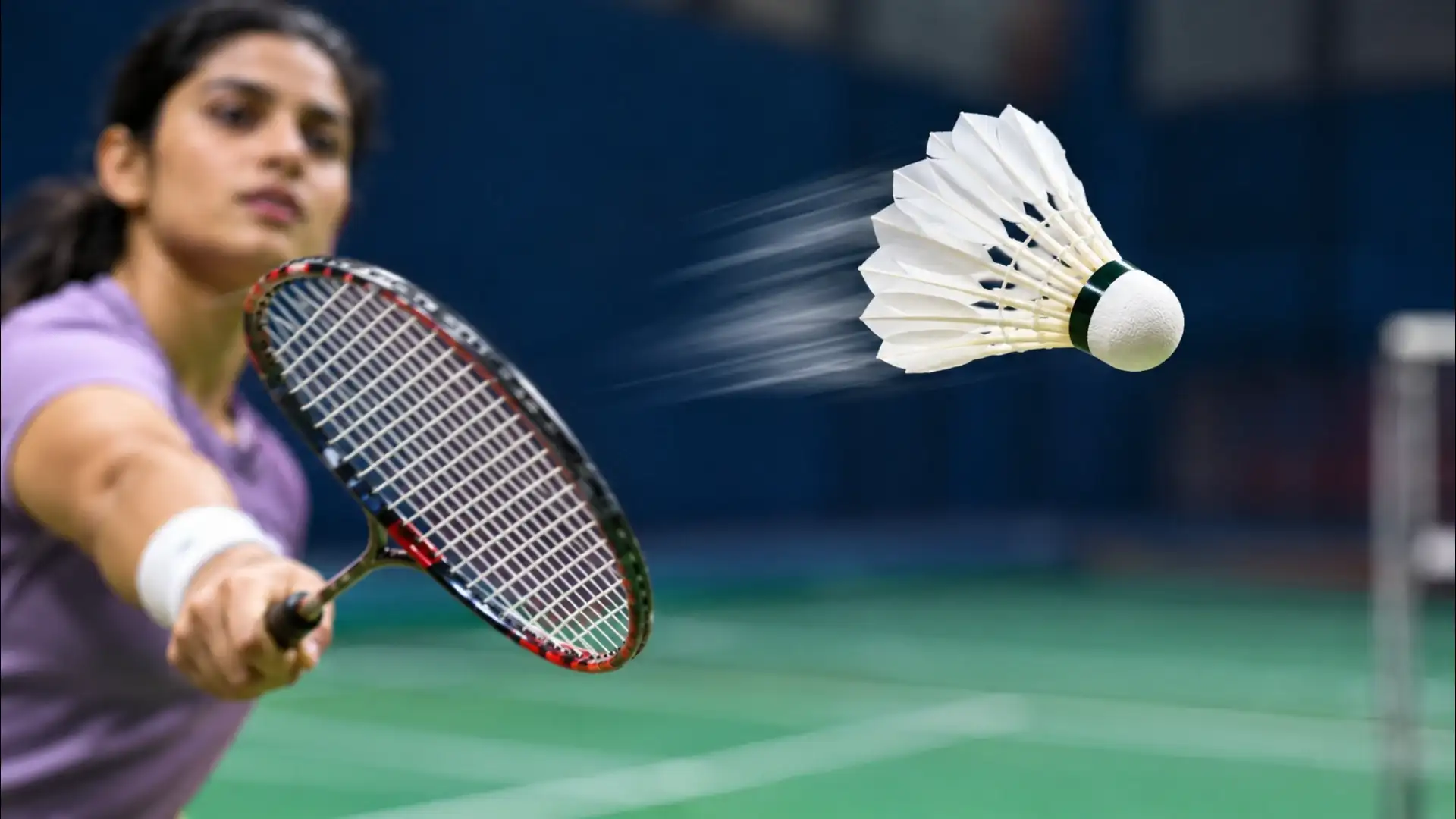
When a shuttlecock is struck and tumbles, the feathered skirt meets the air with far more surface area than the cork. That surface area creates drag, a braking force that slows the skirt down faster than the cork. The cork, being denser and more compact, punches through air more easily. So the skirt slows, the cork keeps moving, and the object rotates until the cork leads. At that point, drag acts symmetrically around the skirt and the shuttlecock stabilises. The self-correction is not a trick. It is the only stable configuration the object can find.
That spin is what gives the flight path its characteristic smoothness. A spinning object resists changes to its orientation, a property called gyroscopic stability. The shuttlecock is not spinning fast enough to be truly gyroscopic in the way a top is, but the rotation adds just enough resistance to wobble that the flight arc stays predictable. Players learn to read that arc instinctively, even if they could not explain why it curves the way it does.
Immediately after impact, if the shuttle has been hit at an odd angle, it will tumble. But the drag differential kicks in within milliseconds. The skirt encounters more air resistance than the cork, rotation begins, and the cork swings forward into the leading position. By the time the shuttle has travelled a metre or two, it is already flying cleanly. A player watching from the other end of the court sees only a smooth, arcing flight. The correction is invisible at match speed.
This asymmetry is unique to badminton among major racquet sports, and it is entirely a product of the skirt's drag. A smash can leave the racquet at extraordinary speed and still drop almost vertically near the net because the deceleration is so aggressive. Defenders learn to read the steep drop as much as the initial pace. The physics that makes the shuttlecock self-correct is the same physics that makes the game's geometry unlike any other.
The cork-first orientation is not a design choice someone made for elegance. It is the only orientation the object's own physics will allow it to hold. Every time a shuttlecock steadies itself in flight, it is simply finding the one configuration where the forces on it balance, and staying there until the next racquet does its work.
The Cork Is Heavy, the Feathers Are Not
The base of a shuttlecock, the cork or rubber dome, carries almost all of the object's mass. The feathers or synthetic skirt fanning out behind it carry almost none. This matters enormously, because when two parts of the same object move through air, the heavier part and the lighter part do not experience resistance equally.When a shuttlecock is struck and tumbles, the feathered skirt meets the air with far more surface area than the cork. That surface area creates drag, a braking force that slows the skirt down faster than the cork. The cork, being denser and more compact, punches through air more easily. So the skirt slows, the cork keeps moving, and the object rotates until the cork leads. At that point, drag acts symmetrically around the skirt and the shuttlecock stabilises. The self-correction is not a trick. It is the only stable configuration the object can find.
Why the Skirt Flares Outward
The angle of the feathers is not decorative. Each feather is set at a slight outward angle relative to the flight axis, and this does two things. First, it creates a conical shape that cups the air behind the cork, which adds to the drag on the skirt side. Second, it gives the shuttlecock a slow, consistent spin around its own axis as it moves forward, similar to the rifling spin of a bullet, but far gentler.That spin is what gives the flight path its characteristic smoothness. A spinning object resists changes to its orientation, a property called gyroscopic stability. The shuttlecock is not spinning fast enough to be truly gyroscopic in the way a top is, but the rotation adds just enough resistance to wobble that the flight arc stays predictable. Players learn to read that arc instinctively, even if they could not explain why it curves the way it does.
What Happens at the Moment of Impact
When a racquet strikes the shuttlecock, the cork takes the direct force of the hit. The skirt, trailing behind, is not struck cleanly, it flexes and deforms slightly on contact, then springs back. This flex is part of what makes the shuttlecock feel different from a ball. It absorbs some of the impact energy, which is one reason a well-struck shuttle has a soft, controlled quality that a rigid object would not.Immediately after impact, if the shuttle has been hit at an odd angle, it will tumble. But the drag differential kicks in within milliseconds. The skirt encounters more air resistance than the cork, rotation begins, and the cork swings forward into the leading position. By the time the shuttle has travelled a metre or two, it is already flying cleanly. A player watching from the other end of the court sees only a smooth, arcing flight. The correction is invisible at match speed.
Why Speed Changes the Shape of the Flight
A shuttlecock does not slow down the way a ball does. It decelerates very fast at first, the large skirt creates enormous drag at high velocity, and then slows more gently as speed drops and drag decreases. This gives the flight path an asymmetric arc: steep and fast on the way out, looping and slower on the way down.This asymmetry is unique to badminton among major racquet sports, and it is entirely a product of the skirt's drag. A smash can leave the racquet at extraordinary speed and still drop almost vertically near the net because the deceleration is so aggressive. Defenders learn to read the steep drop as much as the initial pace. The physics that makes the shuttlecock self-correct is the same physics that makes the game's geometry unlike any other.
The cork-first orientation is not a design choice someone made for elegance. It is the only orientation the object's own physics will allow it to hold. Every time a shuttlecock steadies itself in flight, it is simply finding the one configuration where the forces on it balance, and staying there until the next racquet does its work.
Next Story