
Why Cricket Uses Red, White and Pink Balls for Different Matches

Pick up a cricket ball and you are holding about 155 grams of cork wound in twine, stitched into quarters of leather, and lacquered to a finish that will determine how it moves through air for the next eighty overs. The colour on the outside is not cosmetic. It is the result of a specific problem each format of the game poses, and three different answers.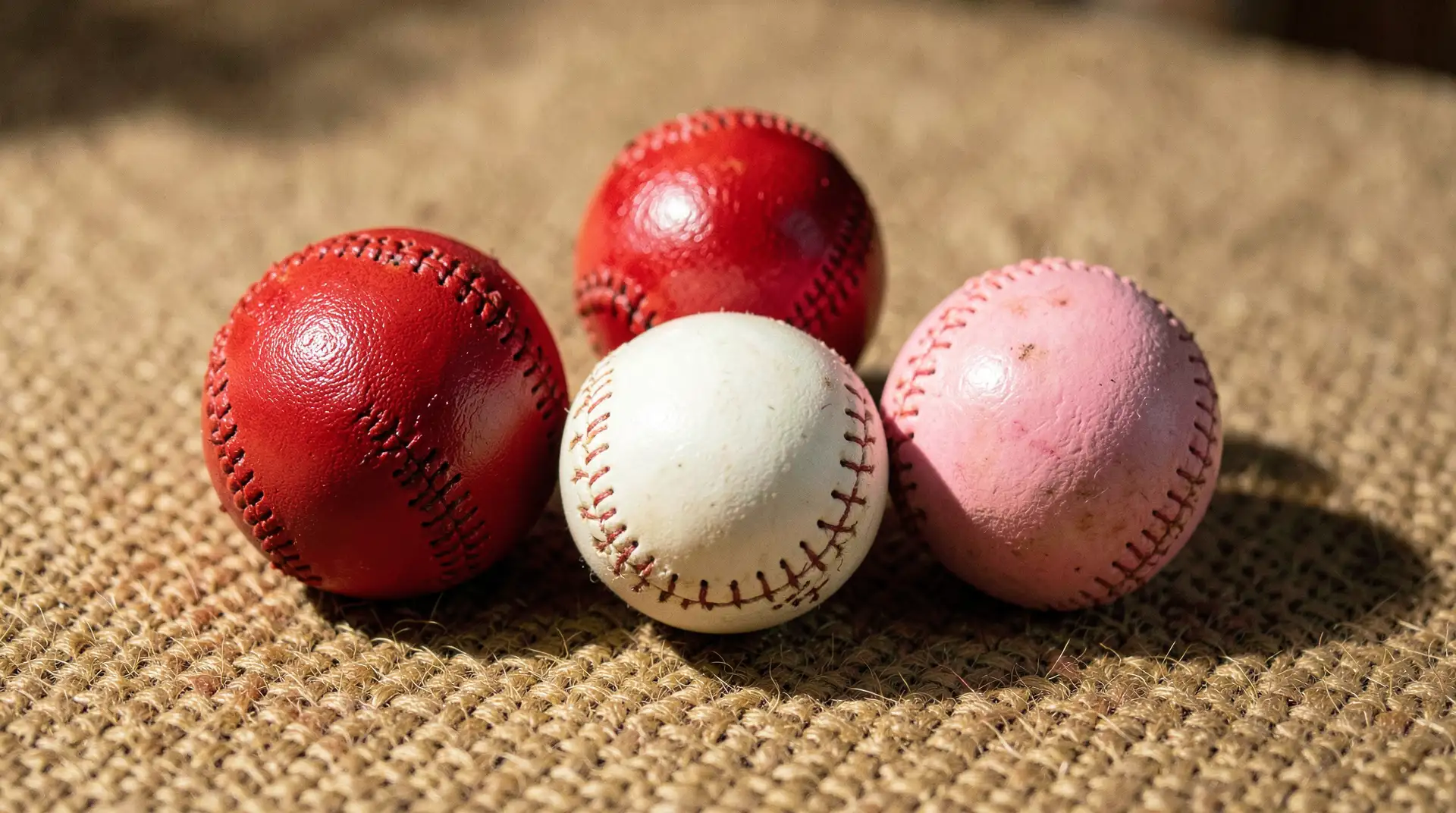
The Red Ball and Why It Swings
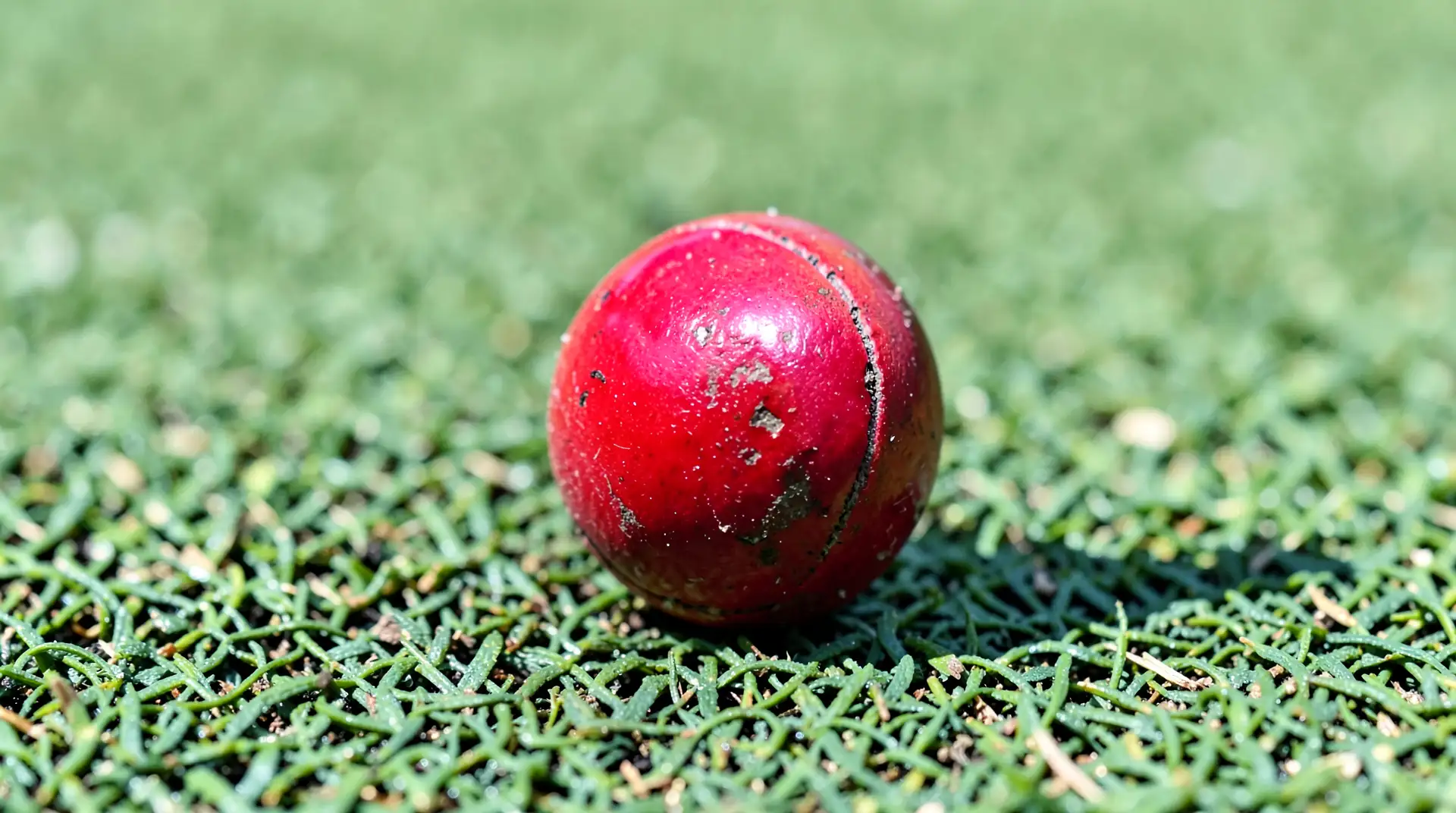
Test cricket is played in daylight, usually over five days, with a ball that must last eighty overs before it is replaced. Red was the original choice for a simple reason: red dye, historically from natural sources like cochineal, bonded well with the tanning process used on cricket leather and produced a surface that could hold a shine on one side while the other scuffed naturally. That contrast, one side smooth and lacquered, the other rough and worn, is what creates swing. Air moves faster over the rough side and slower over the smooth side, and the pressure difference bends the ball's path in the air.Red also shows up well against a white sight screen and green outfield in natural daylight. The seam, raised and prominent on a hand-stitched ball, is visible enough for batters to read but not so obvious it removes the bowler's advantage. The ball is also dense enough that it stays hard for the first thirty overs, producing pace and bounce before it softens and begins to reverse-swing in its final phase.The White Ball and the Problem of Floodlights
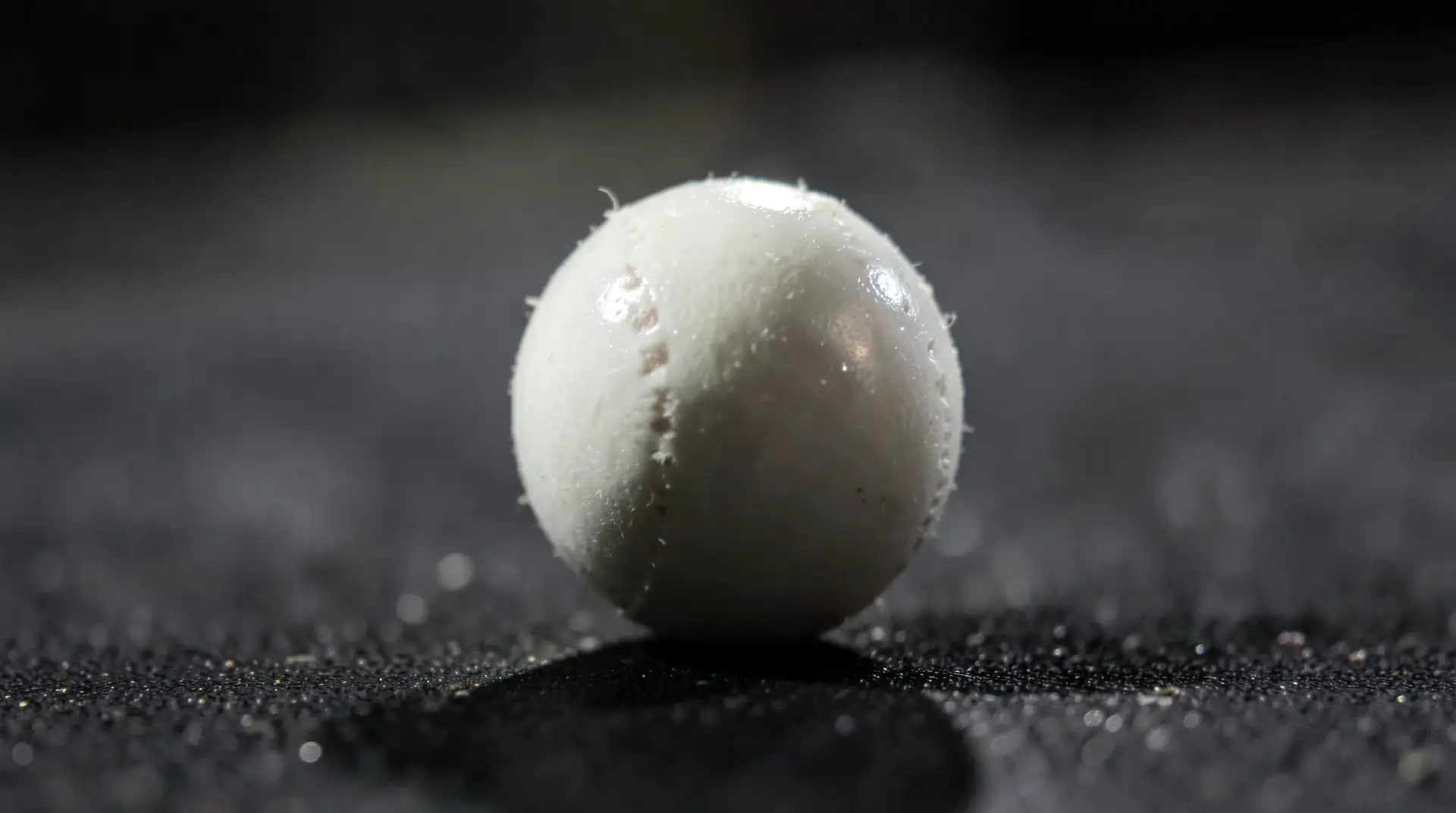
When limited-overs cricket moved under artificial light in the 1970s and 1980s, the red ball became nearly invisible against the dark outfield and the night sky. A white ball solved the visibility problem immediately. Under floodlights, white reflects the light source directly and stays bright across the ground.But white leather has a different relationship with lacquer and dye. It picks up dirt faster, discolours quickly, and loses its shape sooner under the same conditions that keep a red ball swinging. One-day and T20 formats compensate with two balls, one from each end, so neither one reaches the stage where it becomes too soft and uneven to play with fairly. The shorter formats also use a harder compound in the ball's core to keep the pace up across fifty or twenty overs, since there is no second innings to wait for reverse swing.White balls do not swing as dramatically as red ones. The lacquer is heavier and the seam is less prominent, because the priority shifted from movement through the air to durability under lights and visibility at pace.The Pink Ball and a Problem Neither Colour Could Solve
Day-night Test cricket created a specific problem that red and white both failed. A red ball under floodlights is hard to see, particularly in the twilight period when natural and artificial light mix. A white ball under the same conditions performs well, but it does not last eighty overs in the way Test cricket requires, and Test cricket cannot use two balls simultaneously under the same rules as limited-overs formats.The pink ball, introduced for day-night Tests from the mid-2010s onwards, was engineered to sit between the two. The pink dye is visible under floodlights in a way red is not, and it holds its colour and shape longer than white. The lacquer formulation is closer to a red ball's, which means it retains the swing properties Test cricket depends on. The seam is more prominent than on a white ball, and the surface holds its shine on one side long enough for traditional swing to operate.Pink balls do behave differently from red ones, they tend to swing more in their early overs and the swing can arrive later in the spell than bowlers expect. The dye also fades differently as the ball wears, which affects how reverse swing develops. Batters and bowlers have noted that reading the pink ball under lights requires adjustment, particularly in the twilight session, which is why the fielding side often prefers to bowl then.What the Leather Does That the Colour Cannot
The colour is the visible part of a longer manufacturing chain. All three balls start with the same basic structure: a cork core, layers of wound twine for weight and density, and quarters of leather stitched by hand around them. The raised seam is not decorative, it is the bowler's primary tool, the edge that grips the air and initiates movement.The leather itself is treated differently depending on the ball. Red balls are typically made from four pieces of leather with a six-seam construction. White and pink balls sometimes use different stitching patterns or a harder outer lacquer to compensate for the way their dyes interact with moisture and wear. The country of manufacture matters too, English county cricket and international Tests have used balls from different makers, each with slightly different hardness and seam height, which is why a ball from one manufacturer may swing more than one from another under the same conditions.The physics underneath all three colours is identical: a spinning, seam-up delivery through humid air will move. What changes with colour is how long the ball stays in the condition that makes that movement possible, and under which kind of light the whole contest remains visible to everyone in the ground.Next Story