
A giant cliff that vanished billions of years ago may explain the mystery of Earth's 'missing' billion years


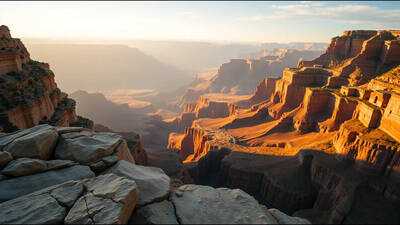
The Grand Canyon exposes roughly 2 billion years of Earth's geological history, but more than half of that record is missing. Geologists call the enormous gap the Great Unconformity , a boundary where rocks representing more than a billion years of geological time are absent. The mystery has persisted for more than a century, with scientists proposing ancient erosion, tectonic upheaval and glaciation as possible explanations. Now, a study led by Thomas Gernon of the University of Southampton offers a way to connect those ideas: a colossal escarpment that may have formed across ancient North America as the supercontinent Rodinia began breaking apart around 800 million years ago. The researchers estimate the escarpment could have stood roughly 1 kilometre high and extended for thousands of kilometres. As it gradually retreated inland, erosion may have stripped away up to 8 kilometres of rock in places, leaving the ancient crystalline basement exposed. Later glaciation could then have removed additional material, helping produce the enormous gap preserved in the Grand Canyon today.
Next Story