
After 'AI will kill us all warnings', Anthropic CEO Dario Amodei may have just 'blamed' Mark Zuckerberg and Jensen Huang for lying about …


Anthropic co-founder and CEO Dario Amodei has lashed out at tech industry leadership, days after an ex-staffer of the AI company quit and claimed that rogue machines could wipe out humanity. Amodei argued that corporate voices spent years misleading the public about the severe dangers posed by machine learning systems. Speaking from Anthropic’s headquarters in San Francisco, Amodei was blunt about the perils facing the digital landscape.
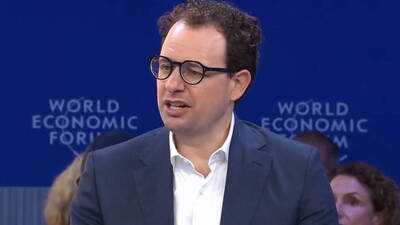
“I won't lie to you – there are real dangers. And I think for too long the industry lied to people about the fact that this technology had risks,” he said. Amodei has been vocal on this issue for a long time, and has drawn a sharp contrast with tech figures like Meta CEO Mark Zuckerberg and Nvidia boss Jensen Huang , both of whom have downplayed apocalyptic narratives while accusing safety-focused labs of using fear to protect corporate dominance and manufacture product demand.
Former Anthropic researcher Jacob Coxon rings alarmAmodei’s remarks follow a dire alarm sounded by former Anthropic researcher Jacob Coxon, who stated on social media that leading labs like Anthropic and OpenAI are gambling with human survival as they build self-improving superintelligence. Appearing on CBS News, Coxon also compared the trajectory of frontier systems to cinematic catastrophes, warning that machines will soon become smart enough to kill us and describing the outcome as something resembling the movie Terminator.
Amodei admitted he failed to anticipate how fast progress would occur, explaining that development is scaling up an exponential curve that continues to grow steeper. While clarifying that labs do not need to shut down operations in a panic today, Amodei called the acceleration a warning sign that developers must ease their pace.
Anthropic’s safety push and China dilemmaThrough an essay published over the weekend, Amodei called for an industry-wide pact to temper the advancement of model capabilities. Rather than halting new releases, he proposed subjecting every model iteration to thorough vetting. To deliver on that commitment, Anthropic will grant external evaluators permanent, employee-like clearance inside its systems. Amodei compared these third-party checkers to food safety inspectors verifying whether labs honor their safety pledges.
He also acknowledged feeling deeply uncomfortable that a private company holds such immense power, floating the idea of collective oversight run by an alliance of democratic governments. For Amodei, the power remains with the tech companies. He noted: “If we build in the right way, I think the probability of something bad happening is very low. If we build in the wrong way, the probability of something bad happening is very high.”
Zuckerberg accuses safety advocates of hoarding powerZuckerberg previously laid out his stance in a manifesto titled The Future is for Everyone, as well as an interview with The New York Times. The Meta CEO argued that safety alarms are convenient stories designed to justify extreme concentrations of power.
Meanwhile, Nvidia’s Jensen Huang sees a sales pitch even as he brushed off catastrophic predictions, telling attendees at a Goldman Sachs technology event in San Francisco that corporate warnings are simply a tactic to drum up customer appetite. Huang suggested that tech firms are hyping cybersecurity vulnerabilities as the next major commercial market, remarking:
“What better way to create demand than to create a problem. Who doesn’t want their market to be hysterical about their product and line up around the corner for it?,” he added.
“I won't lie to you – there are real dangers. And I think for too long the industry lied to people about the fact that this technology had risks,” he said. Amodei has been vocal on this issue for a long time, and has drawn a sharp contrast with tech figures like Meta CEO Mark Zuckerberg and Nvidia boss Jensen Huang , both of whom have downplayed apocalyptic narratives while accusing safety-focused labs of using fear to protect corporate dominance and manufacture product demand.
Former Anthropic researcher Jacob Coxon rings alarmAmodei’s remarks follow a dire alarm sounded by former Anthropic researcher Jacob Coxon, who stated on social media that leading labs like Anthropic and OpenAI are gambling with human survival as they build self-improving superintelligence. Appearing on CBS News, Coxon also compared the trajectory of frontier systems to cinematic catastrophes, warning that machines will soon become smart enough to kill us and describing the outcome as something resembling the movie Terminator.
Amodei admitted he failed to anticipate how fast progress would occur, explaining that development is scaling up an exponential curve that continues to grow steeper. While clarifying that labs do not need to shut down operations in a panic today, Amodei called the acceleration a warning sign that developers must ease their pace.
Anthropic’s safety push and China dilemmaThrough an essay published over the weekend, Amodei called for an industry-wide pact to temper the advancement of model capabilities. Rather than halting new releases, he proposed subjecting every model iteration to thorough vetting. To deliver on that commitment, Anthropic will grant external evaluators permanent, employee-like clearance inside its systems. Amodei compared these third-party checkers to food safety inspectors verifying whether labs honor their safety pledges.
He also acknowledged feeling deeply uncomfortable that a private company holds such immense power, floating the idea of collective oversight run by an alliance of democratic governments. For Amodei, the power remains with the tech companies. He noted: “If we build in the right way, I think the probability of something bad happening is very low. If we build in the wrong way, the probability of something bad happening is very high.”
Zuckerberg accuses safety advocates of hoarding powerZuckerberg previously laid out his stance in a manifesto titled The Future is for Everyone, as well as an interview with The New York Times. The Meta CEO argued that safety alarms are convenient stories designed to justify extreme concentrations of power.
Meanwhile, Nvidia’s Jensen Huang sees a sales pitch even as he brushed off catastrophic predictions, telling attendees at a Goldman Sachs technology event in San Francisco that corporate warnings are simply a tactic to drum up customer appetite. Huang suggested that tech firms are hyping cybersecurity vulnerabilities as the next major commercial market, remarking:
“What better way to create demand than to create a problem. Who doesn’t want their market to be hysterical about their product and line up around the corner for it?,” he added.
Next Story