
AstraZeneca and insitro Join Hands on AI Drug Discovery: What It Means

Developing a new medicine is a lengthy and expensive process. Researchers must understand the biology of a disease, identify promising targets, test potential treatments and establish whether they are safe and effective in people.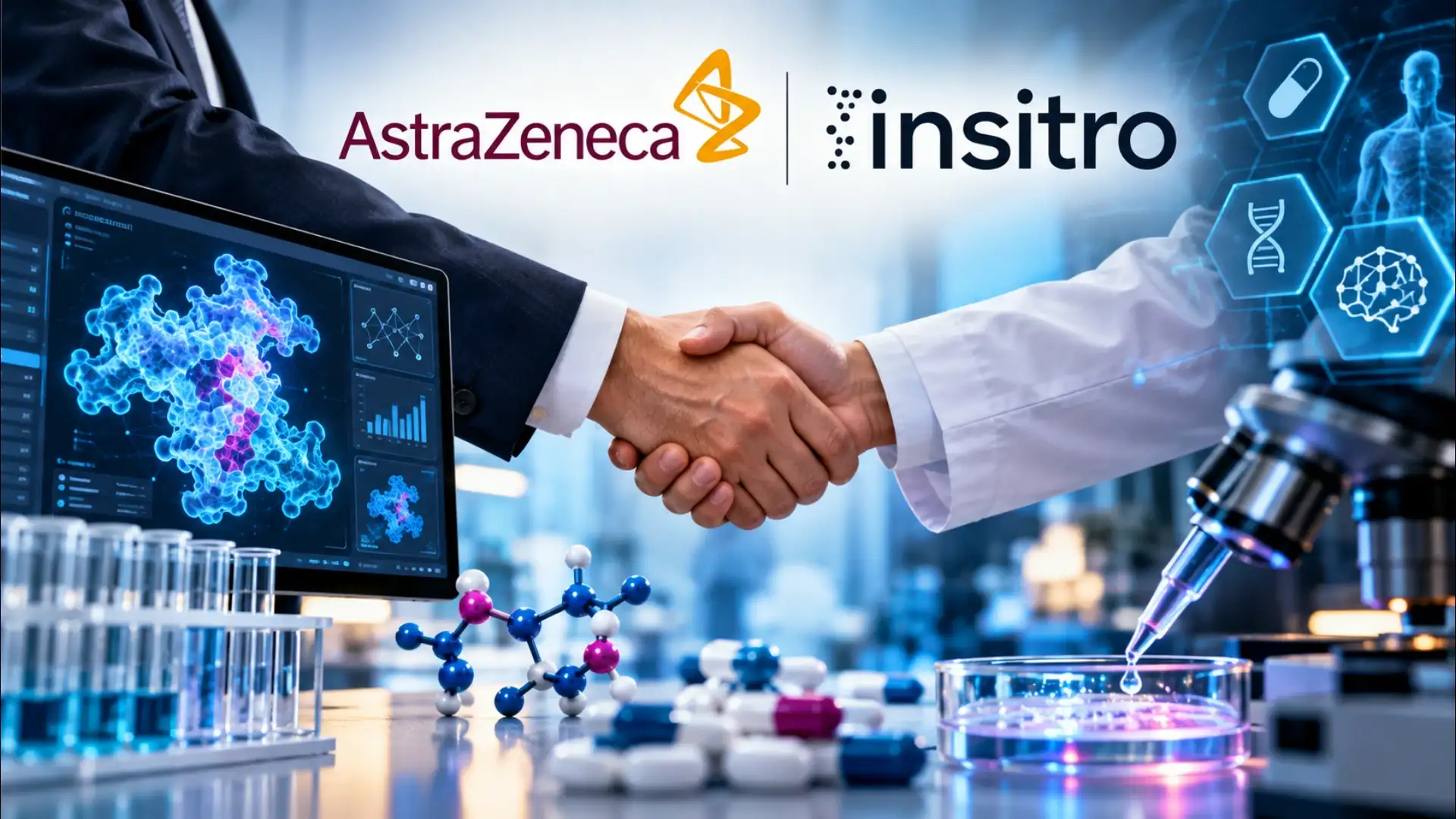
Artificial intelligence is being explored as a way to support some early stages of this work. A new partnership between pharmaceutical company AstraZeneca and biotechnology firm insitro , reported on 15 October 2026, highlights the growing interest in AI-assisted drug discovery. The collaboration will investigate treatments for challenging liver and heart conditions, although any potential medicines remain subject to research and clinical testing.
Under the reported agreement, AstraZeneca will pay $40 million upfront. The total potential value includes up to $1.46 billion in milestone payments, along with possible royalties on future sales.
These figures represent the agreement's potential financial value, not the amount already paid or a guarantee that new medicines will reach patients.
The partnership reflects pharmaceutical companies' growing interest in combining biological research with advanced computing.
The broad idea is to use experimental data and computational methods to identify patterns that could help researchers understand how diseases develop and which biological targets might be worth investigating.
AI may help scientists prioritise promising research directions and make better use of laboratory experiments. However, its predictions depend on the quality of the underlying data and the biological assumptions used.
A promising computational result is only a starting point. Researchers must still establish whether a proposed treatment has the intended effect and whether it can be used safely.
Both areas present complex research challenges because disease development can involve several interacting biological processes.
Finding better treatments requires understanding these mechanisms rather than relying on a single indicator or prediction.
A candidate must pass appropriate preclinical studies and clinical trials before regulators can assess its safety and effectiveness. Many promising research projects do not produce approved medicines.
The AstraZeneca-insitro partnership is therefore best understood as an investment in research, not evidence that a new treatment is ready.
Artificial intelligence is being explored as a way to support some early stages of this work. A new partnership between pharmaceutical company AstraZeneca and biotechnology firm insitro , reported on 15 October 2026, highlights the growing interest in AI-assisted drug discovery. The collaboration will investigate treatments for challenging liver and heart conditions, although any potential medicines remain subject to research and clinical testing.
What Is the New Partnership About?
AstraZeneca and insitro have entered a multi-year collaboration focused on metabolic dysfunction-associated steatohepatitis, commonly known as MASH , and cardiomyopathies, a group of diseases affecting the heart muscle.Under the reported agreement, AstraZeneca will pay $40 million upfront. The total potential value includes up to $1.46 billion in milestone payments, along with possible royalties on future sales.
These figures represent the agreement's potential financial value, not the amount already paid or a guarantee that new medicines will reach patients.
The partnership reflects pharmaceutical companies' growing interest in combining biological research with advanced computing.
How Can AI Help Discover Medicines?
insitro uses a platform described as its Virtual Human system. It combines laboratory-grown cell models with machine learning to investigate disease biology.The broad idea is to use experimental data and computational methods to identify patterns that could help researchers understand how diseases develop and which biological targets might be worth investigating.
AI may help scientists prioritise promising research directions and make better use of laboratory experiments. However, its predictions depend on the quality of the underlying data and the biological assumptions used.
You may also like
- Indian real estate sees $1.3 billion private equity investment in Q3: Report
- Sorry, Not Sorry: When AI Can Write Your Apology and When It Can't
- World's most valuable company Nvidia was once 'dying' for a chip deal; Jensen Huang recalls the night TSMC founder Morris Chang called: Maybe we won't...
- Jack Dorsey's $32 million mansion renovation has been dragging on for 14 years; and his neighbors are fed up
- Google co-founder Sergey Brin says company's AI is helping build its own successors, hinting 'no slowing down' of AI development
A promising computational result is only a starting point. Researchers must still establish whether a proposed treatment has the intended effect and whether it can be used safely.
Why Are Liver and Heart Diseases Important Targets?
MASH is a progressive liver condition associated with fat accumulation and inflammation that can damage liver tissue. Cardiomyopathies affect the heart muscle and can interfere with its ability to pump blood effectively.Both areas present complex research challenges because disease development can involve several interacting biological processes.
Finding better treatments requires understanding these mechanisms rather than relying on a single indicator or prediction.
Can AI Make New Treatments Available Faster?
AI may help researchers narrow down potential targets, but it cannot remove the need for rigorous testing.A candidate must pass appropriate preclinical studies and clinical trials before regulators can assess its safety and effectiveness. Many promising research projects do not produce approved medicines.
The AstraZeneca-insitro partnership is therefore best understood as an investment in research, not evidence that a new treatment is ready.






Loving Newspoint? Download the app now
