
Can Someone Find Your Location From a Photo You Post Online?

Posting a photo online can feel harmless. You take a picture, add a caption and share it with friends or followers. But a photograph can sometimes reveal much more than what appears inside the frame. Depending on how it was captured and shared, a photo may contain location information, clues about your surroundings or details that help someone work out where you live, work or spend time. The risk is not that every image automatically exposes your exact address. Rather, it is that several small clues can be pieced together. In an age of oversharing, understanding what a photograph can reveal has become an important part of staying safe online.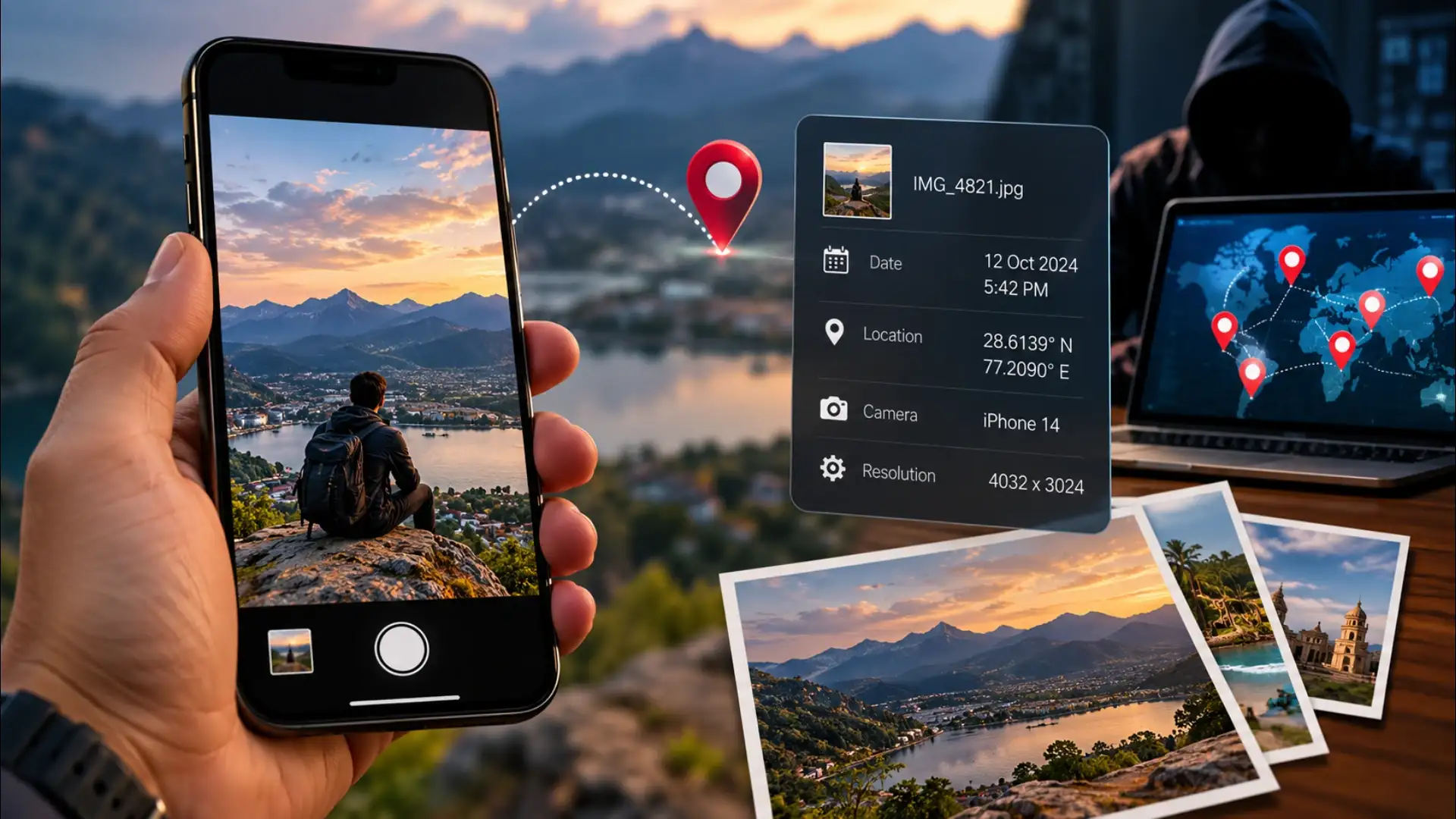
One of the biggest factors is metadata, which is information stored alongside a digital file. Photos taken with smartphones can potentially contain GPS coordinates showing where the picture was captured. This information is commonly associated with EXIF data.
Whether those details remain attached to a photo depends on the device, app and platform involved. Some social media services remove or strip certain metadata when an image is uploaded, but users should not assume that every platform handles photos in exactly the same way.
A street sign, railway station, distinctive building, shop name, road marking or even a recognisable skyline can help identify a location. A reflection in a window or vehicle mirror may occasionally reveal additional surroundings.
There is another, less obvious risk. Posting several photos over time can create a pattern. A person might share a morning coffee near their office, a gym photograph in the evening and a regular weekend location. Individually, these images may reveal little. Together, they can provide a surprisingly detailed picture of someone's routine.
For example, saying that you are "back at my favourite café" while posting a recognisable image could effectively confirm that you are at that location in real time.
This matters particularly for people with public profiles, children who share school-related photographs, journalists, influencers and anyone whose routine is easy to predict.
It is also worth looking at the background before sharing an image. A house number, office badge, school sign or identifiable landmark can disclose more than intended.
Most importantly, avoid routinely announcing your exact location while you are still there. Sharing a photograph after leaving a place can reduce the amount of real-time information available to strangers.
Can Someone Find Your Location From a Photo?
Yes, in some circumstances, someone can work out your location from a photo you post online. However, it is usually not as simple as uploading a picture and instantly discovering someone's exact address.One of the biggest factors is metadata, which is information stored alongside a digital file. Photos taken with smartphones can potentially contain GPS coordinates showing where the picture was captured. This information is commonly associated with EXIF data.
Whether those details remain attached to a photo depends on the device, app and platform involved. Some social media services remove or strip certain metadata when an image is uploaded, but users should not assume that every platform handles photos in exactly the same way.
The Clues Hidden Inside an Ordinary Picture
Even when GPS information is removed, the photograph itself can reveal useful clues.A street sign, railway station, distinctive building, shop name, road marking or even a recognisable skyline can help identify a location. A reflection in a window or vehicle mirror may occasionally reveal additional surroundings.
There is another, less obvious risk. Posting several photos over time can create a pattern. A person might share a morning coffee near their office, a gym photograph in the evening and a regular weekend location. Individually, these images may reveal little. Together, they can provide a surprisingly detailed picture of someone's routine.
Why Social Media Makes This Risk More Relevant
Public posts can be viewed, copied and analysed far beyond the audience originally intended. Location tags and captions can make the process even easier.For example, saying that you are "back at my favourite café" while posting a recognisable image could effectively confirm that you are at that location in real time.
This matters particularly for people with public profiles, children who share school-related photographs, journalists, influencers and anyone whose routine is easy to predict.
How to Reduce the Risk
Before posting a photo, check whether location services are enabled for your camera app and review the privacy settings on your phone. Avoid adding precise location tags unless there is a genuine reason to do so.It is also worth looking at the background before sharing an image. A house number, office badge, school sign or identifiable landmark can disclose more than intended.
Most importantly, avoid routinely announcing your exact location while you are still there. Sharing a photograph after leaving a place can reduce the amount of real-time information available to strangers.
Next Story