
China Proposes New Solar Technology Export Controls: What It Could Mean for India

Solar energy has become an important part of the global transition towards lower-carbon electricity. But expanding solar power requires more than installing panels. Countries also need access to manufacturing equipment, specialised materials and the technologies used to produce solar cells efficiently.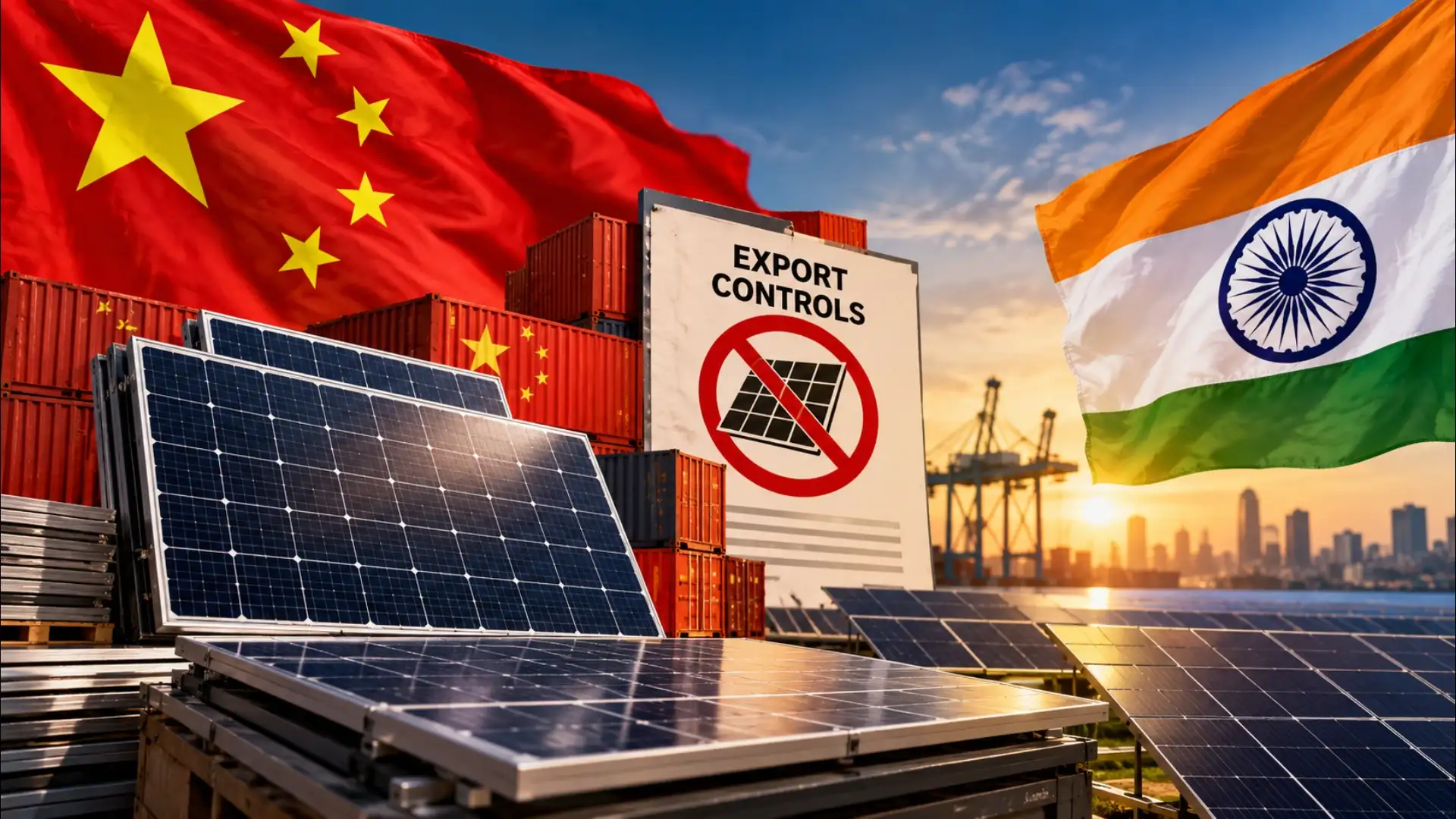
China proposed new export controls covering 12 solar-manufacturing technologies on 16 October 2026, according to Reuters reporting published on 18 October. The proposal forms part of a wider review covering strategically important technologies. For India, which is seeking to strengthen domestic solar manufacturing, the development raises questions about supply chains, technology access and the cost of building local production capacity.
The technologies include processes associated with thin wafers, perovskite and tandem solar cells, and fluidised-bed polysilicon production .
The proposed measures form part of a broader review that also covers artificial intelligence and biotechnology.
China has cited national security concerns and the growing use of some technologies in sensitive sectors.
The proposal is not a blanket prohibition on exporting every solar product. Its practical effect will depend on the final scope of the controls, licensing arrangements and any exceptions.
Improvements in manufacturing processes can affect production costs, energy consumption and the amount of electricity a panel can generate from available sunlight.
Perovskite and tandem solar cells are of particular research interest because they offer potential pathways to higher conversion efficiency.
However, different technologies have different manufacturing requirements, commercial readiness and durability challenges.
Restricting access to specific manufacturing knowledge could influence how quickly companies in other countries adopt particular production methods.
If the proposed restrictions cover technologies that Indian manufacturers need, companies may have to reconsider sourcing arrangements, licensing requirements or investment plans.
The actual impact will depend on which technologies are affected and whether Indian firms already possess alternative capabilities.
Businesses should not assume that every existing solar import will become more expensive or unavailable.
The proposal concerns specified technologies and their transfer, not necessarily all finished solar panels.
Solar manufacturers and investors should monitor the final regulations, assess their supply-chain exposure and examine whether alternative production methods are commercially viable.
For India, the development reinforces the importance of developing technical expertise alongside manufacturing capacity.
Expanding domestic production can improve resilience, but building a competitive solar industry also requires investment in research, skilled workers, equipment and reliable access to materials.
China proposed new export controls covering 12 solar-manufacturing technologies on 16 October 2026, according to Reuters reporting published on 18 October. The proposal forms part of a wider review covering strategically important technologies. For India, which is seeking to strengthen domestic solar manufacturing, the development raises questions about supply chains, technology access and the cost of building local production capacity.
What Has China Proposed?
China's Ministry of Commerce has proposed adding 12 technologies used in solar equipment manufacturing to its export-control catalogue.The technologies include processes associated with thin wafers, perovskite and tandem solar cells, and fluidised-bed polysilicon production .
The proposed measures form part of a broader review that also covers artificial intelligence and biotechnology.
China has cited national security concerns and the growing use of some technologies in sensitive sectors.
The proposal is not a blanket prohibition on exporting every solar product. Its practical effect will depend on the final scope of the controls, licensing arrangements and any exceptions.
Why Are These Technologies Important?
Solar manufacturing involves several stages, from producing polysilicon and wafers to manufacturing cells and assembling panels.Improvements in manufacturing processes can affect production costs, energy consumption and the amount of electricity a panel can generate from available sunlight.
Perovskite and tandem solar cells are of particular research interest because they offer potential pathways to higher conversion efficiency.
However, different technologies have different manufacturing requirements, commercial readiness and durability challenges.
Restricting access to specific manufacturing knowledge could influence how quickly companies in other countries adopt particular production methods.
Could India Be Affected?
India has been working to expand its domestic renewable energy manufacturing capabilities and reduce dependence on imported equipment.If the proposed restrictions cover technologies that Indian manufacturers need, companies may have to reconsider sourcing arrangements, licensing requirements or investment plans.
The actual impact will depend on which technologies are affected and whether Indian firms already possess alternative capabilities.
Businesses should not assume that every existing solar import will become more expensive or unavailable.
The proposal concerns specified technologies and their transfer, not necessarily all finished solar panels.
What Should Manufacturers Watch Next?
China's public consultation period is scheduled to run until 15 November 2026, according to Reuters.Solar manufacturers and investors should monitor the final regulations, assess their supply-chain exposure and examine whether alternative production methods are commercially viable.
For India, the development reinforces the importance of developing technical expertise alongside manufacturing capacity.
Expanding domestic production can improve resilience, but building a competitive solar industry also requires investment in research, skilled workers, equipment and reliable access to materials.
Next Story