
Delhi Durga Puja Traffic Advisory: Routes to Avoid and Travel Tips Until 20 October

Festival celebrations can transform familiar neighbourhoods into busy gathering places. In Delhi, Durga Puja attracts visitors to temporary pandals, cultural programmes and community events, particularly in areas with established Bengali communities. The increased movement of people can affect road traffic, parking and local transport.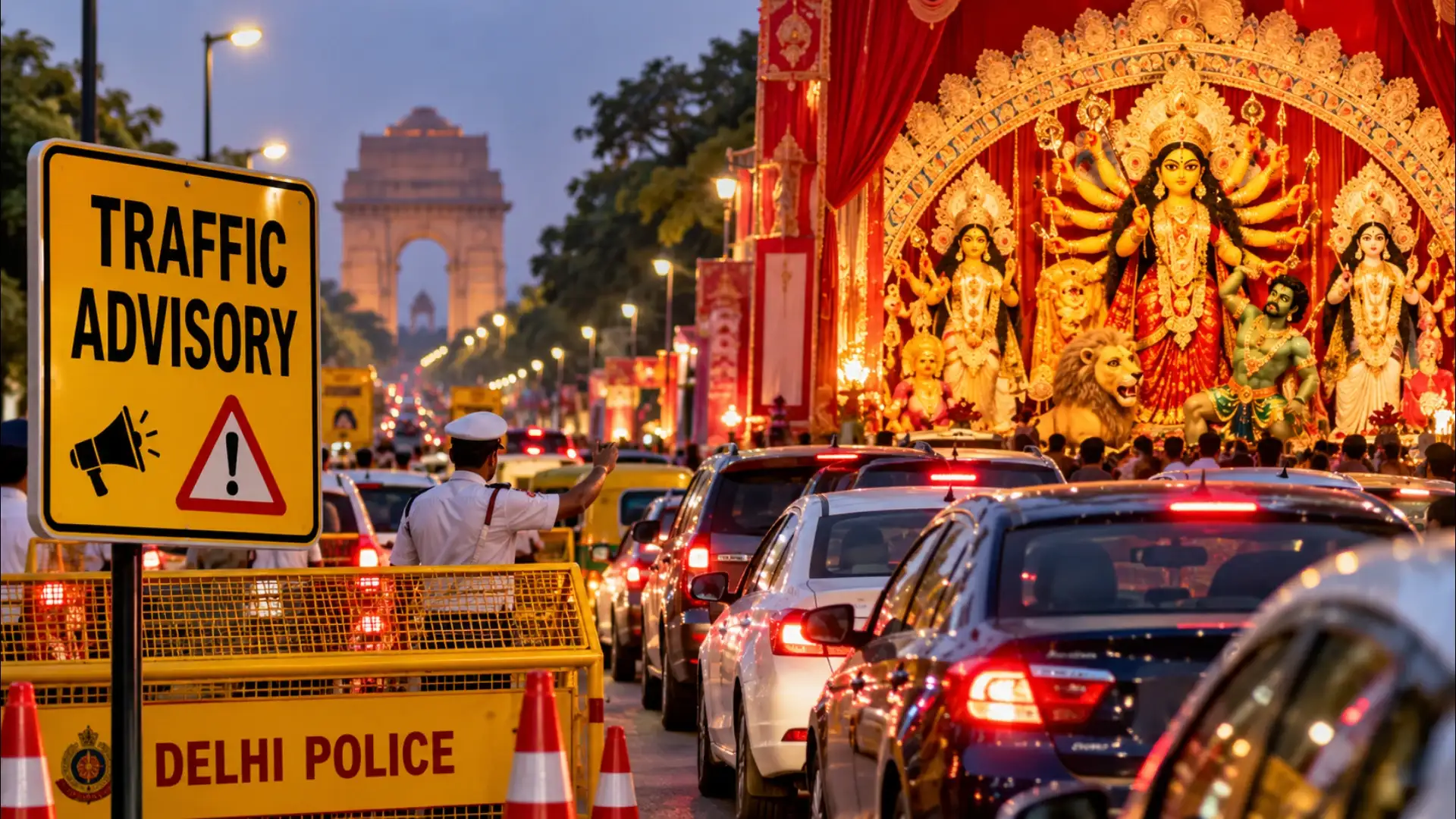
Delhi's traffic authorities have issued advisories for festival-related movement during October. A notice reported on 16 October identified restrictions and expected congestion around Chittaranjan Park and Greater Kailash-II. The arrangements are relevant to commuters, residents and visitors who need to cross these neighbourhoods during the celebrations.
These neighbourhoods host Durga Puja events that attract visitors from across the capital. Roads close to popular venues can become congested as pedestrians, private vehicles and public transport users converge.
The reported restrictions apply from 16 to 20 October, with arrangements operating from 4 pm until midnight in the areas covered by the specific advisory.
Motorists should check the latest local instructions before travelling because the precise restrictions may differ by road and event.
Even a relatively short journey can take longer when vehicles approach popular venues at the same time.
Parking close to a pandal may also be difficult, particularly during evening prayer and cultural programmes.
Drivers who rely on familiar routes should not assume that normal arrangements will remain unchanged during a major public event.
Travellers can check Metro routes and station locations before leaving home, then plan the final part of the journey according to the distance between the station and their destination.
The Metro will not eliminate every delay, and visitors should check the latest service information rather than assume that all connections will be convenient.
Those travelling with older people or children should allow additional time and identify a suitable meeting point in case the group becomes separated.
Avoid stopping or parking in unauthorised areas, and follow diversions indicated by traffic personnel. If a journey is not essential, travelling outside peak festival hours may be more convenient.
Residents should also account for access restrictions when arranging deliveries or picking up family members.
The practical lesson is simple: checking current traffic arrangements before leaving can prevent avoidable delays and make festival travel easier for everyone.
Delhi's traffic authorities have issued advisories for festival-related movement during October. A notice reported on 16 October identified restrictions and expected congestion around Chittaranjan Park and Greater Kailash-II. The arrangements are relevant to commuters, residents and visitors who need to cross these neighbourhoods during the celebrations.
Which Areas Are Affected?
The reported advisory covers festival-related traffic arrangements in Chittaranjan Park, commonly known as CR Park, and Greater Kailash-II.These neighbourhoods host Durga Puja events that attract visitors from across the capital. Roads close to popular venues can become congested as pedestrians, private vehicles and public transport users converge.
The reported restrictions apply from 16 to 20 October, with arrangements operating from 4 pm until midnight in the areas covered by the specific advisory.
Motorists should check the latest local instructions before travelling because the precise restrictions may differ by road and event.
Why Can Traffic Become Difficult During Festivals?
Festival traffic is influenced by several factors, including visitor numbers, temporary parking arrangements, pedestrian movement and the availability of road space.Even a relatively short journey can take longer when vehicles approach popular venues at the same time.
Parking close to a pandal may also be difficult, particularly during evening prayer and cultural programmes.
You may also like
- Winter is coming: From capacity to safety, the things you cannot miss in your next Geyser
- Samsung Galaxy F70 5G Design, Camera and Battery Specifications Revealed
- Tecno Spark 50S 5G Price in India Revealed, Sale Begins October 20
- Redmi K100 Set to Launch Soon With 185Hz OLED Display and 10,000mAh Battery
- Fake Google Chrome app with over 1 lakh downloads found on Google Play: How to spot and what to do next
Drivers who rely on familiar routes should not assume that normal arrangements will remain unchanged during a major public event.
Should Visitors Use the Delhi Metro?
Public transport can reduce the need to find parking near crowded venues.Travellers can check Metro routes and station locations before leaving home, then plan the final part of the journey according to the distance between the station and their destination.
The Metro will not eliminate every delay, and visitors should check the latest service information rather than assume that all connections will be convenient.
Those travelling with older people or children should allow additional time and identify a suitable meeting point in case the group becomes separated.
How Can Commuters Avoid Unnecessary Delays?
Check the official traffic advisory before departure and allow extra time for essential journeys.Avoid stopping or parking in unauthorised areas, and follow diversions indicated by traffic personnel. If a journey is not essential, travelling outside peak festival hours may be more convenient.
Residents should also account for access restrictions when arranging deliveries or picking up family members.
The practical lesson is simple: checking current traffic arrangements before leaving can prevent avoidable delays and make festival travel easier for everyone.






Loving Newspoint? Download the app now
