
Dell CEO Michael Dell, biggest contributor to Trump Accounts, advice to businesses on what never to ask other people


Michael Dell , the founder and CEO of Dell Technologies and one of the biggest contributors to the Trump Accounts initiative, has a simple piece of advice for entrepreneurs and business leaders: don't ask other people whether your big idea is a good one. Speaking in an interview with Fortune, Dell said that breakthrough businesses are often built on ideas that others initially dismiss. According to the billionaire executive, entrepreneurs should focus on creating something unique and differentiated instead of seeking validation from people who may not share their vision. His point is that most people will dismiss anything unfamiliar, so he says to trust your own instincts about whether a product or business will succeed over the long run. Fortune has revisited his advice now that his company is valued at $302 billion as of October 30. Dell also told Fortune that to make it big, an idea has to be unique, and differentiated from anything others are doing.
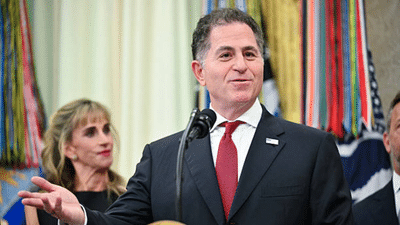
Michael Dell: If you go and ask people, most will tell you noReflecting on his entrepreneurial journey, Dell said risk-taking played a crucial role in building what has become a technology company valued at more than $300 billion.
"If you want to really make it big, you better come up with something unique," Dell told Fortune. He added that successful ideas need to be differentiated from what everyone else is doing.
His strongest advice, however, was directed at founders looking for approval before launching a product or business. "If you go and ask people if it's a good idea, most of them will tell you no," Dell said. "So don't go ask." According to Dell, entrepreneurs should trust their instincts and vision rather than relying too heavily on external opinions, especially in the early stages of building a business.
From a dorm room to a $302 billion companyDell took up pre-med at the University of Texas in 1983 to please his parents, according to Entrepreneur, but he had long been fascinated by computers. According to the 1999 biography Direct From Dell, he took apart an Apple II at 15 to see how it worked. At 19, he began selling PC upgrade kits to other students in his dorm, which launched his business. Like Apple’s Steve Jobs, he was a college dropout.
He started with just $1,000, and his manufacturing team consisted of “three guys with screwdrivers sitting at six-foot tables,” he said in the book. “You have to embrace risk, and you have to accept failure,” he told Fortune.
Embracing risk and failureDell says a willingness to take risks has remained central to his leadership philosophy. "You have to embrace risk, and you have to accept failure," he told Fortune, arguing that excessive focus on avoiding risk often stifles innovation. The billionaire contrasted entrepreneurial thinking with the approach commonly found inside large corporations, where risk management frequently takes precedence over experimentation.
"Big companies generally aren't good at taking risks," Dell said. "If you talk about risk, they'll talk about the risk reduction, and the risk committee, and the risk management, and all those say the risk is bad. Well, if you don't have risk, you don't have innovation."
Early entrepreneurial instinctsLong before founding Dell Technologies, Dell displayed an entrepreneurial streak while attending high school in Houston. He sold newspaper subscriptions for the Houston Post and developed a targeted marketing strategy focused on newly married couples.
By identifying households most likely to subscribe and reaching them through direct-mail campaigns, Dell reportedly earned $18,000 in a single year, more than some of his teachers were making at the time. The experience would later influence Dell's direct-sales business model, helping the company become the world's largest PC maker by 2001.
Building a $302 billion companyDell's company has undergone multiple transformations over the decades. After taking the company private in a $24.4 billion buyout in 2013, Dell orchestrated the $67 billion acquisition of EMC, one of the largest technology deals ever completed. Today, Dell Technologies has a market value of roughly $302 billion, while Michael Dell's personal fortune is estimated at around $234 billion.
Last year, Dell and his wife, Susan Dell, pledged $6.25 billion to help seed Trump Accounts for millions of American children, making them among the largest contributors to the initiative. Despite building one of the world's most valuable technology companies, Dell says the formula for innovation has remained unchanged: take risks, accept failure and avoid seeking permission for every bold idea. "We've got hundreds of projects, and they're not all going to work out," Dell told Fortune. "That's okay."
Next Story