
Explained: What is CNAP, government's new Caller Name Display Service, becoming mandatory from November 1; how it works and all you need to know


The Department of Telecommunications (DoT) has directed telecom operators to introduce Calling Name Presentation (CNAP) from November 1. With this feature, your phone will essentially show the names of the people calling you if you have not saved their numbers without requiring users to download an app or sign up separately. Here is what the service is, how it works and what it means for you.
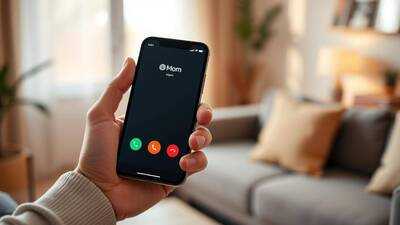
What is Calling Name Presentation (CNAP)CNAP is a service that displays the caller’s name on the recipient’s phone. Users do not need to sign up for it separately. To begin with, the service will be available on 4G and higher-generation networks. Whether it comes to 2G, 3G and landline networks will be decided separately.
What will users see when a call comes inWhen the service will be rolled out, the name on the phone’s screen depends on who is calling:
Notably, when a call reaches the recipient’s network, the operator on the receiving end fetches the name from this database and shows it on the recipient’s screen. This essentially means that if your number is on your father’s name, your father’s name will appear on the screen.
The DoT’s instructions apply to all telecom service providers that hold an authorisation or licence to provide access services. They must roll out the service across their service areas from November 1, 2026.
Importantly, users who have chosen the calling line identification restriction (CLIR) facility, under existing guidelines, will not have their names displayed. For everyone else, what appears depends on whether the number is saved in your contacts and, if not, on the rules for domestic and international calls described above.
What CNAP means for businessesOperators may offer businesses and users with bulk connections a separate facility to display a preferred name instead of the name in their subscriber records. The name has to be verified. It must be either a trademark registered in the user’s name with the trade marks registry, under the Controller General of Patents, Designs and Trade Marks (Department for Promotion of Industry and Internal Trade, Ministry of Commerce and Industry), or a trade name registered on the Goods and Services Tax (GST) portal.
For new connections, the preferred name must be recorded on both the customer application form and the subscriber data record.
For existing connections, operators must create a way for businesses to apply to have their preferred names recorded. The name can be updated in the subscriber data record once the application has been examined and properly verified.
What about data and security with CNAP service The DoT has set safeguards to protect communications and to make sure the service does not affect the quality of telecom services. Operators must follow a security-by-design approach. The system that looks up the name must make sure it is not kept after the incoming call ends.
Operators must make sure their databases, networks and connectivity can handle name queries efficiently and deliver the information on time. Service quality must be maintained as required by law.
Users will have a way to raise complaints about the service. Every operator must put in place technical and organisational measures to receive, record and maintain complaints, and resolve them within a set timeframe.
What is Calling Name Presentation (CNAP)CNAP is a service that displays the caller’s name on the recipient’s phone. Users do not need to sign up for it separately. To begin with, the service will be available on 4G and higher-generation networks. Whether it comes to 2G, 3G and landline networks will be decided separately.
What will users see when a call comes inWhen the service will be rolled out, the name on the phone’s screen depends on who is calling:
- Number saved in your contacts: Users will see the name you have stored for that contact.
- Unsaved domestic number: Users will see the name recorded in the subscriber records of the caller’s telecom operator.
- Unsaved international number: Users will see “International Call” instead of a name. This applies to calls between two countries where either India or the other country is the point of origin or destination.
Notably, when a call reaches the recipient’s network, the operator on the receiving end fetches the name from this database and shows it on the recipient’s screen. This essentially means that if your number is on your father’s name, your father’s name will appear on the screen.
The DoT’s instructions apply to all telecom service providers that hold an authorisation or licence to provide access services. They must roll out the service across their service areas from November 1, 2026.
Importantly, users who have chosen the calling line identification restriction (CLIR) facility, under existing guidelines, will not have their names displayed. For everyone else, what appears depends on whether the number is saved in your contacts and, if not, on the rules for domestic and international calls described above.
What CNAP means for businessesOperators may offer businesses and users with bulk connections a separate facility to display a preferred name instead of the name in their subscriber records. The name has to be verified. It must be either a trademark registered in the user’s name with the trade marks registry, under the Controller General of Patents, Designs and Trade Marks (Department for Promotion of Industry and Internal Trade, Ministry of Commerce and Industry), or a trade name registered on the Goods and Services Tax (GST) portal.
For new connections, the preferred name must be recorded on both the customer application form and the subscriber data record.
For existing connections, operators must create a way for businesses to apply to have their preferred names recorded. The name can be updated in the subscriber data record once the application has been examined and properly verified.
What about data and security with CNAP service The DoT has set safeguards to protect communications and to make sure the service does not affect the quality of telecom services. Operators must follow a security-by-design approach. The system that looks up the name must make sure it is not kept after the incoming call ends.
Operators must make sure their databases, networks and connectivity can handle name queries efficiently and deliver the information on time. Service quality must be maintained as required by law.
Users will have a way to raise complaints about the service. Every operator must put in place technical and organisational measures to receive, record and maintain complaints, and resolve them within a set timeframe.
Next Story