
Festive Shopping Guide: How to Avoid Impulse Purchases During Big Sales

Festive shopping remains an important part of India's retail economy, but consumers are becoming more selective about how they spend. Clothing, food, household essentials and gifts continue to attract buyers, while higher prices can make expensive purchases harder to justify.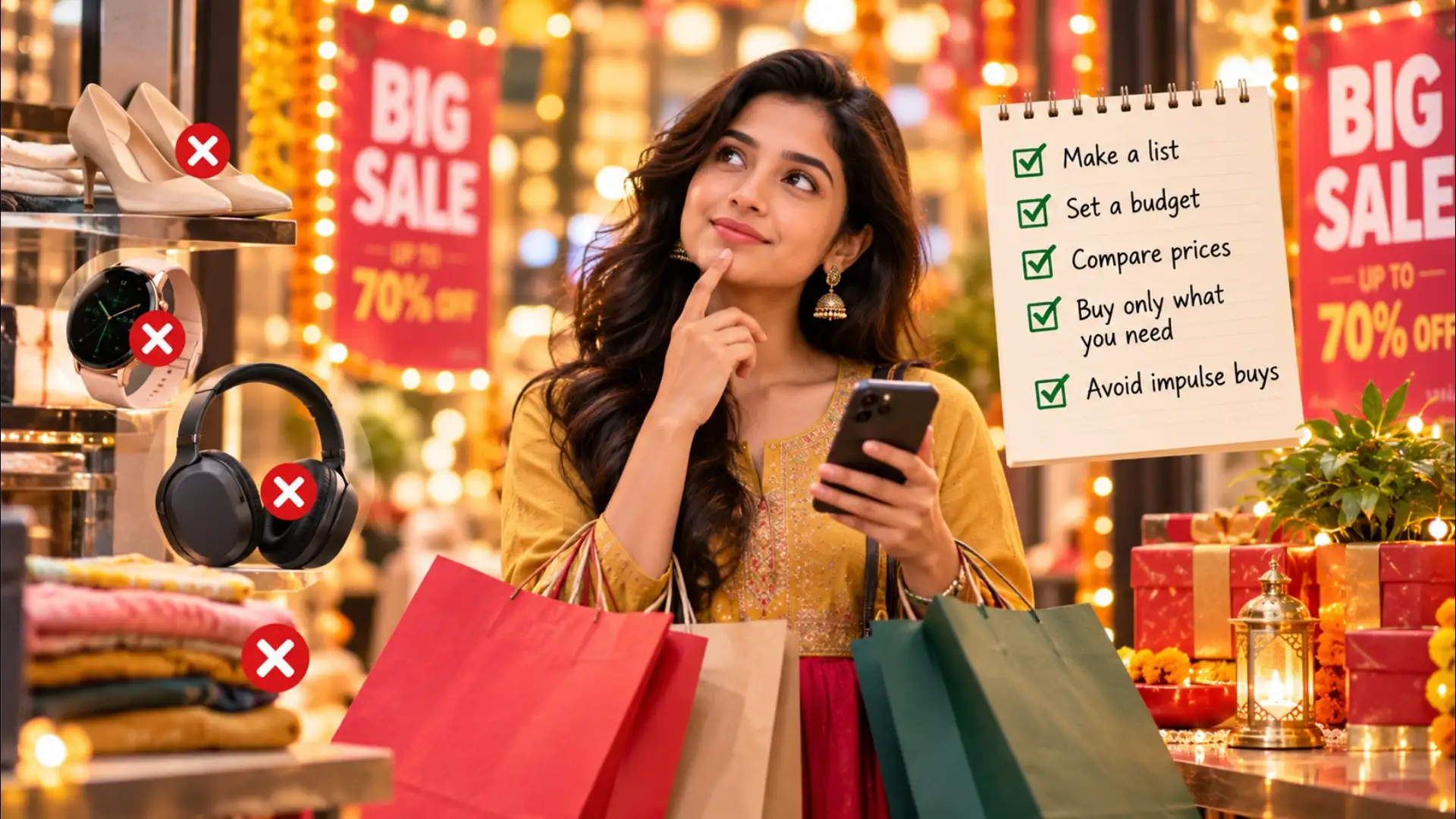
A report published by The Economic Times on 16 October 2026 highlighted a more cautious approach among Indian shoppers. Many consumers intend to maintain their festive budgets while seeking better value, and others plan to reduce non-essential spending. The trend offers a useful lesson for households: discounts can help, but only when purchases fit a realistic budget.
According to the report, 26% of respondents planned to maintain their usual festive budget while shopping more carefully. Another 23% intended to cut non-essential purchases, while 14% expected to spend more than in the previous year.
Clothing and fashion remained the leading planned spending category, followed by groceries, food and sweets.
These figures describe reported intentions and survey findings. Actual purchases may differ as the festive season continues.
Consumers may prioritise essentials, compare products more carefully or postpone expensive purchases. Some may also choose less costly alternatives rather than abandoning a purchase altogether.
Online marketplaces make price comparisons easier, but they can also encourage impulse buying through countdowns, personalised recommendations and limited-time promotions.
The availability of an attractive discount does not automatically mean a purchase offers good value.
Decide how much remains available for discretionary purchases before browsing sales.
For expensive products, compare the final price across several sellers and check delivery charges, warranties and return conditions.
If you are considering buying jewellery or electronics, distinguish between an item you genuinely need and one that looks attractive because of a promotion.
A written budget can help prevent multiple small purchases from adding up to a larger-than-expected bill.
Instalment plans can make an expensive purchase appear more affordable, but buyers should examine the total repayment amount, processing fees and penalties.
Avoid borrowing simply to maintain a festive spending pattern that your income cannot comfortably support.
The broader trend towards value-conscious shopping does not mean consumers have stopped celebrating. It suggests that many households are balancing enjoyment with financial caution.
A report published by The Economic Times on 16 October 2026 highlighted a more cautious approach among Indian shoppers. Many consumers intend to maintain their festive budgets while seeking better value, and others plan to reduce non-essential spending. The trend offers a useful lesson for households: discounts can help, but only when purchases fit a realistic budget.
What Do the Latest Shopping Trends Show?
The Economic Times reported findings from YouGov's India Festive Shopping Report 2026, based on a survey of 1,077 consumers.According to the report, 26% of respondents planned to maintain their usual festive budget while shopping more carefully. Another 23% intended to cut non-essential purchases, while 14% expected to spend more than in the previous year.
Clothing and fashion remained the leading planned spending category, followed by groceries, food and sweets.
These figures describe reported intentions and survey findings. Actual purchases may differ as the festive season continues.
Why Are Shoppers Becoming More Selective?
Higher prices can make it harder for households to increase spending across every category.Consumers may prioritise essentials, compare products more carefully or postpone expensive purchases. Some may also choose less costly alternatives rather than abandoning a purchase altogether.
Online marketplaces make price comparisons easier, but they can also encourage impulse buying through countdowns, personalised recommendations and limited-time promotions.
You may also like
- Awan Roy and Suntosh Panikkar on what AI still needs to get customer support right
- San Francisco techie shuts down video game that had players killing 'homeless people'; says: Made a personal donation to …
- Govt asks Meta to review Facebook and Instagram recommendation systems
- Apple's First Foldable iPhone Sells Out Within Hours! Delivery Delays Stretch to January 2027
- Bank Fraud Alert 2026: Money Missing From Your Account at Midnight? Report It Immediately Using These Steps
The availability of an attractive discount does not automatically mean a purchase offers good value.
How Can You Set a Realistic Festive Budget?
Start by listing essential expenses, including groceries, travel, gifts and household requirements.Decide how much remains available for discretionary purchases before browsing sales.
For expensive products, compare the final price across several sellers and check delivery charges, warranties and return conditions.
If you are considering buying jewellery or electronics, distinguish between an item you genuinely need and one that looks attractive because of a promotion.
A written budget can help prevent multiple small purchases from adding up to a larger-than-expected bill.
Are Discounts and Instalment Plans Always Worth It?
No. A discount is useful only if the product is needed and the final price is competitive.Instalment plans can make an expensive purchase appear more affordable, but buyers should examine the total repayment amount, processing fees and penalties.
Avoid borrowing simply to maintain a festive spending pattern that your income cannot comfortably support.
The broader trend towards value-conscious shopping does not mean consumers have stopped celebrating. It suggests that many households are balancing enjoyment with financial caution.






Loving Newspoint? Download the app now
