
Google Gemini 4 Argon Arrives: What Is New and How Can You Use It?

Artificial intelligence assistants are gradually moving beyond answering questions and generating text. Newer systems are being designed to handle complex instructions, work across applications and help users complete tasks that previously required several manual steps.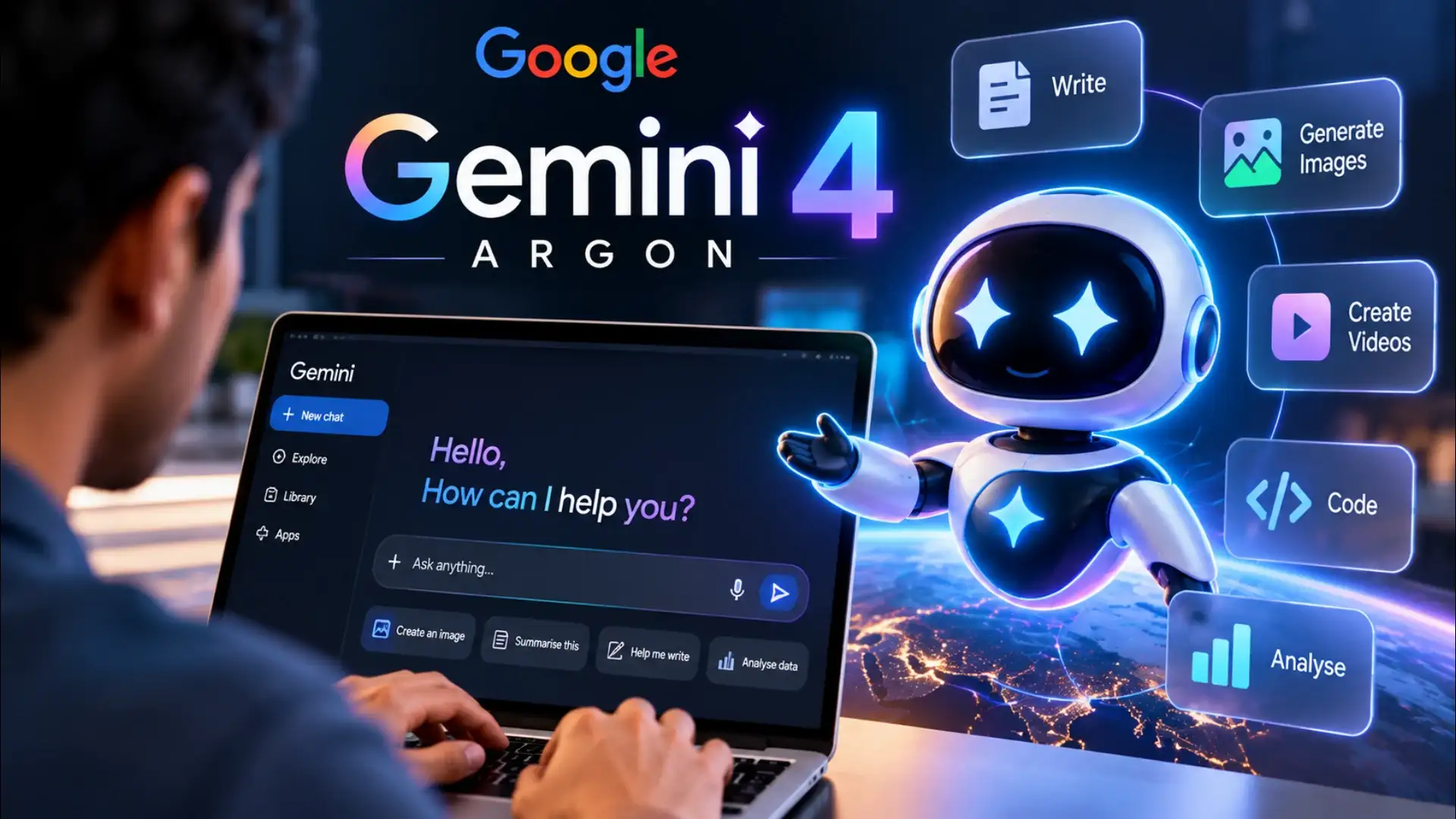
Google's latest Gemini 4 Argon release, announced on 13 October 2026, reflects this shift. The company is positioning the model for advanced reasoning, coding and multi-step work. Its arrival raises an important question for everyday users: can a more capable AI assistant genuinely save time, or does it still require careful human supervision?
Google says the model produces more direct answers, reduces unnecessary repetition and provides clearer progress updates during longer tasks. These improvements could make extended interactions easier to follow.
However, advertised capabilities should not be confused with guaranteed results. An AI model may still misunderstand instructions, overlook important details or generate incorrect information.
According to Google's announcement, eligible subscribers can use Gemini to carry out tasks across connected applications. The available integrations include services associated with shopping, bookings, design and business activities.
For example, a user might ask an assistant to organise information, prepare a draft or coordinate several steps towards a defined goal. Developers can also explore the model for complex coding and research workflows .
The practical benefit depends on which integrations are available, the permissions granted and the complexity of the task.
Users should check important calculations, confirm bookings, review generated code and verify factual claims before acting on them. Financial, legal, medical and security-related decisions deserve particular scrutiny.
Privacy is another consideration. Before connecting applications, users should understand which information the assistant can access and what permissions they are granting.
For users, the sensible approach is to start with low-risk activities, measure the time saved and verify the output. The most useful AI assistant will not necessarily be the one with the longest feature list, but the one that completes a real task accurately and transparently.
Google's latest Gemini 4 Argon release, announced on 13 October 2026, reflects this shift. The company is positioning the model for advanced reasoning, coding and multi-step work. Its arrival raises an important question for everyday users: can a more capable AI assistant genuinely save time, or does it still require careful human supervision?
What Is Gemini 4 Argon?
Gemini 4 Argon is Google's flagship AI model designed for demanding tasks that require reasoning across multiple steps. Its intended applications include software development, research and business workflows.Google says the model produces more direct answers, reduces unnecessary repetition and provides clearer progress updates during longer tasks. These improvements could make extended interactions easier to follow.
However, advertised capabilities should not be confused with guaranteed results. An AI model may still misunderstand instructions, overlook important details or generate incorrect information.
How Can Users Benefit From the New Features?
One important development is the integration of task-oriented capabilities into Google's AI ecosystem.According to Google's announcement, eligible subscribers can use Gemini to carry out tasks across connected applications. The available integrations include services associated with shopping, bookings, design and business activities.
For example, a user might ask an assistant to organise information, prepare a draft or coordinate several steps towards a defined goal. Developers can also explore the model for complex coding and research workflows .
The practical benefit depends on which integrations are available, the permissions granted and the complexity of the task.
Why Human Supervision Still Matters
A capable AI assistant is not automatically a reliable decision-maker.Users should check important calculations, confirm bookings, review generated code and verify factual claims before acting on them. Financial, legal, medical and security-related decisions deserve particular scrutiny.
Privacy is another consideration. Before connecting applications, users should understand which information the assistant can access and what permissions they are granting.
What Does This Mean for Everyday AI Use?
Gemini 4 Argon represents a broader movement towards AI systems that can help execute tasks rather than simply describe how to complete them.For users, the sensible approach is to start with low-risk activities, measure the time saved and verify the output. The most useful AI assistant will not necessarily be the one with the longest feature list, but the one that completes a real task accurately and transparently.
Next Story