
How to choose the right dishwasher for an Indian kitchen


Dinner time is over. Steel plates, bowls, glasses, oily woks, and a pressure cooker lid are placed by the sink. The dishwasher may have space for plates, but what about the bigger utensils? Can their materials withstand a dishwasher? Which cycle is apt for a vessel that has oily gravy?
Before purchasing a dishwasher in India, these are some key questions that need answering. Capacity, rack design, wash cycles, water conditions and installation determine the part that a dishwasher will play in the daily wash of utensils.
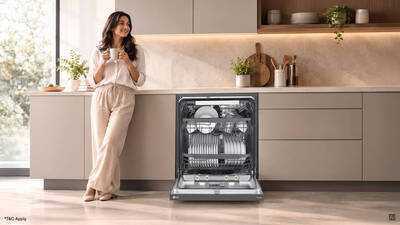
Begin with a 14-15-place setting model, depending on your home’s typical load. Measure your large utensils, and check their dishwasher compatibility. Look for an intensive programme if you regularly cook with oil, spices and thick gravies. If the water is hard, look out for the machine’s water-softening requirements before assessing prices.
A guide to picking a dishwasher for your kitchen
1. Choose capacity around your actual utensils
Dishwasher capacity is measured in place settings, a standardised measure of tableware. A large plate or wok can take up space that would otherwise hold several smaller items. A 12-place-setting machine may suit a smaller household with moderate daily loads. A 14- or 15-place-setting model may offer more flexibility when several people eat at home or when the dishwasher needs to accommodate cookware as well as plates and bowls.
2. Understand the installation type and measure the space
A freestanding standard dishwasher size is commonly around 60 cm wide, 85 cm high and 60 cm deep. Measure the available width, height and depth, then allow for the door to open and the racks to slide out. Check where the water inlet and drain hose will connect, and confirm the electrical supply and earthing requirements in the installation manual. If the machine will sit beneath a countertop, check the manufacturer's clearance requirements before ordering. These checks can prevent an expensive mistake: A dishwasher that fits between two cabinets may still be difficult to install if the drain connection or door clearance is inadequate.
3. Check whether the cookware can be placed inside
The material and construction of each utensil determine whether machine washing is appropriate. Brands like LG offer dishwashers that deliver flexibility with EasyRack™ Plus. The dishwasher’s adjustable racks ensure that loading utensils ranging from a heavy wok to delicate glassware is an easy task. It is also advisable to avoid washing aluminium, copper, brass, wooden utensils, cast iron cookware, non-stick pans (unless marked dishwasher-safe), and delicate crystal or hand-painted cookware in the dishwasher. Always refer to the dishwasher manual and the cookware manufacturer’s instructions.
4. Match the wash cycle to the food residue
Understanding what each cycle does can change the way you go about using your dishwasher. Each setting serves a purpose, so picking a suitable one from the start can help one clean dishes without wasting water, energy or time.
LG’s DFB335HM lists TruesteamTM, which penetrates and removes stubborn spice stains. QuadWash™ ensures that multi-motion spray arms and high-pressure jets offer maximum coverage to clean utensils for the first time.
5. Assess noise and connectivity
Noise ratings are expressed in decibels, or dBA. Take a look at the levels mentioned when the dishwasher will run near a living or sleeping area, also do take note that installation and surrounding surfaces can impact the sound one hears. The LG DFB335HM has been designed with fewer moving parts, so as to deliver a quieter performance. WiFi connectivity and app-based controls offer notifications and remote monitoring. With the LG ThinQ App, download new wash cycles to meet your needs like pots and pans, glassware etc.
*The noise may vary from product to product and model to model
Frequently Asked Questions (FAQs)
Which dishwasher capacity suits an Indian family?
A 12-place-setting model may suit a smaller household, while 14- or 15-place-setting machines offer more room for larger loads. The dimensions and arrangement of your cookware determine how much will fit.
What to do about the food odours after use?
LG recommends cleaning the filter once evey 1-2 weeks to remove odours. To sterilise the inside of the dishwasher, pour 200 to 300 ml of white vinegar in a shallow bowl, place it in the top basket, and run it on Auto Cycle.
Can one wash plastic containers in the dishwasher?
Yes, but only if they are made of heat-resistant plastics; regular plastics can become deformed in high-temperature washes.
How much water does a dishwasher use in one cycle exactly?
This depends on the cycle or programme that’s chosen as each cycle consumes varied amount of water. But generally, a regular cycle would use around 9 litres of water.
Does a dishwasher remove oil stains and burnt food?
An appropriate programme and detergent can clean many oily and dried-on residues. Scrape off food before loading, and soak severely burnt-on residue when necessary. Results vary with the residue, cookware and wash cycle.
What should one verify before making an online purchase?
Check the exact model number, dimensions, capacity, cookware compatibility, wash programmes, water-softening requirements, warranty, installation charges and local service availability. Confirm the current price immediately before purchase.
Disclaimer: This article has been produced on behalf of LG by Times Internet’s Spotlight team.
Before purchasing a dishwasher in India, these are some key questions that need answering. Capacity, rack design, wash cycles, water conditions and installation determine the part that a dishwasher will play in the daily wash of utensils.
Begin with a 14-15-place setting model, depending on your home’s typical load. Measure your large utensils, and check their dishwasher compatibility. Look for an intensive programme if you regularly cook with oil, spices and thick gravies. If the water is hard, look out for the machine’s water-softening requirements before assessing prices.
A guide to picking a dishwasher for your kitchen
1. Choose capacity around your actual utensils
Dishwasher capacity is measured in place settings, a standardised measure of tableware. A large plate or wok can take up space that would otherwise hold several smaller items. A 12-place-setting machine may suit a smaller household with moderate daily loads. A 14- or 15-place-setting model may offer more flexibility when several people eat at home or when the dishwasher needs to accommodate cookware as well as plates and bowls.
2. Understand the installation type and measure the space
A freestanding standard dishwasher size is commonly around 60 cm wide, 85 cm high and 60 cm deep. Measure the available width, height and depth, then allow for the door to open and the racks to slide out. Check where the water inlet and drain hose will connect, and confirm the electrical supply and earthing requirements in the installation manual. If the machine will sit beneath a countertop, check the manufacturer's clearance requirements before ordering. These checks can prevent an expensive mistake: A dishwasher that fits between two cabinets may still be difficult to install if the drain connection or door clearance is inadequate.
3. Check whether the cookware can be placed inside
The material and construction of each utensil determine whether machine washing is appropriate. Brands like LG offer dishwashers that deliver flexibility with EasyRack™ Plus. The dishwasher’s adjustable racks ensure that loading utensils ranging from a heavy wok to delicate glassware is an easy task. It is also advisable to avoid washing aluminium, copper, brass, wooden utensils, cast iron cookware, non-stick pans (unless marked dishwasher-safe), and delicate crystal or hand-painted cookware in the dishwasher. Always refer to the dishwasher manual and the cookware manufacturer’s instructions.
4. Match the wash cycle to the food residue
Understanding what each cycle does can change the way you go about using your dishwasher. Each setting serves a purpose, so picking a suitable one from the start can help one clean dishes without wasting water, energy or time.
LG’s DFB335HM lists TruesteamTM, which penetrates and removes stubborn spice stains. QuadWash™ ensures that multi-motion spray arms and high-pressure jets offer maximum coverage to clean utensils for the first time.
5. Assess noise and connectivity
Noise ratings are expressed in decibels, or dBA. Take a look at the levels mentioned when the dishwasher will run near a living or sleeping area, also do take note that installation and surrounding surfaces can impact the sound one hears. The LG DFB335HM has been designed with fewer moving parts, so as to deliver a quieter performance. WiFi connectivity and app-based controls offer notifications and remote monitoring. With the LG ThinQ App, download new wash cycles to meet your needs like pots and pans, glassware etc.
*The noise may vary from product to product and model to model
Frequently Asked Questions (FAQs)
Which dishwasher capacity suits an Indian family?
A 12-place-setting model may suit a smaller household, while 14- or 15-place-setting machines offer more room for larger loads. The dimensions and arrangement of your cookware determine how much will fit.
What to do about the food odours after use?
LG recommends cleaning the filter once evey 1-2 weeks to remove odours. To sterilise the inside of the dishwasher, pour 200 to 300 ml of white vinegar in a shallow bowl, place it in the top basket, and run it on Auto Cycle.
Can one wash plastic containers in the dishwasher?
Yes, but only if they are made of heat-resistant plastics; regular plastics can become deformed in high-temperature washes.
How much water does a dishwasher use in one cycle exactly?
This depends on the cycle or programme that’s chosen as each cycle consumes varied amount of water. But generally, a regular cycle would use around 9 litres of water.
Does a dishwasher remove oil stains and burnt food?
An appropriate programme and detergent can clean many oily and dried-on residues. Scrape off food before loading, and soak severely burnt-on residue when necessary. Results vary with the residue, cookware and wash cycle.
What should one verify before making an online purchase?
Check the exact model number, dimensions, capacity, cookware compatibility, wash programmes, water-softening requirements, warranty, installation charges and local service availability. Confirm the current price immediately before purchase.
Disclaimer: This article has been produced on behalf of LG by Times Internet’s Spotlight team.
Next Story