
In 1978, a Mexico City street dig unearthed a colossal Aztec stone disk that reopened the sacred heart of the ancient empire


Any digging in the concrete of a modern metropolis would most likely bring up only remnants of ancient sewerage systems, electrical wires, and other pieces of modern construction equipment. But when a group of utility workers were hard at work in the centre of Mexico City in February 1978, things turned out quite differently for them. Their digging equipment came upon a huge circular stone block, which did not seem to be a part of the modern construction system. After cleaning the dirt off, they discovered a highly detailed carved image of a human being.
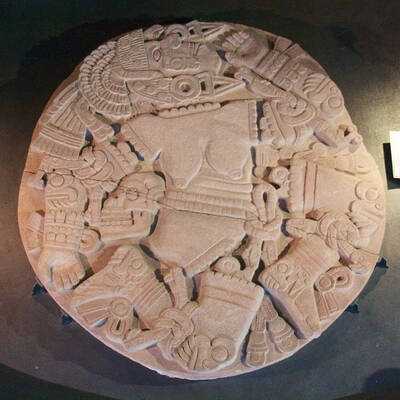
In essence, what they had stumbled upon was the Coyolxauhqui Stone , a gigantic Aztec stone disk with a diameter of more than ten feet. More than just some rogue artefact, the stone was in fact an extremely holy monument that was placed in its current location many years ago by the Aztecs. The discovery was shocking and served to demonstrate that far from being obliterated by time and modernisation, the great Aztec empire remained in plain sight beneath the busy city, only a few feet under the feet of countless passers-by each day.
A tragic legend etched onto a monolithic masterpiece
The monolith was quite a frightening image indeed, representing an epic tale of violence and bloodshed. In accordance with the research analysis, The Templo Mayor and the Coyolxauhqui Stone, the monolith tells the story of how the Aztec moon goddess, Coyolxauhqui, is depicted as gruesomely dismembered. As a matter of fact, her name translates to "Bells-Her-Cheeks," referring to the little bells carved onto her head. It is said that Coyolxauhqui attempted to kill her mother when her brother, the sun god Huitzilopochtli, appeared fully grown from within the womb to protect their mother.
The location of the stone itself was the final key for archaeologists. During the time of the Aztecs, the large stone rested at the foot of the Templo Mayor , the enormous pair of pyramids that functioned as the centre of religion and politics of the empire. After the ritual human sacrifice on the pyramid, the bodies would be thrown down its stone stairway, thus replicating the legendary fall of the moon goddess. With the exact position of the Coyolxauhqui Stone determined, it became immediately possible to trace out the entire structure of the majestic building.
The uncovering of layers within a buried capital
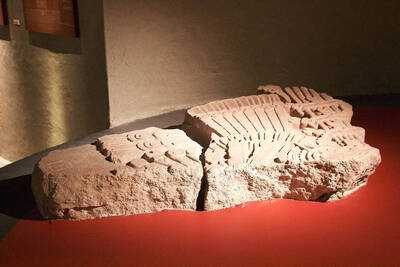
While conventional wisdom saw the Aztec capital as a lost civilisation destroyed and buried beneath layers of concrete and asphalt, the 1978 discovery threw everything into question. As stated in the detailed archaeological report, El Templo Mayor: the Great Temple of the Aztecs in the heart of Mexico City, the finding of the goddess disk triggered the start of an ambitious archaeological dig project led by Eduardo Matos Moctezuma.
To dig up the past, teams had to navigate the living, breathing metropolis above carefully. Whole buildings were demolished, and streets were diverted to allow scientists to peel back the colonial layers systematically. What they found was a massive complex of multiple pyramid phases, ritual altars, and thousands of beautifully preserved offerings, ranging from greenstone beads to ceremonial knives. The project showed that the sacred geography of the Aztecs was still physically present, creating a fascinating cross-section of time where the ancient world and the modern city exist simultaneously.
Currently, the Templo Mayor archaeological site, along with its related museum, ranks among the most important cultural landmarks in all of Mexico. The Coyolxauhqui Stone continues to serve as an iconic masterpiece, which serves as a constant reminder that urban design and coincidental discovery go hand in hand. History, we realise, does not only take place far back in time or in textbooks that are locked up somewhere else. Instead, it sometimes lies right beneath our feet in wait for construction workers to break ground and let it breathe anew.
The mind-boggling part is that there existed a period spanning several hundred years when houses were being built, carts were driven, and people used to walk on the very place where the Aztecs practised their religion in the most fervent manner. You suddenly start seeing the everyday streets of your hometown with some sense of awe, wondering about possible tales hidden underneath the concrete.
In essence, what they had stumbled upon was the Coyolxauhqui Stone , a gigantic Aztec stone disk with a diameter of more than ten feet. More than just some rogue artefact, the stone was in fact an extremely holy monument that was placed in its current location many years ago by the Aztecs. The discovery was shocking and served to demonstrate that far from being obliterated by time and modernisation, the great Aztec empire remained in plain sight beneath the busy city, only a few feet under the feet of countless passers-by each day.
A tragic legend etched onto a monolithic masterpiece
The monolith was quite a frightening image indeed, representing an epic tale of violence and bloodshed. In accordance with the research analysis, The Templo Mayor and the Coyolxauhqui Stone, the monolith tells the story of how the Aztec moon goddess, Coyolxauhqui, is depicted as gruesomely dismembered. As a matter of fact, her name translates to "Bells-Her-Cheeks," referring to the little bells carved onto her head. It is said that Coyolxauhqui attempted to kill her mother when her brother, the sun god Huitzilopochtli, appeared fully grown from within the womb to protect their mother.
The location of the stone itself was the final key for archaeologists. During the time of the Aztecs, the large stone rested at the foot of the Templo Mayor , the enormous pair of pyramids that functioned as the centre of religion and politics of the empire. After the ritual human sacrifice on the pyramid, the bodies would be thrown down its stone stairway, thus replicating the legendary fall of the moon goddess. With the exact position of the Coyolxauhqui Stone determined, it became immediately possible to trace out the entire structure of the majestic building.
The uncovering of layers within a buried capital
While conventional wisdom saw the Aztec capital as a lost civilisation destroyed and buried beneath layers of concrete and asphalt, the 1978 discovery threw everything into question. As stated in the detailed archaeological report, El Templo Mayor: the Great Temple of the Aztecs in the heart of Mexico City, the finding of the goddess disk triggered the start of an ambitious archaeological dig project led by Eduardo Matos Moctezuma.
To dig up the past, teams had to navigate the living, breathing metropolis above carefully. Whole buildings were demolished, and streets were diverted to allow scientists to peel back the colonial layers systematically. What they found was a massive complex of multiple pyramid phases, ritual altars, and thousands of beautifully preserved offerings, ranging from greenstone beads to ceremonial knives. The project showed that the sacred geography of the Aztecs was still physically present, creating a fascinating cross-section of time where the ancient world and the modern city exist simultaneously.
Currently, the Templo Mayor archaeological site, along with its related museum, ranks among the most important cultural landmarks in all of Mexico. The Coyolxauhqui Stone continues to serve as an iconic masterpiece, which serves as a constant reminder that urban design and coincidental discovery go hand in hand. History, we realise, does not only take place far back in time or in textbooks that are locked up somewhere else. Instead, it sometimes lies right beneath our feet in wait for construction workers to break ground and let it breathe anew.
The mind-boggling part is that there existed a period spanning several hundred years when houses were being built, carts were driven, and people used to walk on the very place where the Aztecs practised their religion in the most fervent manner. You suddenly start seeing the everyday streets of your hometown with some sense of awe, wondering about possible tales hidden underneath the concrete.
Next Story