
India's GCCs become enterprise co-creators


India’s global capability centres (GCCs) are rapidly becoming strategic enterprise command hubs, with a focus on product ownership, intellectual property, AI transformation, enterprise-wide process redesign and global decision-making. They are no longer just execution partners, they are enterprise co-creators – that was the substance of a discussion we had at the GCC summit in Hyderabad.
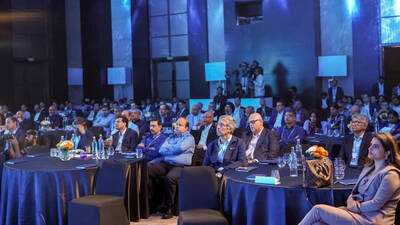
Sangeeta Gupta, SVP and chief strategy officer at Nasscom , said the criticism that India-based technology teams perform only low-value work has followed every phase of the IT industry but no longer reflects the breadth of work now being handled by GCCs. “GCCs are no more a best kept secret. They are the talk of the town,” she said, adding that India now has about 2,200 GCCs, with nearly half in what Nasscom describes as the “portfolio and transformation” stage, meaning they own intellectual property, products or process lines, host global leadership roles and drive transformation programmes.
But India, she said, must serve the full value chain, from data annotation to advanced AI-led business transformation. AI, she said, is likely to expand the opportunity for services. The next phase, she added, will depend on the AI fluency, domain depth and transformation capability of talent. “Most of the GCCs in India are actually driving this AI transformation for their global enterprise because the capabilities exist here,” she said.
Sailaja Josyula, SVP and global head of GCC service line at Cognizant, said a GCC becomes truly strategic when it has C-suite sponsorship, meaningful ownership and the decision rights to influence enterprise outcomes. “It must be viewed as a location fundamental to the company’s strategy,” she said.
One way to assess a GCC’s strategic value, she said, is to ask what would happen to the business if the centre were to shut down for a week. “If the business could not operate effectively without it, that is a clear indication that the GCC has become integral to the enterprise,” she said.
Josyula said companies should stop viewing such centres as separate offshore entities. When a GCC is viewed as the India office, alongside the enterprise’s offices in London, New York or other global locations, it becomes an integral part of the global organisation. That shift in mindset, she said, strengthens ownership, empowerment and its role in enterprise decision-making.
Ganpat Anchalya, site head at Novartis Corporate Centre, Hyderabad, said the company’s India centre, which is marking 25 years, has become a critical part of the global enterprise. He said Novartis has nearly 9,000 employees in India, representing about 30% of its office-based global workforce, along with more than 15,000 outsourced roles managed from the country.
“We have all elements of Novartis present in Hyderabad that no other location has,” Anchaliya said. India’s advantage, he said, lies in “talent, agility, curiosity and ability to always scale up beyond the roles.”
He said the presence of multiple functions under one roof allows faster enterprise-wide transformation. “If you want to bring a new tool or capability to transform the process, you can do it in a few weeks or few months,” he said. India, he said, will play an outsized role in Novartis’s AI-led redesign of work.
Echoing Josyula’s point, Vikas Jaiswal, SVP and MD at Nationwide Global Services India, said the financial services company treats Hyderabad as its fourth campus, alongside three campuses in the US, rather than as a conventional offshore centre. “Everything changes when you say this is a fourth campus,” he said. “The global leaders have teams here as on other campuses. So the teams are empowered to participate in the lifecycle of a product.”
He said GCCs become strategically important when they combine business knowledge, technology depth and architecture capability. “In this age of AI you need to have business partners along with depth in technology and architecture, and then help your organisation reimagine the business processes by leveraging AI,” he said.
Murali Krishna, chief global officer and country head at Providence India, said the healthcare company’s India centre was built as a transformation engine from the beginning. “We were never set up as an execution engine. We were always set up as a transformation engine, right from day one,” he said. The centre now owns products and platforms, co-leads transformation and works on AI capabilities aimed at reducing administrative burden, improving operational efficiency and supporting caregivers and patients.
Next Story