
Microsoft sees Hyderabad cloud region as strategic hub for India and the Global South: Rajiv Kumar, MD of India Development Center


Microsoft has positioned its recently-operational Hyderabad cloud and data center region as a primary strategic hub serving both domestic enterprise demand across India and growing computing needs across the Global South. In a conversation with The Times of India on the sidelines of Microsoft AI Infrastructure Summit, Rajiv Kumar , managing director of India Development Center (IDC), explained how the company’s newest datacenter region in Hyderabad, explained the need for this expansion and how it will help in accelerating AI innovation and digital growth across the region.
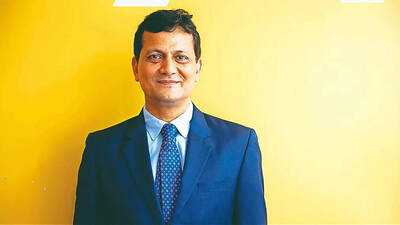
“Microsoft has about 80 regions, and each region can have two or three data centers, depending on the resiliency we want to build. And how we decide on this is based on several factors,” Kumar said, adding, “It starts with the customer demand. We clearly see customer demand from India and in the regional vicinity of Global South that's close to India. And based on that, we picked Hyderabad, because in India, it happens to be the central location.”
“This is not just a data center, it is one of the strategic regions for Microsoft where most of almost all of Azure’s business can run. And also the ability to scale it for any new services that come in. So that's very special. I think from India’s perspective, being in the center, is the closest to all customers in India,” he added.
The Hyderabad expansion is a part of Microsoft's $20.5 billion infrastructure commitment in India, which company CEO Satya Nadella announced across two phases totaling $3 billion and $17.5 billion over the last 14 months.
Three core areas receiving Microsoft’s $20.5 billion investmentWhen asked details about Microsoft’s plan for this investment in India, Kumar explained three ‘buckets’, or areas that receive this capital. First is physical infrastructure wherein the company is constructing AI-ready data centers to provide the underlying computing foundation, mirroring the role earlier physical rails played for India's digital public infrastructure.
The second area is workforce skilling where Microsoft aims to prepare local professionals to deploy technology at the ground level. Microsoft has committed to training 20 million Indians in AI by 2030, having officially crossed the 10 million learner mark.
“The third bucket is: sovereignty, security and scale, and all this being done in a sustainable way,” he told TOI.
Microsoft addressing environmental and resource concernsExpanding more on sustainability, Kumar explained the specific architectural approaches used at the Hyderabad facility. The first is zero water usage. The facility relies primarily on air cooling, channeling chilled air directly across chip beds. The accompanying closed-loop water system avoids constant water consumption, removing a major operational strain on regional resources.
“I visited our research lab for the data centre in Redmond (Microsoft’s HQ) where cutting edge technology is developed. One of things that the researchers were working with was a closed loop of water, in addition to the air cooling process. The majority of the cooling happens with air. We can cool the air and we can flow it on top of the bed of chips. So, that's what we have brought in this data center, and that's why the water is no longer a big challenge,” Kumar explained.
“In fact, in Hyderabad’s campus, we are adding water to the ground through soak pits and the borewell recharges,” he said.
In Clean Energy, Microsoft maintains a 100% renewable energy mandate, adopting a policy of “additionality” to avoid pulling existing power away from the local consumer grid. The company has contracted 1,000 megawatts (1 GW) of newly generated clean energy capacity in India, with 630 megawatts already operational and feeding power.
When asked about the growing pushback against AI, Kumar said that large-scale infrastructure investments will transform the nature of tasks rather than replace human workers.
He cited one operational example from Prithvi, an IIT Delhi accelerator startup supported by Microsoft that automates railway safety checks. Historically, human inspectors at trackside posts had only 30 to 40 seconds to visually evaluate up to 20 moving bogies and dozens of mechanical parts. By using thermal sensors, computer vision, and infrared feeds, the system digitizes undercarriage data in real time, giving inspectors complete telemetry to review and make reliable maintenance decisions.
Similarly, in software engineering, Kumar explained that generative coding tools automate repetitive works, allowing developers to dedicate more time to client requirements
Microsoft pointed to data from a Boston Consulting Group (BCG) report that for every $1 invested in data center build-outs, there’s roughly $3.50 of value created in the broader commercial ecosystem. That multiplier is expected to generate between $140 billion and $200 billion of gross economic output throughout India through 2030, and will underpin net-new employment as data-driven industries grow.
“Microsoft has about 80 regions, and each region can have two or three data centers, depending on the resiliency we want to build. And how we decide on this is based on several factors,” Kumar said, adding, “It starts with the customer demand. We clearly see customer demand from India and in the regional vicinity of Global South that's close to India. And based on that, we picked Hyderabad, because in India, it happens to be the central location.”
“This is not just a data center, it is one of the strategic regions for Microsoft where most of almost all of Azure’s business can run. And also the ability to scale it for any new services that come in. So that's very special. I think from India’s perspective, being in the center, is the closest to all customers in India,” he added.
The Hyderabad expansion is a part of Microsoft's $20.5 billion infrastructure commitment in India, which company CEO Satya Nadella announced across two phases totaling $3 billion and $17.5 billion over the last 14 months.
Three core areas receiving Microsoft’s $20.5 billion investmentWhen asked details about Microsoft’s plan for this investment in India, Kumar explained three ‘buckets’, or areas that receive this capital. First is physical infrastructure wherein the company is constructing AI-ready data centers to provide the underlying computing foundation, mirroring the role earlier physical rails played for India's digital public infrastructure.
The second area is workforce skilling where Microsoft aims to prepare local professionals to deploy technology at the ground level. Microsoft has committed to training 20 million Indians in AI by 2030, having officially crossed the 10 million learner mark.
“The third bucket is: sovereignty, security and scale, and all this being done in a sustainable way,” he told TOI.
Microsoft addressing environmental and resource concernsExpanding more on sustainability, Kumar explained the specific architectural approaches used at the Hyderabad facility. The first is zero water usage. The facility relies primarily on air cooling, channeling chilled air directly across chip beds. The accompanying closed-loop water system avoids constant water consumption, removing a major operational strain on regional resources.
“I visited our research lab for the data centre in Redmond (Microsoft’s HQ) where cutting edge technology is developed. One of things that the researchers were working with was a closed loop of water, in addition to the air cooling process. The majority of the cooling happens with air. We can cool the air and we can flow it on top of the bed of chips. So, that's what we have brought in this data center, and that's why the water is no longer a big challenge,” Kumar explained.
“In fact, in Hyderabad’s campus, we are adding water to the ground through soak pits and the borewell recharges,” he said.
In Clean Energy, Microsoft maintains a 100% renewable energy mandate, adopting a policy of “additionality” to avoid pulling existing power away from the local consumer grid. The company has contracted 1,000 megawatts (1 GW) of newly generated clean energy capacity in India, with 630 megawatts already operational and feeding power.
When asked about the growing pushback against AI, Kumar said that large-scale infrastructure investments will transform the nature of tasks rather than replace human workers.
He cited one operational example from Prithvi, an IIT Delhi accelerator startup supported by Microsoft that automates railway safety checks. Historically, human inspectors at trackside posts had only 30 to 40 seconds to visually evaluate up to 20 moving bogies and dozens of mechanical parts. By using thermal sensors, computer vision, and infrared feeds, the system digitizes undercarriage data in real time, giving inspectors complete telemetry to review and make reliable maintenance decisions.
Similarly, in software engineering, Kumar explained that generative coding tools automate repetitive works, allowing developers to dedicate more time to client requirements
Microsoft pointed to data from a Boston Consulting Group (BCG) report that for every $1 invested in data center build-outs, there’s roughly $3.50 of value created in the broader commercial ecosystem. That multiplier is expected to generate between $140 billion and $200 billion of gross economic output throughout India through 2030, and will underpin net-new employment as data-driven industries grow.
Next Story