
Quick-Commerce Advertising Could Reach ₹2,200 Crore This Festive Season

Quick-commerce platforms have changed how many Indian consumers buy groceries, personal-care products and everyday essentials. Their appeal lies in convenience, but they have also created new advertising opportunities for brands seeking to reach customers close to the point of purchase.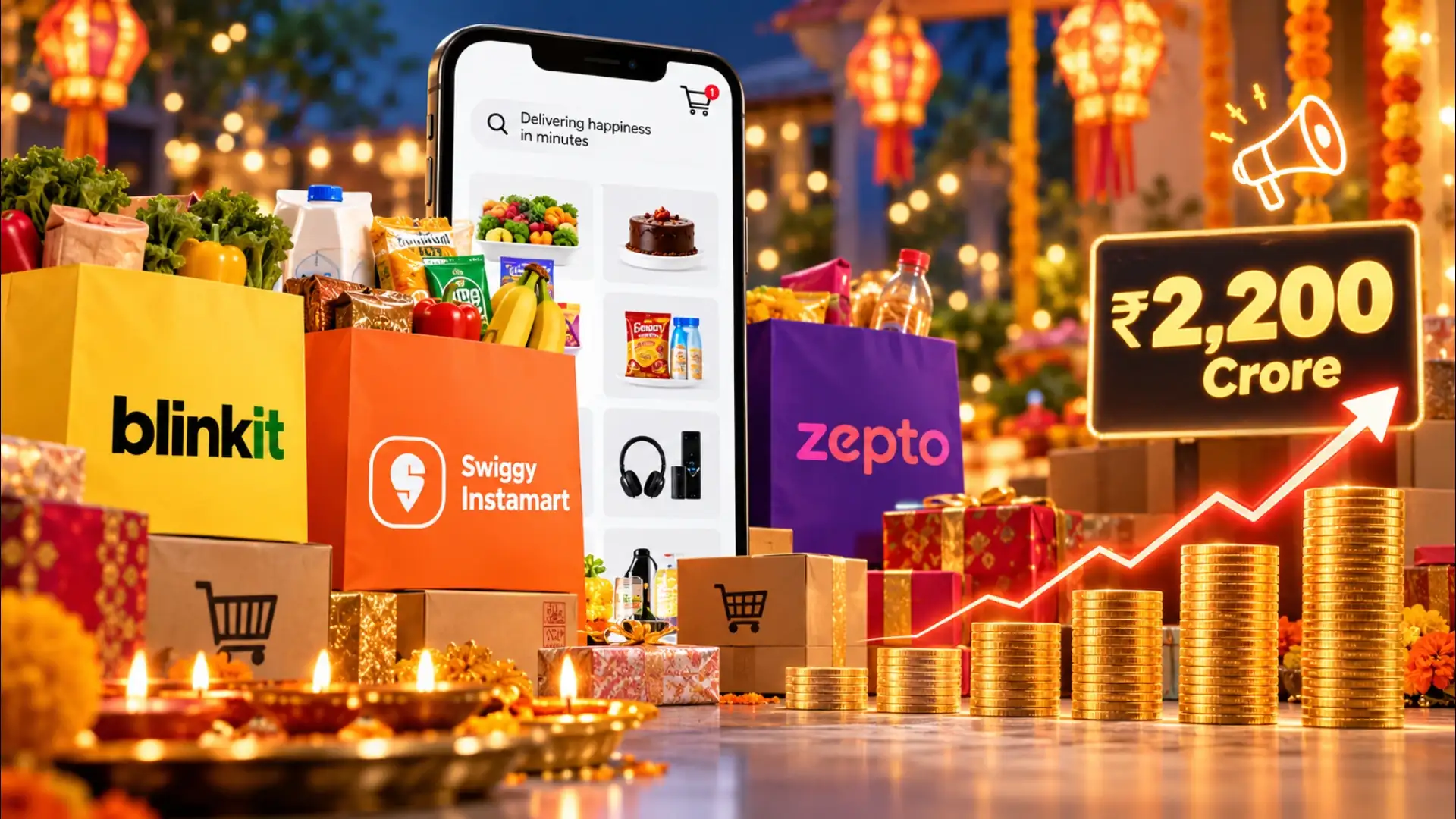
A report published by Financial Express in October 2026 estimates that brands could spend ₹2,200 crore on quick-commerce advertising during the festive season, representing a 50% increase from the previous year. The projection highlights the growing commercial importance of rapid-delivery platforms , although higher advertising spending does not automatically translate into higher profits for retailers or platforms.
Advertisements can appear while customers browse groceries, household goods, snacks and personal-care products.
This creates a direct connection between advertising and purchasing. A customer looking for a product can see a sponsored alternative and potentially add it to the same order.
During festivals, when households purchase gifts, sweets, decorations and everyday essentials, brands may increase promotional activity to capture demand.
The estimate comes from the Festive AdEx report by Datum Intelligence.
The report also highlights the increasing importance of retail media, where retailers use their digital platforms and customer interactions to sell advertising space.
These figures are projections rather than audited final spending totals. Actual expenditure may differ as the season progresses.
Advertising can help shoppers discover products, but sponsored placement does not guarantee the lowest price or the best quality.
Consumers should compare unit prices, delivery charges and product sizes rather than assuming that the first result is the most economical option.
Quick-commerce convenience can also make it easier to place unplanned orders. Small purchases may accumulate into a substantial monthly expense if spending is not monitored.
Retailers must also balance advertising revenue against customer experience. Too many sponsored placements or unclear promotions can make an application less useful.
For smaller businesses, rising advertising costs may create additional competition for visibility.
The quick-commerce advertising trend reflects a broader change in digital retail. As platforms become more influential in product discovery, brands will need to demonstrate that their spending generates sustainable returns rather than temporary sales spikes.
A report published by Financial Express in October 2026 estimates that brands could spend ₹2,200 crore on quick-commerce advertising during the festive season, representing a 50% increase from the previous year. The projection highlights the growing commercial importance of rapid-delivery platforms , although higher advertising spending does not automatically translate into higher profits for retailers or platforms.
Why Is Quick-Commerce Advertising Growing?
Platforms such as Blinkit, Zepto and Swiggy Instamart offer brands opportunities to promote products inside shopping applications.Advertisements can appear while customers browse groceries, household goods, snacks and personal-care products.
This creates a direct connection between advertising and purchasing. A customer looking for a product can see a sponsored alternative and potentially add it to the same order.
During festivals, when households purchase gifts, sweets, decorations and everyday essentials, brands may increase promotional activity to capture demand.
What Do the Latest Estimates Suggest?
Financial Express reported that festive quick-commerce advertising spending could reach ₹2,200 crore in 2026, up approximately 50% year on year.The estimate comes from the Festive AdEx report by Datum Intelligence.
The report also highlights the increasing importance of retail media, where retailers use their digital platforms and customer interactions to sell advertising space.
These figures are projections rather than audited final spending totals. Actual expenditure may differ as the season progresses.
Does More Advertising Mean Better Deals for Consumers?
Not necessarily.Advertising can help shoppers discover products, but sponsored placement does not guarantee the lowest price or the best quality.
Consumers should compare unit prices, delivery charges and product sizes rather than assuming that the first result is the most economical option.
Quick-commerce convenience can also make it easier to place unplanned orders. Small purchases may accumulate into a substantial monthly expense if spending is not monitored.
What Should Brands and Retailers Consider?
Brands need to assess whether advertising produces profitable sales rather than focusing only on clicks or order volume.Retailers must also balance advertising revenue against customer experience. Too many sponsored placements or unclear promotions can make an application less useful.
For smaller businesses, rising advertising costs may create additional competition for visibility.
The quick-commerce advertising trend reflects a broader change in digital retail. As platforms become more influential in product discovery, brands will need to demonstrate that their spending generates sustainable returns rather than temporary sales spikes.
Next Story