
Startups seek lead in the therapy game via AI tools and bots


The growing trend of people turning towards artificial intelligence chatbots like ChatGPT, Gemini and Claude for information and suggestions is expanding, not shrinking, the market for online mental health services, say founders of online therapy platforms.
Y Combinator-backed Docvita has seen a 16% year-on-year (YoY) rise in user numbers. For Fireside Ventures-backed Amaha Health, which provides online therapy and psychiatry services, this growth has been 80%.
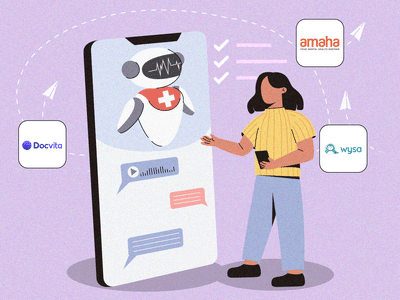
While free, easily accessible chatbots might appear to threaten online therapy, founders argue the opposite. “This is actually expanding our market instead of limiting it,” said Anmol Arora, founder of Docvita. “People who are already talking to ChatGPT are taking initiative, and these clients perform better in therapy and recover faster.”
According to Rhea Thimaiah, clinical psychologist at Kaha Mind, four out of ten patients said they had first turned to ChatGPT or similar tools but ultimately sought human therapists. “With AI, more people are becoming ‘psychoeducated’, aware of their mental health, and actively looking for solutions. At the end of the day, an AI bot will still point you back to therapy,” she said.
AI in therapy
These companies are also building customer-facing chatbots and in-house models.
Amaha Health is piloting an AI system to match patients with the right specialist. “AI eases administrative burdens on therapists, giving them more time for care and helping us scale without losing quality,” said Amit Malik, founder of Amaha Health, which has grown sixfold in three years.
Docvita is developing its own chatbot to match patients with doctors and manage client history, while Wysa uses an AI co-pilot to take notes during sessions. Wysa also offers what it calls “clinically approved” AI-powered chatbots that provide support but nudge users toward professional help when needed.
“We are not a self-training model; our platform is built on therapist protocols and not designed to merely retain users,” said Wysa founder Jo Aggarwal.
Pune-based Infiheal, founded by IIT-Bombay alumna Srishti Srivastava in 2019, has launched its own AI chatbot, Healo. Experts say the rise of such platforms makes clinical approval and reliable training data essential.
Y Combinator-backed Docvita has seen a 16% year-on-year (YoY) rise in user numbers. For Fireside Ventures-backed Amaha Health, which provides online therapy and psychiatry services, this growth has been 80%.
While free, easily accessible chatbots might appear to threaten online therapy, founders argue the opposite. “This is actually expanding our market instead of limiting it,” said Anmol Arora, founder of Docvita. “People who are already talking to ChatGPT are taking initiative, and these clients perform better in therapy and recover faster.”
According to Rhea Thimaiah, clinical psychologist at Kaha Mind, four out of ten patients said they had first turned to ChatGPT or similar tools but ultimately sought human therapists. “With AI, more people are becoming ‘psychoeducated’, aware of their mental health, and actively looking for solutions. At the end of the day, an AI bot will still point you back to therapy,” she said.
AI in therapy
These companies are also building customer-facing chatbots and in-house models.
Amaha Health is piloting an AI system to match patients with the right specialist. “AI eases administrative burdens on therapists, giving them more time for care and helping us scale without losing quality,” said Amit Malik, founder of Amaha Health, which has grown sixfold in three years.
Docvita is developing its own chatbot to match patients with doctors and manage client history, while Wysa uses an AI co-pilot to take notes during sessions. Wysa also offers what it calls “clinically approved” AI-powered chatbots that provide support but nudge users toward professional help when needed.
“We are not a self-training model; our platform is built on therapist protocols and not designed to merely retain users,” said Wysa founder Jo Aggarwal.
Pune-based Infiheal, founded by IIT-Bombay alumna Srishti Srivastava in 2019, has launched its own AI chatbot, Healo. Experts say the rise of such platforms makes clinical approval and reliable training data essential.
Next Story