
Why Your Phone Slows Down When It Gets Hot: Thermal Throttling Explained

A smartphone that unexpectedly experiences lag while you are immersed in a game or engaged in a video call is not necessarily experiencing a technical failure. In fact, it is functioning precisely as it was designed to: opting to operate at a slower pace instead of risking the possibility of overheating and causing damage to its internal components.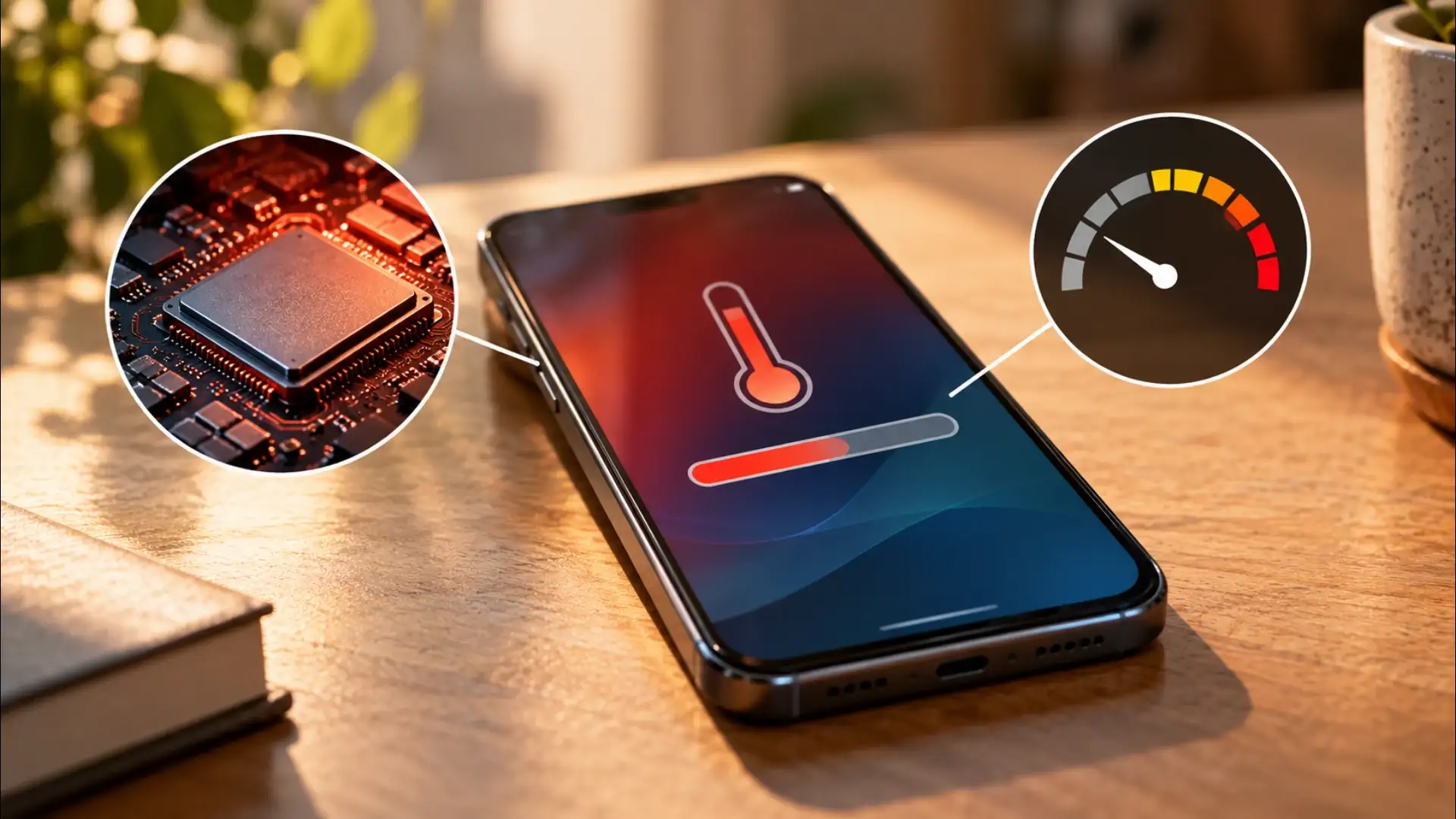
When the chip temperature climbs past a threshold the manufacturer programs in, typically somewhere between 80°C and 95°C for the processor core, the device's firmware steps in. It reduces the clock speed of the CPU and GPU, cutting how many operations the chip completes each second. Fewer operations mean less heat generated. The phone stays functional instead of shutting down or, in a worst case, suffering permanent damage to the silicon.
This automatic reduction is thermal throttling. It is a safety valve, not a flaw.
Lithium-ion batteries degrade faster at high temperatures. Heat accelerates the chemical reactions inside the cell that permanently reduce its capacity. A battery kept consistently hot ages months faster than one kept cool. Thermal throttling reduces the workload on the processor, which in turn reduces how hard the battery is being discharged, which reduces the heat the battery itself generates.
The processor is made of silicon, and silicon transistors have a physical limit. Running a chip too hot for too long causes electromigration, metal atoms inside the chip's wiring slowly drift out of place under heat and electrical stress, eventually breaking the circuit. This kind of damage is irreversible. Throttling keeps the chip inside safe operating temperatures so it lasts the full life of the device.
Long gaming sessions are the most common trigger. A 3D game drives both the CPU and the GPU hard at the same time, and it does so continuously. Within twenty to thirty minutes on a demanding title, most phones will have throttled noticeably, frame rates drop, controls feel less responsive, and the back of the phone is warm to the touch.
Video recording at high resolution generates similar heat. The processor is compressing every frame in real time while the camera sensor, the display, and the radio are all running simultaneously. Shooting a long event on a hot day can push a phone into throttling faster than any game.
Direct sunlight compounds everything. A phone left on a car dashboard or used outdoors on a summer afternoon is absorbing heat from the environment before the processor adds any of its own. The chip reaches its threshold sooner, and throttling kicks in earlier and harder.
Vapour chambers are the most effective passive solution in a phone-sized package. A thin sealed cavity filled with a small amount of liquid sits against the processor. When the chip heats up, the liquid evaporates, carries the heat across the chamber, condenses on the cooler far wall, and flows back. The cycle moves heat away from the chip faster than any solid metal spreader can. Flagship phones from most major manufacturers now include some version of this.
Thermal interface materials, the paste or pad between the chip and its metal frame, determine how efficiently heat moves from the processor to whatever is carrying it away. Better materials here reduce the temperature difference between the chip and the phone's body, giving the throttling system more headroom before it needs to act.
Software plays a role too. The firmware that controls throttling is tunable. A manufacturer can set a more aggressive threshold that starts throttling earlier and keeps temperatures lower, at the cost of peak performance. Or it can allow higher temperatures and more performance, at the cost of faster battery aging and a hotter device. This is one reason two phones with identical chips can feel different under sustained load.
Keep the phone out of direct sunlight during heavy use. The ambient heat the sun adds is free punishment on top of what the chip generates itself. A shaded surface or a pocket makes a measurable difference.
Remove a thick case during long gaming or recording sessions. Cases trap heat against the phone's back, which is one of the surfaces the device uses to radiate warmth away. A case that fits tightly against the back panel with no air gap is particularly effective at trapping heat.
Lower the screen brightness. The display is one of the largest heat sources in a phone during normal use. Dropping brightness reduces the load on the battery and the board, giving the processor a slightly cooler environment to work in.
Thermal throttling is the phone making a quiet, automatic trade: a little performance now in exchange for a working device years from now. The lag you feel during a hot gaming session is the chip doing its job correctly.
What Is Thermal Throttling
Every processor, whether in a phone, a laptop, or a server rack, generates heat as a byproduct of switching billions of transistors on and off every second. In a desktop computer, a large fan and a metal heatsink carry that heat away. A phone has neither. Its processor sits millimetres from a glass back, inside a sealed aluminium or plastic shell with no moving parts and almost no room to breathe.When the chip temperature climbs past a threshold the manufacturer programs in, typically somewhere between 80°C and 95°C for the processor core, the device's firmware steps in. It reduces the clock speed of the CPU and GPU, cutting how many operations the chip completes each second. Fewer operations mean less heat generated. The phone stays functional instead of shutting down or, in a worst case, suffering permanent damage to the silicon.
This automatic reduction is thermal throttling. It is a safety valve, not a flaw.
What the Phone Is Actually Protecting
Sustained high heat does real harm to the components inside a phone. The two most vulnerable are the battery and the processor itself.Lithium-ion batteries degrade faster at high temperatures. Heat accelerates the chemical reactions inside the cell that permanently reduce its capacity. A battery kept consistently hot ages months faster than one kept cool. Thermal throttling reduces the workload on the processor, which in turn reduces how hard the battery is being discharged, which reduces the heat the battery itself generates.
The processor is made of silicon, and silicon transistors have a physical limit. Running a chip too hot for too long causes electromigration, metal atoms inside the chip's wiring slowly drift out of place under heat and electrical stress, eventually breaking the circuit. This kind of damage is irreversible. Throttling keeps the chip inside safe operating temperatures so it lasts the full life of the device.
When You Will Notice It
Thermal throttling is invisible until the workload is heavy enough to push the chip into its danger zone. A few situations bring it on reliably.Long gaming sessions are the most common trigger. A 3D game drives both the CPU and the GPU hard at the same time, and it does so continuously. Within twenty to thirty minutes on a demanding title, most phones will have throttled noticeably, frame rates drop, controls feel less responsive, and the back of the phone is warm to the touch.
Video recording at high resolution generates similar heat. The processor is compressing every frame in real time while the camera sensor, the display, and the radio are all running simultaneously. Shooting a long event on a hot day can push a phone into throttling faster than any game.
Direct sunlight compounds everything. A phone left on a car dashboard or used outdoors on a summer afternoon is absorbing heat from the environment before the processor adds any of its own. The chip reaches its threshold sooner, and throttling kicks in earlier and harder.
How Manufacturers Manage It
Phone makers approach heat in a few different ways, and the choices show up in how a device performs under sustained load.Vapour chambers are the most effective passive solution in a phone-sized package. A thin sealed cavity filled with a small amount of liquid sits against the processor. When the chip heats up, the liquid evaporates, carries the heat across the chamber, condenses on the cooler far wall, and flows back. The cycle moves heat away from the chip faster than any solid metal spreader can. Flagship phones from most major manufacturers now include some version of this.
Thermal interface materials, the paste or pad between the chip and its metal frame, determine how efficiently heat moves from the processor to whatever is carrying it away. Better materials here reduce the temperature difference between the chip and the phone's body, giving the throttling system more headroom before it needs to act.
You may also like
- As Cisco president Jeetu Patel has tasked a 27-year-old to rewrite 98% of Cisco's legacy code; he admits putting a GenZ in a room with employees with decades of experience can create friction, but …
- Melinda French Gates has a 2-day rule for employees, she says that if they pass this, they can be confident that the job they did was good
- Anthropic president Daniela Amodei did not agree with Sam Altman signing deal with Pentagon just hours after Claude maker refused to bow to the US Army's request; says: Was this really a …
- Phones, laptops and consoles get costlier over memory price hike; OpenAI CEO Sam Altman to gadget buyers: Having DRAM in your devices is 'quite terrible' for the world's limited supply
- Dixon Technologies' Q2 profit falls 49 pc to Rs 344 crore
Software plays a role too. The firmware that controls throttling is tunable. A manufacturer can set a more aggressive threshold that starts throttling earlier and keeps temperatures lower, at the cost of peak performance. Or it can allow higher temperatures and more performance, at the cost of faster battery aging and a hotter device. This is one reason two phones with identical chips can feel different under sustained load.
What You Can Do About It
You cannot stop thermal throttling, and you should not want to. What you can do is reduce how often the phone needs to use it.Keep the phone out of direct sunlight during heavy use. The ambient heat the sun adds is free punishment on top of what the chip generates itself. A shaded surface or a pocket makes a measurable difference.
Remove a thick case during long gaming or recording sessions. Cases trap heat against the phone's back, which is one of the surfaces the device uses to radiate warmth away. A case that fits tightly against the back panel with no air gap is particularly effective at trapping heat.
Lower the screen brightness. The display is one of the largest heat sources in a phone during normal use. Dropping brightness reduces the load on the battery and the board, giving the processor a slightly cooler environment to work in.
Thermal throttling is the phone making a quiet, automatic trade: a little performance now in exchange for a working device years from now. The lag you feel during a hot gaming session is the chip doing its job correctly.






Loving Newspoint? Download the app now
