
What Actually Happens When You Send a WhatsApp Message?

You type “Are you home?”, tap send and almost instantly see the message appear on the other person’s phone. It feels like the words have travelled directly from one screen to another, but that is not what happens. Your message passes through a sophisticated network involving your phone, WhatsApp’s servers, encryption systems and the recipient’s device. Yet the actual message content is protected along the way. WhatsApp has used end-to-end encryption by default for personal conversations since 2016, with the Signal Protocol forming the foundation of that protection.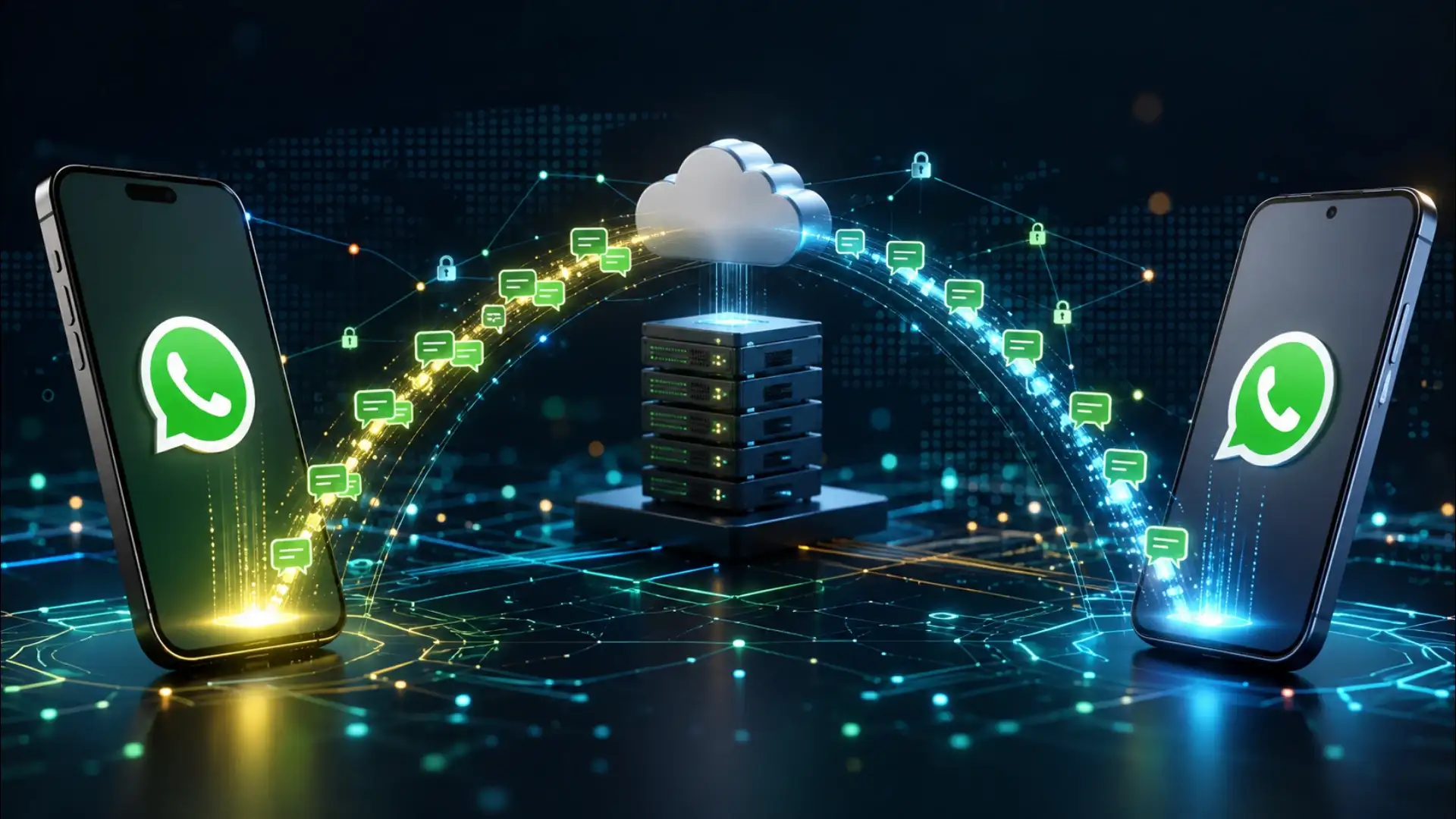
End-to-end encryption is designed so that only the intended participants can decrypt the message. WhatsApp says its personal messages are protected using this approach, meaning the company itself cannot simply read the contents of an encrypted conversation.
The encryption process relies on cryptographic keys associated with the devices involved. Your phone effectively prepares a locked version of the message that the recipient’s device can unlock.
Meta has explained that its servers push messages to connected clients over persistent connections. Once the recipient receives the message, the relevant device decrypts it so the person can read the original text.
This is one reason WhatsApp can work even when the recipient is temporarily offline. The service can handle delivery while the recipient’s device is unavailable, rather than requiring both phones to be connected at exactly the same moment.
That small change on your screen therefore represents several stages of communication happening across the network.
The interesting part is that this complex system is deliberately hidden from you. You see a message box, a send button and a couple of ticks. Behind them is a carefully engineered combination of networking and cryptography.
So the next time a message appears almost instantly, remember that your words did not simply travel across the internet. They were encrypted, routed and delivered through a global communications system before being unlocked on another device.
Your Phone Encrypts the Message First
The journey begins before the message leaves your phone. WhatsApp encrypts the message on your device, meaning the readable text is transformed into protected data before it is transmitted.End-to-end encryption is designed so that only the intended participants can decrypt the message. WhatsApp says its personal messages are protected using this approach, meaning the company itself cannot simply read the contents of an encrypted conversation.
The encryption process relies on cryptographic keys associated with the devices involved. Your phone effectively prepares a locked version of the message that the recipient’s device can unlock.
WhatsApp Servers Help Deliver It
Although the message is end-to-end encrypted, WhatsApp’s servers still play an important role. They act as part of the delivery infrastructure, helping move encrypted messages between connected devices.You may also like
- Quote of the day by Larry Page: 'Lots of companies don't succeed over time'
- iQoo teases new Buds TWS design, set to launch alongside iQoo Z11 on August 20: What we know so far
- Itel launches its first ever home appliance portfolio in India with new washing machines and TVs: All details
- Google Cloud and Mahindra partners to bring Gemini Enterprise experience in car
- India's next generation of builders and innovators is already here: Gautam Adani
Meta has explained that its servers push messages to connected clients over persistent connections. Once the recipient receives the message, the relevant device decrypts it so the person can read the original text.
This is one reason WhatsApp can work even when the recipient is temporarily offline. The service can handle delivery while the recipient’s device is unavailable, rather than requiring both phones to be connected at exactly the same moment.
What Do the Ticks Actually Mean?
The familiar ticks provide a simplified view of this journey. A single grey tick generally indicates that the message has left your device and reached WhatsApp’s delivery system. Two grey ticks indicate delivery to the recipient’s device, while two blue ticks normally indicate that the message has been read, depending on privacy settings.That small change on your screen therefore represents several stages of communication happening across the network.
Why Encryption Matters Today
WhatsApp handles an enormous volume of communication. Meta has previously reported the service supporting more than 100 billion messages a day, illustrating the extraordinary scale of the infrastructure required to keep conversations moving.The interesting part is that this complex system is deliberately hidden from you. You see a message box, a send button and a couple of ticks. Behind them is a carefully engineered combination of networking and cryptography.
So the next time a message appears almost instantly, remember that your words did not simply travel across the internet. They were encrypted, routed and delivered through a global communications system before being unlocked on another device.






Loving Newspoint? Download the app now
