
What Happens Behind the Scenes When You Withdraw Cash From an ATM?

You insert your card into an ATM, enter your PIN, request ₹5,000 and wait. Within seconds, the machine either counts out the cash or politely tells you that the transaction cannot be completed. But the ATM itself does not usually know how much money is sitting in your bank account. It has to ask the bank. That simple cash withdrawal triggers a rapid exchange of information between the ATM, its acquiring bank, a card network or payment switch, and the bank that issued your card. The fascinating part is that most of this happens before you even hear the first notes being counted.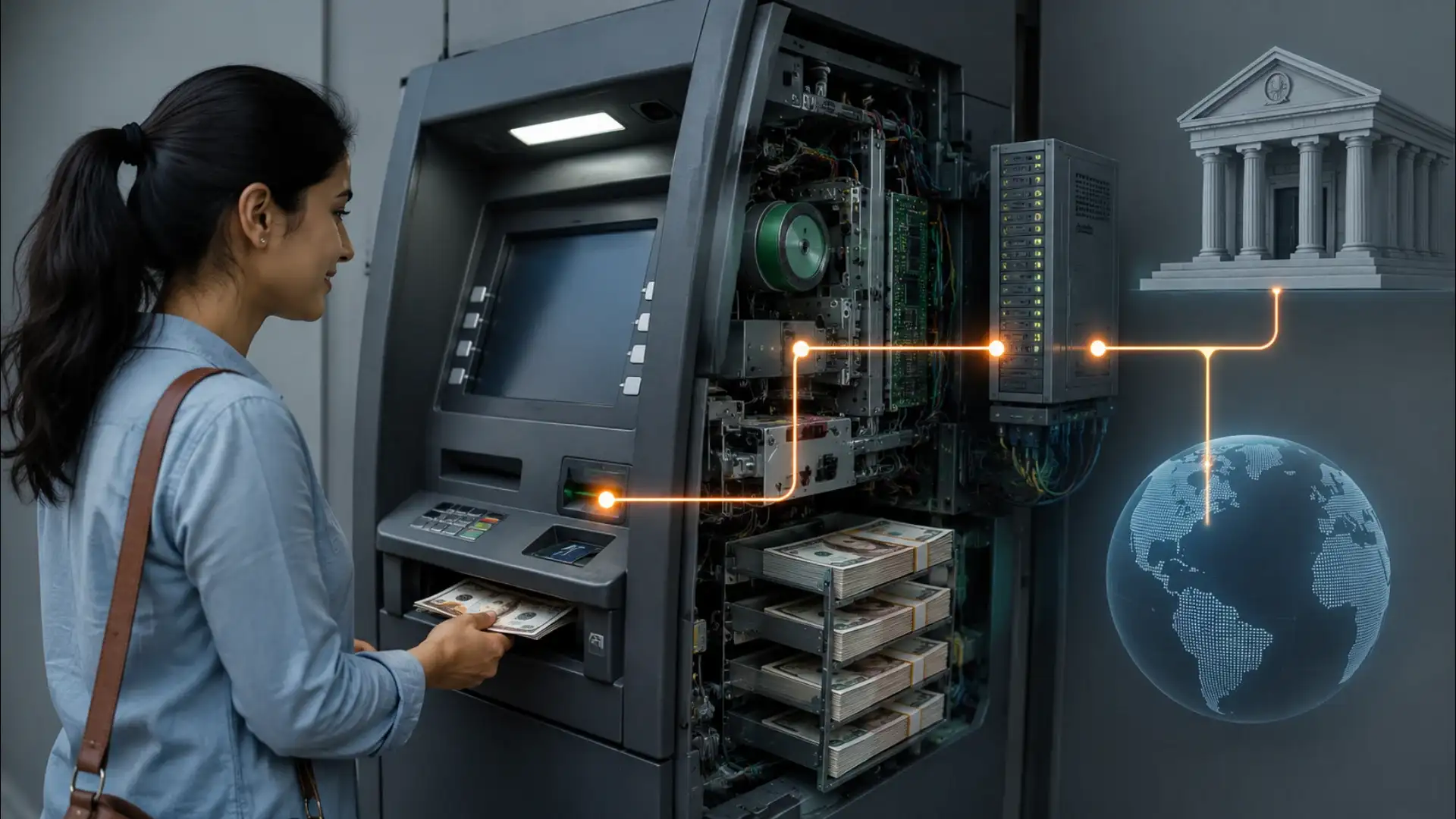
If you are using an ATM belonging to another bank, the machine does not directly access your account. The request is routed to the institution that issued your card. Card networks such as Visa can provide the infrastructure for ATM transactions, while banks and processors handle the account-specific decision.
For a debit-card withdrawal, that can involve checking available funds, withdrawal limits and the account's status. The bank also verifies the authentication information and may apply security and fraud controls before returning an approval or decline.
This is why an ATM does not simply look at your card and somehow “see” your balance. The card identifies the account and helps initiate the request, while the bank's systems make the financial decision. Visa describes authorisation as the process in which the issuer decides whether a transaction should be approved or declined.
In India, the Reserve Bank of India has required PIN validation for ATM transactions, including balance enquiries, as a security measure.
Once the bank approves the request, the response travels back through the network to the ATM.
The remarkable thing is that the ATM is simultaneously performing two very different jobs. One is electronic, involving authentication and financial authorisation. The other is mechanical, involving sensors, motors and banknote handling.
So next time an ATM gives you cash almost instantly, remember that the machine did not magically discover your balance. It asked the bank, received an answer and then acted on it, all within a few seconds.
The ATM Is Really Asking Your Bank
When you insert your card, the ATM reads information stored on the card, including details needed to identify the account and route the transaction. It then sends a withdrawal request through the banking and card-processing network.If you are using an ATM belonging to another bank, the machine does not directly access your account. The request is routed to the institution that issued your card. Card networks such as Visa can provide the infrastructure for ATM transactions, while banks and processors handle the account-specific decision.
Your Bank Checks the Available Money
This is the crucial moment. Your issuing bank receives the request and checks whether the transaction can be authorised.For a debit-card withdrawal, that can involve checking available funds, withdrawal limits and the account's status. The bank also verifies the authentication information and may apply security and fraud controls before returning an approval or decline.
You may also like
- Quote of the day by Larry Page: 'Lots of companies don't succeed over time'
- iQoo teases new Buds TWS design, set to launch alongside iQoo Z11 on August 20: What we know so far
- Itel launches its first ever home appliance portfolio in India with new washing machines and TVs: All details
- Google Cloud and Mahindra partners to bring Gemini Enterprise experience in car
- India's next generation of builders and innovators is already here: Gautam Adani
This is why an ATM does not simply look at your card and somehow “see” your balance. The card identifies the account and helps initiate the request, while the bank's systems make the financial decision. Visa describes authorisation as the process in which the issuer decides whether a transaction should be approved or declined.
Why Your PIN Matters
Your PIN is another important part of the process. It helps establish that the person attempting the withdrawal is authorised to use the card.In India, the Reserve Bank of India has required PIN validation for ATM transactions, including balance enquiries, as a security measure.
Once the bank approves the request, the response travels back through the network to the ATM.
Then the Machine Dispenses Your Cash
Only after receiving the appropriate approval does the ATM proceed with the physical part of the transaction. Its internal mechanism selects and counts the requested banknotes before dispensing them.The remarkable thing is that the ATM is simultaneously performing two very different jobs. One is electronic, involving authentication and financial authorisation. The other is mechanical, involving sensors, motors and banknote handling.
So next time an ATM gives you cash almost instantly, remember that the machine did not magically discover your balance. It asked the bank, received an answer and then acted on it, all within a few seconds.






Loving Newspoint? Download the app now
