
What Is a SIM Swap Scam and How Can You Protect Your Number?

Your mobile number is more than a way for people to call you. It may be connected to your bank account, email address, social media profiles and other important services. That makes it a valuable target for criminals. One increasingly serious form of fraud is SIM swapping, where a fraudster attempts to transfer a victim's mobile number to a SIM card controlled by them. If successful, the victim's phone can suddenly lose network service while the criminal starts receiving calls and text messages meant for them. The scam can be particularly dangerous when SMS is being used to verify financial or online accounts.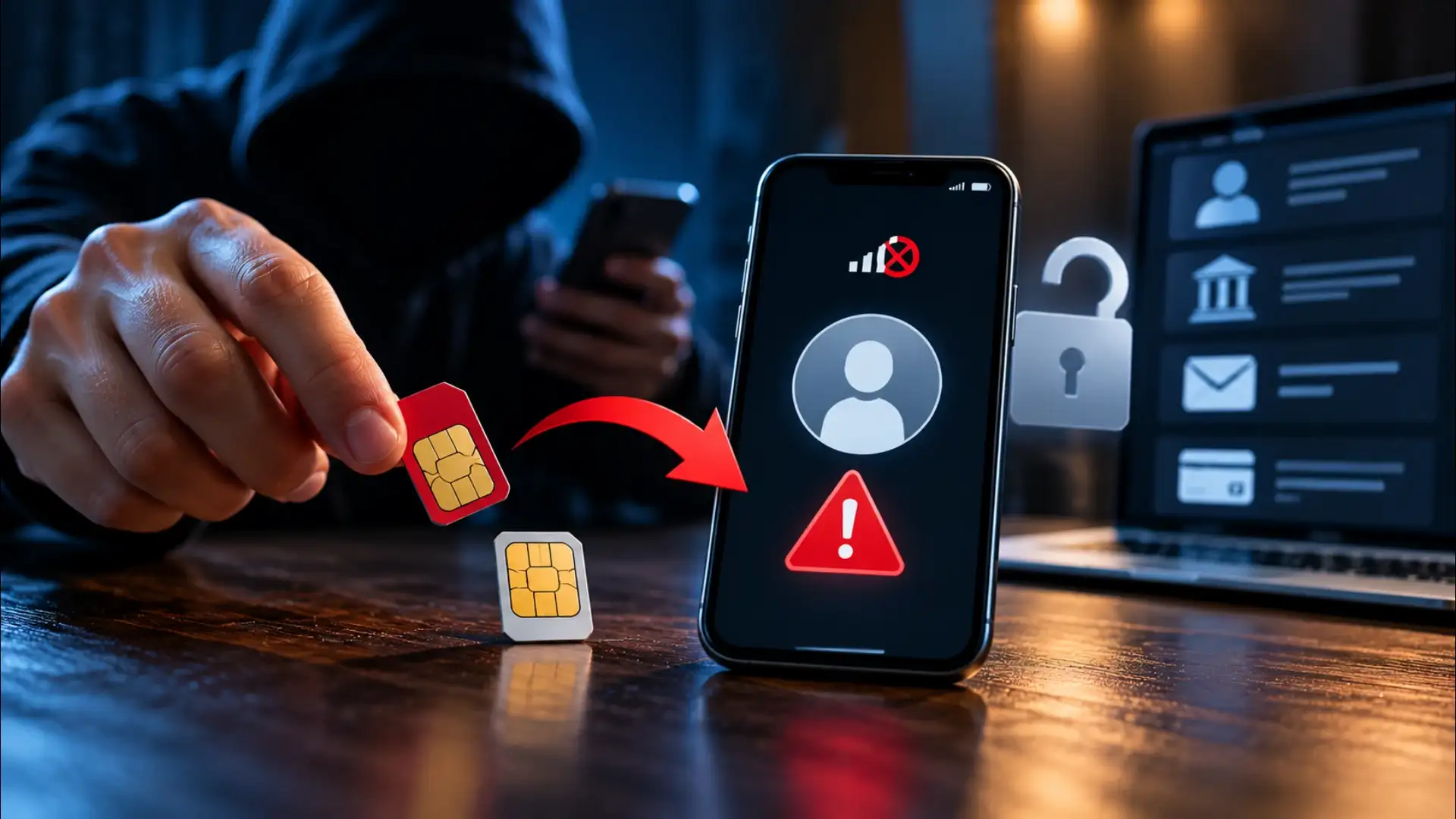
The process itself is not inherently suspicious. Customers legitimately replace damaged SIM cards, change devices or request replacement SIMs. The problem occurs when a criminal convinces a telecom provider that they are the genuine account holder.
Once the number is transferred, the victim's original SIM may stop connecting to the mobile network. Meanwhile, the fraudster may begin receiving incoming calls and SMS messages.
They then attempt to use this information to impersonate the victim when dealing with a telecom provider.
The exact verification process varies between operators and countries, so there is no single method used in every SIM swap case. The objective, however, remains the same: persuade the provider to activate the victim's number on a different SIM.
If a bank, email provider or online service sends verification codes by SMS, a criminal controlling the number may receive those messages. In some circumstances, this can help them attempt password resets or other account-recovery processes.
That does not mean a SIM swap automatically gives someone access to every account. Strong passwords, authenticator apps and additional security checks can still prevent an attacker from taking over an account.
The danger comes from the number acting as one part of the security chain.
If your phone suddenly shows no network connection and you have not changed your SIM, do not simply assume it is a temporary network problem. Check whether other people using the same network are affected and contact your mobile operator through an official channel as soon as possible.
If you suspect a SIM swap, secure important accounts and contact your bank if there is any possibility that financial information could be exposed.
A mobile number is useful, but it should not be treated as an unbreakable security lock.
SIM swap fraud is ultimately a reminder that your phone number has become part of your digital identity. Protecting it is therefore about much more than preventing unwanted calls.
What Is a SIM Swap?
A SIM swap happens when a mobile number is moved from the victim's existing SIM to another SIM controlled by someone else.The process itself is not inherently suspicious. Customers legitimately replace damaged SIM cards, change devices or request replacement SIMs. The problem occurs when a criminal convinces a telecom provider that they are the genuine account holder.
Once the number is transferred, the victim's original SIM may stop connecting to the mobile network. Meanwhile, the fraudster may begin receiving incoming calls and SMS messages.
How Do Criminals Carry It Out?
The scam usually starts with information gathering. Criminals may already know a person's name, mobile number, email address or other details through social media, leaked databases, phishing attacks or previous scams.They then attempt to use this information to impersonate the victim when dealing with a telecom provider.
The exact verification process varies between operators and countries, so there is no single method used in every SIM swap case. The objective, however, remains the same: persuade the provider to activate the victim's number on a different SIM.
Why Losing Your Number Can Be Serious
A stolen mobile number can become a gateway to other accounts.If a bank, email provider or online service sends verification codes by SMS, a criminal controlling the number may receive those messages. In some circumstances, this can help them attempt password resets or other account-recovery processes.
That does not mean a SIM swap automatically gives someone access to every account. Strong passwords, authenticator apps and additional security checks can still prevent an attacker from taking over an account.
The danger comes from the number acting as one part of the security chain.
The Warning Sign Many People Miss
One of the clearest signs can be an unexpected loss of mobile service.If your phone suddenly shows no network connection and you have not changed your SIM, do not simply assume it is a temporary network problem. Check whether other people using the same network are affected and contact your mobile operator through an official channel as soon as possible.
If you suspect a SIM swap, secure important accounts and contact your bank if there is any possibility that financial information could be exposed.
How to Make a SIM Swap Harder
Keep your personal information private and avoid sharing unnecessary details publicly. Use strong, unique passwords for important accounts and enable an authenticator app or security key where available rather than relying exclusively on SMS verification.A mobile number is useful, but it should not be treated as an unbreakable security lock.
SIM swap fraud is ultimately a reminder that your phone number has become part of your digital identity. Protecting it is therefore about much more than preventing unwanted calls.
Next Story