
What Is Metadata and Why Should You Remove It Before Sharing Photos?

A photograph may look like a simple image, but behind the pixels there can be a surprising amount of information. Your phone may record when a picture was taken, what device captured it and, in some cases, the exact location where you were standing. This information is known as metadata . Most people never see it because it sits behind the image rather than appearing visibly on screen. Yet metadata can become a privacy concern when photographs are shared publicly, sent to strangers or uploaded to websites. Understanding what metadata is, what it can reveal and how to remove it is a simple but useful step towards protecting your digital privacy .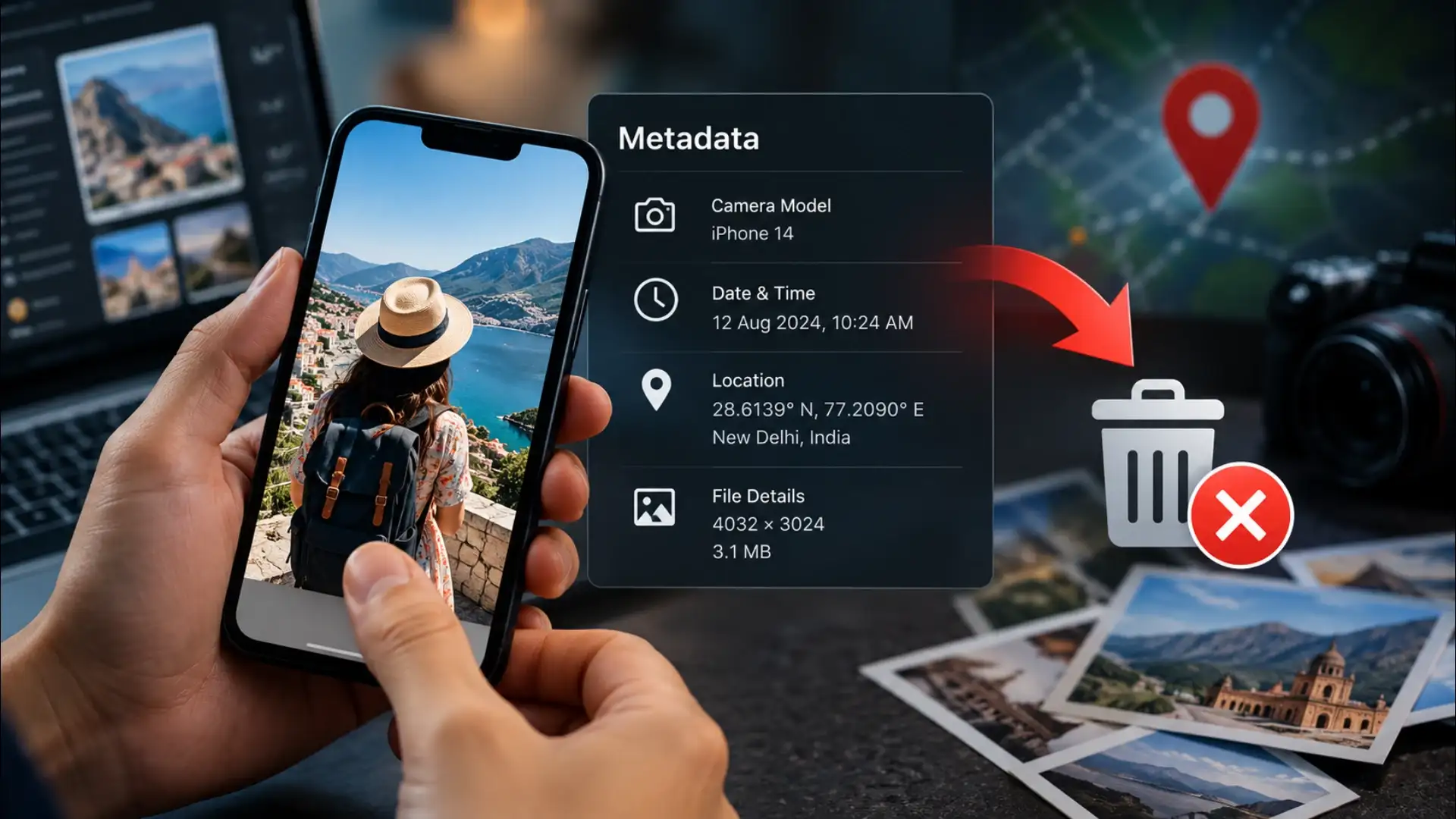
Modern smartphones automatically record some of this information when taking a picture. Depending on the device and camera settings, a photo can contain details such as the date and time it was captured, camera model, image dimensions and editing information.
One of the most important forms is EXIF, short for Exchangeable Image File Format. EXIF data can include GPS coordinates if location services are enabled for the camera.
That means a photograph taken inside your home could potentially carry information about where it was captured, even though the address is not visible in the picture itself.
Imagine taking a photograph in your living room and sending the original file to someone. If GPS data is attached, the image could potentially reveal the location where it was taken. The photograph does not need to show a street sign or landmark for the location information to exist.
This is one reason privacy experts often recommend checking location permissions and metadata before sharing original image files with people or organisations you do not fully trust.
There is also a difference between posting an image publicly and sending the original photograph directly. An original file shared through email, cloud storage or messaging services may retain information that a compressed social media version does not.
The safest approach is therefore not to rely entirely on the platform.
On smartphones, check the camera's location permissions and photo-sharing options. When sharing an image, some devices also provide an option to exclude location data.
For sensitive photographs, dedicated metadata-removal tools can remove EXIF information before the file is shared. It is sensible to check the resulting file afterwards if privacy is particularly important.
Removing metadata therefore does not make a photograph completely anonymous. It simply removes one layer of information.
The broader lesson is straightforward. Before sharing a photograph online, think beyond what you can see in the frame. Sometimes the most revealing details are the ones you cannot see at all.
What Is Metadata?
Metadata is essentially data about data. In a photograph, it can describe how, when and sometimes where the image was created.Modern smartphones automatically record some of this information when taking a picture. Depending on the device and camera settings, a photo can contain details such as the date and time it was captured, camera model, image dimensions and editing information.
One of the most important forms is EXIF, short for Exchangeable Image File Format. EXIF data can include GPS coordinates if location services are enabled for the camera.
That means a photograph taken inside your home could potentially carry information about where it was captured, even though the address is not visible in the picture itself.
Why GPS Metadata Deserves Attention
Location information is particularly sensitive because GPS coordinates can be remarkably precise.Imagine taking a photograph in your living room and sending the original file to someone. If GPS data is attached, the image could potentially reveal the location where it was taken. The photograph does not need to show a street sign or landmark for the location information to exist.
This is one reason privacy experts often recommend checking location permissions and metadata before sharing original image files with people or organisations you do not fully trust.
Metadata Is Not Always Removed Automatically
A common assumption is that uploading a photograph to social media automatically removes every piece of metadata. Some platforms may strip certain EXIF information during processing, but practices vary between services, file types and sharing methods.There is also a difference between posting an image publicly and sending the original photograph directly. An original file shared through email, cloud storage or messaging services may retain information that a compressed social media version does not.
The safest approach is therefore not to rely entirely on the platform.
How to Remove Metadata Before Sharing
Many modern phones and computers offer privacy controls that allow users to remove or prevent location information from being attached to photographs.On smartphones, check the camera's location permissions and photo-sharing options. When sharing an image, some devices also provide an option to exclude location data.
For sensitive photographs, dedicated metadata-removal tools can remove EXIF information before the file is shared. It is sensible to check the resulting file afterwards if privacy is particularly important.
The Overlooked Privacy Problem
Metadata is rarely the only source of information. The photograph itself can still reveal a location through signs, landmarks, documents, house numbers or other visual clues.Removing metadata therefore does not make a photograph completely anonymous. It simply removes one layer of information.
The broader lesson is straightforward. Before sharing a photograph online, think beyond what you can see in the frame. Sometimes the most revealing details are the ones you cannot see at all.
Next Story