
Why Wired Earphones Always Break Near the Plug First

Pull a pair of wired earphones from your pocket and there is a good chance the cable near the plug is slightly kinked, flattened, or twisted in a way the rest of the cable is not. That spot is where the failure begins, and it begins there for a mechanical reason that has nothing to do with quality and everything to do with geometry.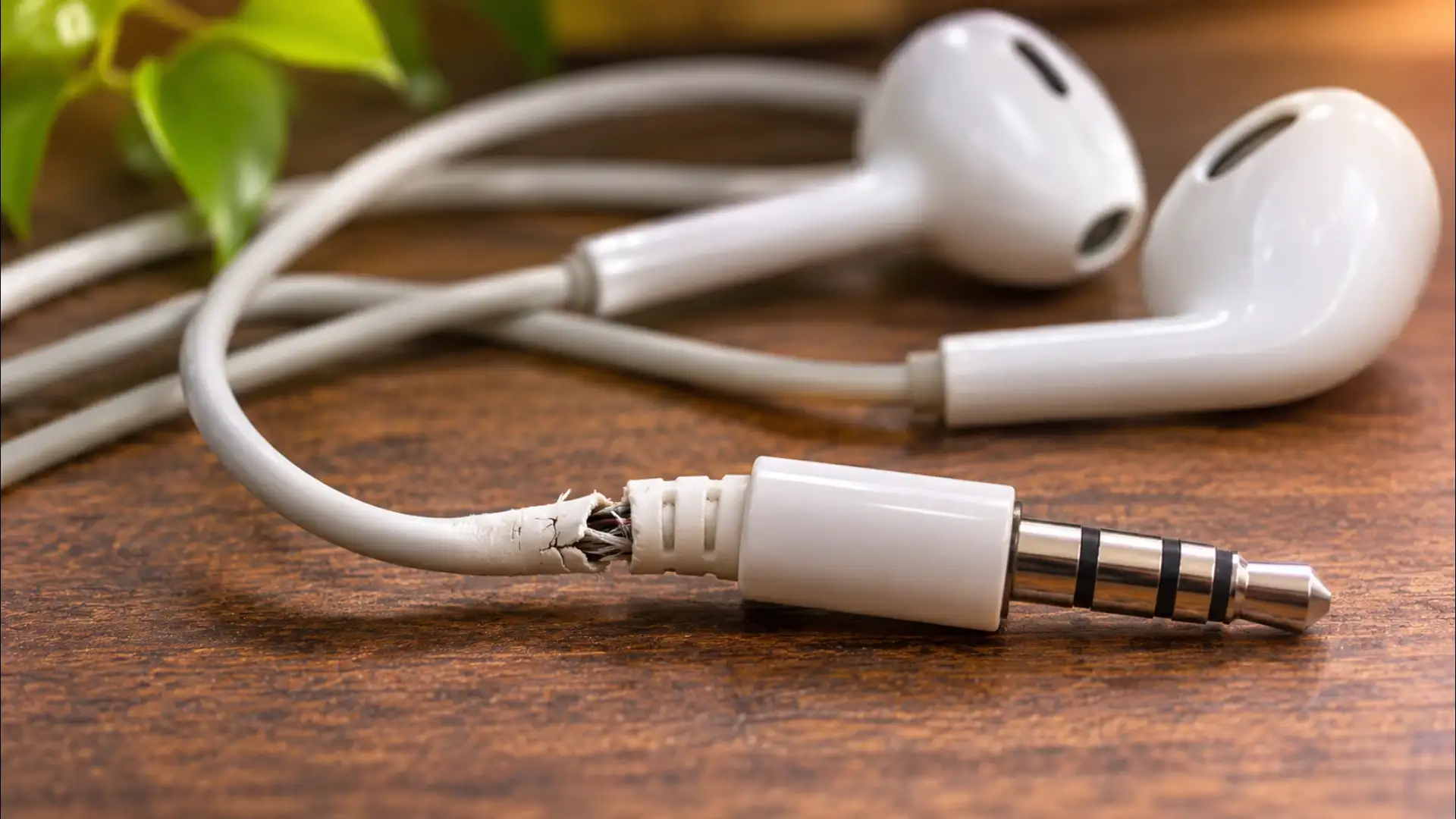
These strands are thin because thin copper bends without snapping. A single thick wire would fracture quickly under repeated flexing. The stranded design spreads the mechanical load across many filaments so that no single one carries the full stress of a bend. It works well, until one spot in the cable bends far more often than anywhere else.
Engineers call the stress that accumulates at this kind of boundary a stress concentration. The cable on either side of that point flexes relatively little because it is free to distribute movement along its length. But the section right at the plug body has nowhere to go. It bends repeatedly at the same angle, in the same place, millions of times across the life of the cable. The copper strands fatigue and eventually break, not all at once, but one by one. Each broken strand shifts its share of the electrical load to the survivors, which then fatigue faster. The audio starts to cut out when you move the cable, then cuts out when the cable is still, then goes silent on one side.
A well-made strain relief is long, tapered, and made from a material that resists permanent deformation. A poor one is short, stubby, and hardens or cracks within months. On budget earphones, the strain relief is often cosmetic, it looks like it provides protection but is too stiff or too short to actually distribute the stress. On better-built cables, you can feel the gradual transition when you flex the plug end between your fingers.
The middle of the cable fails only when it has been sharply kinked, bent at a tight angle and left that way, or repeatedly run over, pinched in a bag zip, or wound too tightly around a device. That kind of damage is visible. The plug-end failure is invisible until it is too late because it accumulates inside the insulation where you cannot see it.
Some people use a spring from a pen, slid over the cable at the plug end, to create a flexible armature that prevents the cable from bending past a certain angle. It looks improvised because it is, but the physics behind it is identical to what a good strain relief does from the factory.
The failure is predictable because the stress is predictable. The plug end breaks first because that is where the geometry concentrates every force the cable ever experiences. Protecting that junction is the only intervention that meaningfully extends the cable's working life.
What Is Actually Inside the Cable
A headphone cable is not a single wire. It carries at least two conductors, one for each channel, plus a ground return, and in a microphone cable, a fourth line. Each conductor is a bundle of very fine copper strands, sometimes as thin as a human hair, twisted together and wrapped in insulation. The whole assembly is then jacketed in the rubber or plastic sleeve you see on the outside.These strands are thin because thin copper bends without snapping. A single thick wire would fracture quickly under repeated flexing. The stranded design spreads the mechanical load across many filaments so that no single one carries the full stress of a bend. It works well, until one spot in the cable bends far more often than anywhere else.
Why the Plug End Is the Weakest Point
The 3.5 mm or 6.35 mm plug is a rigid metal cylinder. The cable, being flexible, can bend in any direction the moment it leaves the plug body. Every time you pull the earphones from your pocket, coil the cable, plug them into a phone, or let them hang from a socket, the cable bends at that junction. The plug cannot bend. The cable can. So all the movement happens in the first few millimetres of cable, at the point where rigid meets flexible.Engineers call the stress that accumulates at this kind of boundary a stress concentration. The cable on either side of that point flexes relatively little because it is free to distribute movement along its length. But the section right at the plug body has nowhere to go. It bends repeatedly at the same angle, in the same place, millions of times across the life of the cable. The copper strands fatigue and eventually break, not all at once, but one by one. Each broken strand shifts its share of the electrical load to the survivors, which then fatigue faster. The audio starts to cut out when you move the cable, then cuts out when the cable is still, then goes silent on one side.
You may also like
- Government's anti-cybercrime wing has 'WhatsApp Web' warning for you
- Best Samsung 8kg washing machines in India: 5 front-load, top-load and semi-automatic options to choose from
- Fertiliser subsidy may rise to Rs 2.5 lakh crore: Industry
- Best Samsung 8 kg washing machines in India: Features, specifications and price
- India Developing Global Space Infrastructure with International Partnerships
Why Better Earphones Last Longer at This Spot
Manufacturers address this with a strain relief, the tapered or ribbed section of rubber or plastic that extends from the plug body along the first few centimetres of cable. Its job is to stiffen the transition zone gradually rather than abruptly. Instead of a hard stop between rigid plug and fully flexible cable, the strain relief creates a zone that bends a little, then a little more, spreading the flex across a longer section of cable. This means no single millimetre of copper is doing all the bending.A well-made strain relief is long, tapered, and made from a material that resists permanent deformation. A poor one is short, stubby, and hardens or cracks within months. On budget earphones, the strain relief is often cosmetic, it looks like it provides protection but is too stiff or too short to actually distribute the stress. On better-built cables, you can feel the gradual transition when you flex the plug end between your fingers.
The Same Failure Happens at the Earpiece End
The same physics applies where the cable enters each earpiece housing, though it tends to progress more slowly there. The earpiece end bends less dramatically than the plug end, the plug is pulled, rotated, and yanked far more often than the earpiece connection. But if you examine a failed earphone carefully, one side usually goes before the other, and the failure is almost always at a junction between rigid housing and flexible cable, not somewhere in the middle of the run.The middle of the cable fails only when it has been sharply kinked, bent at a tight angle and left that way, or repeatedly run over, pinched in a bag zip, or wound too tightly around a device. That kind of damage is visible. The plug-end failure is invisible until it is too late because it accumulates inside the insulation where you cannot see it.
How to Extend the Life of Any Wired Cable
Knowing the mechanism points directly at what helps. Pulling the plug body rather than the cable when disconnecting removes the sharp tug that bends the cable at the worst angle. Coiling the cable loosely rather than wrapping it tightly around a device or your fingers prevents the same spot from being bent repeatedly in the same direction. A small piece of heat-shrink tubing slid over the plug end and shrunk in place adds the stiffening that a poor strain relief fails to provide, the same principle, applied after the fact.Some people use a spring from a pen, slid over the cable at the plug end, to create a flexible armature that prevents the cable from bending past a certain angle. It looks improvised because it is, but the physics behind it is identical to what a good strain relief does from the factory.
The failure is predictable because the stress is predictable. The plug end breaks first because that is where the geometry concentrates every force the cable ever experiences. Protecting that junction is the only intervention that meaningfully extends the cable's working life.






Loving Newspoint? Download the app now
