
Adani seeks government nod to invest in airlines, eyes bigger role in India's aviation market


Adani Group has approached the government seeking permission to invest in the airline sector, signalling a possible expansion of its aviation interests beyond airport operations as it sees scope for a significant increase in India's air traffic capacity.
Group chief financial officer Jugeshinder Robbie Singh said on Friday that India needs nearly 10 times its current daily flight capacity, to around 30,000 flights, to cater to the potential passenger base.
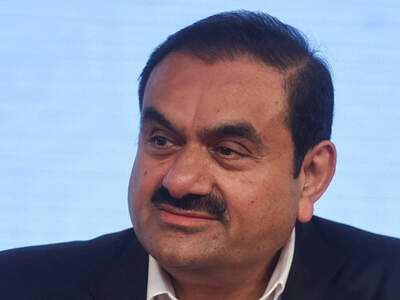
"And that's why we requested the government to at least allow us to invest, so that we can facilitate the development of airlines. Some fund, some other airline company and things like that...or an entrepreneur who wants to go into that space," Singh told reporters on the sidelines of the India Debt Capital Market Summit.
Adani sees room for more airlines
Singh said more than 60 crore people in India have the potential to fly, pointing to the need for greater airline capacity to accommodate the country's untapped aviation demand.
The group's request comes amid calls for greater competition in India's airline industry, which has effectively become a duopoly dominated by Tata Group-owned Air India and Rahul Bhatia-led IndiGo. The two carriers together control around 90% of the domestic aviation market.
Operational disruptions at IndiGo last year, which triggered thousands of flight cancellations, also fuelled demands for more airlines and greater competition in the sector.
Earlier denials of airline ambitions
The latest comments come despite the group's earlier indications that it was not looking to enter the airline business directly.
In July this year, the Adani Group had said it was "not evaluating any proposal to enter the airlines business". On November 3, Adani Airport Holdings chief executive Arun Bansal had also ruled out an airline venture, arguing that competing with customers was never a good strategy.
The group operates eight airports across India, including Mumbai, Navi Mumbai, Ahmedabad, Lucknow and Guwahati. Its airport network handles more than a fourth of the country's air passenger traffic, giving it a substantial presence in India's aviation infrastructure.
Singh's remarks, however, suggest the group is seeking a broader role in the airline ecosystem, potentially by enabling investments in existing carriers, funds or entrepreneurs looking to enter the sector.
Group chief financial officer Jugeshinder Robbie Singh said on Friday that India needs nearly 10 times its current daily flight capacity, to around 30,000 flights, to cater to the potential passenger base.
"And that's why we requested the government to at least allow us to invest, so that we can facilitate the development of airlines. Some fund, some other airline company and things like that...or an entrepreneur who wants to go into that space," Singh told reporters on the sidelines of the India Debt Capital Market Summit.
Adani sees room for more airlines
Singh said more than 60 crore people in India have the potential to fly, pointing to the need for greater airline capacity to accommodate the country's untapped aviation demand.
The group's request comes amid calls for greater competition in India's airline industry, which has effectively become a duopoly dominated by Tata Group-owned Air India and Rahul Bhatia-led IndiGo. The two carriers together control around 90% of the domestic aviation market.
Operational disruptions at IndiGo last year, which triggered thousands of flight cancellations, also fuelled demands for more airlines and greater competition in the sector.
Earlier denials of airline ambitions
The latest comments come despite the group's earlier indications that it was not looking to enter the airline business directly.
In July this year, the Adani Group had said it was "not evaluating any proposal to enter the airlines business". On November 3, Adani Airport Holdings chief executive Arun Bansal had also ruled out an airline venture, arguing that competing with customers was never a good strategy.
The group operates eight airports across India, including Mumbai, Navi Mumbai, Ahmedabad, Lucknow and Guwahati. Its airport network handles more than a fourth of the country's air passenger traffic, giving it a substantial presence in India's aviation infrastructure.
Singh's remarks, however, suggest the group is seeking a broader role in the airline ecosystem, potentially by enabling investments in existing carriers, funds or entrepreneurs looking to enter the sector.
Next Story