
ASEAN must advance effective South China Sea Code of Conduct under international law: Philippine President Marcos


Manila: Philippine President Ferdinand Marcos Jr. on Sunday called for stronger maritime cooperation among ASEAN member states and efforts towards an effective and substantive Code of Conduct (COC) in the South China Sea, in accordance with international law, including the United Nations Convention on the Law of the Sea (UNCLOS).
Addressing the opening plenary of the 49th ASEAN Summit in Manila, Marcos identified maritime cooperation and regional security as key priorities under the Philippines' ASEAN chairmanship, emphasising the need to reinforce regional norms and dialogue to maintain peace, stability and security.
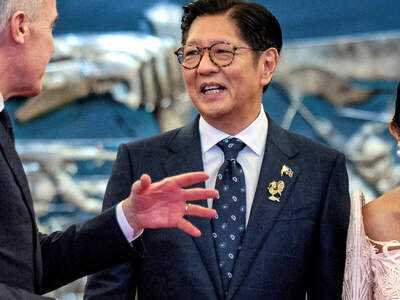
"Under peace and security anchors, we have focused on the conditions that allow our region to remain peaceful, stable, and secure, reinforcing norms and dialogue, strengthening maritime cooperation, advancing efforts on an effective and substantive Code of Conduct in the South China Sea, in accordance with international law, including the 1982 UNCLOS," Marcos said.
The Philippine President said the country's ASEAN chairmanship was organised around three priorities, namely peace and security anchors, prosperity corridors and people empowerment, aimed at strengthening regional stability, economic connectivity and inclusive development.
Under the peace and security pillar, he also highlighted the importance of preparing for disasters and climate risks and strengthening regional responses to transnational and emerging threats.
Marcos said the three priorities were interconnected and called for greater coordination across ASEAN institutions, involving governments, businesses, civil society, academia and people across the region.
"Peace, prosperity, and well-being of our peoples become increasingly connected. Our institutions, therefore, must become better at working across pillars and sectors," he said.
Highlighting the scale of regional cooperation, Marcos said more than 100 outcome documents had been brought forward across the ASEAN Summit and related summits following months of close coordination, negotiations and collaboration among member states and their partners.
He also emphasised the need to strengthen ASEAN's external partnerships, saying the next task was to ensure that the expanding network of partners delivered tangible benefits for the people of the region.
The Philippines welcomed seven new high contracting parties to the Treaty of Amity and Cooperation in Southeast Asia, Turkiye as ASEAN's 12th Dialogue Partner, and Denmark, Germany and Qatar as Sectoral Dialogue Partners during its chairmanship.
Marcos called for translating comprehensive and strategic partnerships into concrete cooperation and building on the ASEAN Outlook on the Indo-Pacific as a framework for open, inclusive and practical regional engagement.
On the economic front, he said all 19 priority economic deliverables of the Philippine chairmanship were expected to be completed by the end of 2026, including the signing of the ASEAN Digital Economy Framework Agreement.
He also welcomed Canadian Prime Minister Mark Carney and Brazilian President Luiz Inacio Lula da Silva, highlighting opportunities to deepen ASEAN's partnerships with both countries and broaden cooperation.
International Monetary Fund Managing Director Kristalina Georgieva was also among the distinguished guests at the summit.
Concluding his remarks, Marcos said ASEAN must consider not only where the regional grouping was headed but also what it needed to become to achieve its long-term objectives under the ASEAN 2045 vision.
He subsequently declared the 49th ASEAN Summit Plenary open. The host nation has framed its leadership around the theme "Navigating Our Future, Together", with the official Philippine chairship emphasising the need for unified statesmanship to ensure the regional bloc remains agile amid shifting geopolitical and global dynamics.
According to the Philippine News Agency, the grand summit serves as a vital convergence point where leaders representing various ASEAN member states and their key dialogue partners assemble to advance shared regional priorities and strengthen diplomatic alliances.
Beyond high-level discussions and diplomatic engagements, the host nation is strategically leveraging its chairship to spotlight its rich cultural legacy, premier tourism attractions, thriving domestic enterprises and renowned local hospitality.
In a nod to sustainable innovation, delegates were transported aboard eco-friendly electric tricycles directly to the main venue for the summit's formal opening.
Meanwhile, at the International Media Center situated within the World Trade Center Metro Manila in Pasay City, journalists and international broadcasters are greeted by an Experiential Pavilion thoughtfully curated to exhibit signature commodities, specialty brews, culinary delights and artistic showcases from Luzon, the Visayas and Mindanao.
As reported by the Philippine News Agency, these multifaceted showcases reflect the administration's broader vision to transform the high-profile diplomatic gathering into a dynamic showcase for the nation's burgeoning tourism sector, cultural identity and long-term economic prospects.
Addressing the opening plenary of the 49th ASEAN Summit in Manila, Marcos identified maritime cooperation and regional security as key priorities under the Philippines' ASEAN chairmanship, emphasising the need to reinforce regional norms and dialogue to maintain peace, stability and security.
"Under peace and security anchors, we have focused on the conditions that allow our region to remain peaceful, stable, and secure, reinforcing norms and dialogue, strengthening maritime cooperation, advancing efforts on an effective and substantive Code of Conduct in the South China Sea, in accordance with international law, including the 1982 UNCLOS," Marcos said.
The Philippine President said the country's ASEAN chairmanship was organised around three priorities, namely peace and security anchors, prosperity corridors and people empowerment, aimed at strengthening regional stability, economic connectivity and inclusive development.
Under the peace and security pillar, he also highlighted the importance of preparing for disasters and climate risks and strengthening regional responses to transnational and emerging threats.
Marcos said the three priorities were interconnected and called for greater coordination across ASEAN institutions, involving governments, businesses, civil society, academia and people across the region.
"Peace, prosperity, and well-being of our peoples become increasingly connected. Our institutions, therefore, must become better at working across pillars and sectors," he said.
Highlighting the scale of regional cooperation, Marcos said more than 100 outcome documents had been brought forward across the ASEAN Summit and related summits following months of close coordination, negotiations and collaboration among member states and their partners.
He also emphasised the need to strengthen ASEAN's external partnerships, saying the next task was to ensure that the expanding network of partners delivered tangible benefits for the people of the region.
The Philippines welcomed seven new high contracting parties to the Treaty of Amity and Cooperation in Southeast Asia, Turkiye as ASEAN's 12th Dialogue Partner, and Denmark, Germany and Qatar as Sectoral Dialogue Partners during its chairmanship.
Marcos called for translating comprehensive and strategic partnerships into concrete cooperation and building on the ASEAN Outlook on the Indo-Pacific as a framework for open, inclusive and practical regional engagement.
On the economic front, he said all 19 priority economic deliverables of the Philippine chairmanship were expected to be completed by the end of 2026, including the signing of the ASEAN Digital Economy Framework Agreement.
He also welcomed Canadian Prime Minister Mark Carney and Brazilian President Luiz Inacio Lula da Silva, highlighting opportunities to deepen ASEAN's partnerships with both countries and broaden cooperation.
International Monetary Fund Managing Director Kristalina Georgieva was also among the distinguished guests at the summit.
Concluding his remarks, Marcos said ASEAN must consider not only where the regional grouping was headed but also what it needed to become to achieve its long-term objectives under the ASEAN 2045 vision.
He subsequently declared the 49th ASEAN Summit Plenary open. The host nation has framed its leadership around the theme "Navigating Our Future, Together", with the official Philippine chairship emphasising the need for unified statesmanship to ensure the regional bloc remains agile amid shifting geopolitical and global dynamics.
According to the Philippine News Agency, the grand summit serves as a vital convergence point where leaders representing various ASEAN member states and their key dialogue partners assemble to advance shared regional priorities and strengthen diplomatic alliances.
Beyond high-level discussions and diplomatic engagements, the host nation is strategically leveraging its chairship to spotlight its rich cultural legacy, premier tourism attractions, thriving domestic enterprises and renowned local hospitality.
In a nod to sustainable innovation, delegates were transported aboard eco-friendly electric tricycles directly to the main venue for the summit's formal opening.
Meanwhile, at the International Media Center situated within the World Trade Center Metro Manila in Pasay City, journalists and international broadcasters are greeted by an Experiential Pavilion thoughtfully curated to exhibit signature commodities, specialty brews, culinary delights and artistic showcases from Luzon, the Visayas and Mindanao.
As reported by the Philippine News Agency, these multifaceted showcases reflect the administration's broader vision to transform the high-profile diplomatic gathering into a dynamic showcase for the nation's burgeoning tourism sector, cultural identity and long-term economic prospects.
Next Story