
Chief Minister Mohan Yadav Releases Cheetah into Gandhi Sagar Sanctuary, Emphasizes Environmental Strengthening


Neemuch, September 20 (Daily Kiran) : Chief Minister Mohan Yadav of Madhya Pradesh released a female cheetah named CCB-2 into the Gandhi Sagar Wildlife Sanctuary in Neemuch on Sunday. This release increases the sanctuary's cheetah population to four, comprising two males and two females, raising hopes for the species' revival in the area. Speaking to the media after the release, Yadav highlighted that this initiative reflects Madhya Pradesh's commitment to wildlife conservation, embodying the spirit of “live and let live.” He congratulated the forest department and the citizens for their efforts and emphasized the need to strengthen the state's environmental ecosystem further.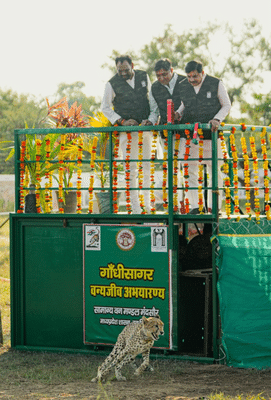 Under Prime Minister Narendra Modi's guidance, the state government has been making significant strides in cheetah conservation, according to Yadav. He described Project Cheetah as a historic and crucial initiative not just for Madhya Pradesh but for all of Asia. Yadav noted that cheetahs had once become extinct in Asia and were also missing from Madhya Pradesh. He expressed his satisfaction that these magnificent animals are now roaming freely in the state once again.Currently, Madhya Pradesh is home to a total of 56 cheetahs, including cubs. The Chief Minister praised the forest department for its achievements and highlighted the state’s rich history in wildlife and forest conservation. He extended his congratulations to all officials and staff involved in preserving the state's natural heritage and biodiversity. Yadav assured that the cheetahs released last year, named "Pavak" and "Prabhas," are healthy. He also mentioned that four new cheetahs arrived just two days prior.The project aims to re-establish the cheetah population after nearly a century of absence. Additionally, Yadav revealed that wild buffaloes have been brought in from Assam, reflecting the government's commitment to wildlife relocation. He discussed the social and economic impacts of this initiative, noting that it has created job opportunities and improved the lives of local residents. Initially, there were concerns among villagers, but the situation has improved over time.Yadav stated that successful wildlife conservation relies on the positive cooperation of all stakeholders involved.
Next Story