
India vs New Zealand 2nd Test: India pick 5 wickets but will rue a few missed opportunities on an eventful opening day


Shubman Gill won another crucial toss. India took five New Zealand wickets. Selection was a hot topic of discussion. It was a repeat of Day 1 in Wellington at the second Test in Christchurch. And yet, when play ended, things could not have been more different.
For starters, the selection debate, particularly Prasidh Krishna’s omission, all but evaporated by lunch. Gurnoor Brar, who came into the XI, picked up his maiden Test wicket. The buzz around Brar has been building for some time now. Gill’s affinity for tall, hit-the-deck bowlers is well known, and Brar has worked his way through white-ball cricket to the Test side.
Throughout his career, Prasidh has been criticised for his body language. He’s too quiet, too much of a nice guy and just does not have the aggro needed to be a fast bowler. Prasidh has had to do a tough job, often bowling on lifeless surfaces and being asked to bang the ball in when little was happening. And his returns reflect this. In 10 Tests, he has 35 wickets at an acceptable average of 31.25 and a really good strike rate of 47.5. But the management was looking for an opportunity to try Brar in a similar role.
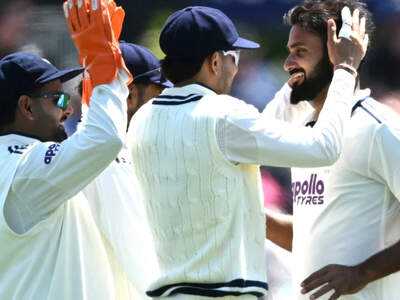
And when he got his chance, Brar delivered. While he was not immediately excited at having to bowl to a leg-side field, Brar got one to come in to Devon Conway, nailing him in front of the stumps.
New Zealand’s nervy start — the opening stand of 77 featured several half-chances and a couple of close calls survived via the DRS — gave way to an Indian ascendancy.
The quick bowlers were guilty of not making the batsmen play enough in the first session, but they corrected course after making the breakthrough.
Akash Deep was the most impressive of the lot, operating from around the stumps to the left-handed batters and getting the ball to straighten just enough. Akash bowled with good pace — what would once be referred to as a heavy ball — and was rewarded with near-identical dismissals of Tom Latham and Rachin Ravindra.
The significant difference between Wellington and Christchurch was bounce. The ball carried through well to Rishab Pant behind the stumps and more than once edges fell short of the fielder at gully.
The bounce ensured that India’s bowlers did not lose hope at any point. This was best illustrated by Anshul Kamboj picking up a wicket with a short one. Although he mostly operated in the late 120 to early 130kmh range, he managed to extract a bit of extra bounce and draw a top edge from Henry Nicholls’ pull.
As if not wanting to be left out, Washington Sundar got in on the act. A well-laid leg trap left Daryl Mitchell feeling sheepish as he clipped one straight to Dhruv Jurel, who held onto a sharp catch at short leg.
If there was one glaring area of concern for India, it was Jasprit Bumrah. It’s rare for the spearhead goes wicketless, but he had to endure 19 overs with nothing tangible to show for it. Bumrah’s pace was down, and he kept switching between one approach and another. Bumrah altered his run up and load up, going more conventional, with arms by his sides as he moved forward, abandoning his usual approach of holding both hands in front of him. But nothing worked.
“Even in the practice session before the match Bumrah was trying a few different things, including the action you saw today,” said Akash, after the day’s play. “He must have had a plan in his mind, which is why he tried something different. He’s Bumrah, and when he does something there will be a plan behind it.”
Akash also conceded that India could have done better. “Overall, it was a pretty good [day], but we could have done better,” said Akash.
“In the first session, there was a bit of moisture, so the ball wasn’t coming on to the bat with much pace. So the edges weren’t carrying.
“Early on, we were also moving the ball a bit too much. After lunch, we decided to focus on bowling in good areas and being patient. That was our plan, and it helped us pick up three wickets.”
The good news for India is that they never allowed New Zealand to settle into a rhythm.
If India can replicate this on the second morning, they can keep the home team down to a manageable first-innings score and use the learnings from the first Test with the assistance on offer in the second to press for an outright result.
(Disclaimer: The opinions expressed in this column are that of the writer. The facts and opinions expressed here do not reflect the views of www.economictimes.com)
For starters, the selection debate, particularly Prasidh Krishna’s omission, all but evaporated by lunch. Gurnoor Brar, who came into the XI, picked up his maiden Test wicket. The buzz around Brar has been building for some time now. Gill’s affinity for tall, hit-the-deck bowlers is well known, and Brar has worked his way through white-ball cricket to the Test side.
Throughout his career, Prasidh has been criticised for his body language. He’s too quiet, too much of a nice guy and just does not have the aggro needed to be a fast bowler. Prasidh has had to do a tough job, often bowling on lifeless surfaces and being asked to bang the ball in when little was happening. And his returns reflect this. In 10 Tests, he has 35 wickets at an acceptable average of 31.25 and a really good strike rate of 47.5. But the management was looking for an opportunity to try Brar in a similar role.
And when he got his chance, Brar delivered. While he was not immediately excited at having to bowl to a leg-side field, Brar got one to come in to Devon Conway, nailing him in front of the stumps.
New Zealand’s nervy start — the opening stand of 77 featured several half-chances and a couple of close calls survived via the DRS — gave way to an Indian ascendancy.
The quick bowlers were guilty of not making the batsmen play enough in the first session, but they corrected course after making the breakthrough.
Akash Deep was the most impressive of the lot, operating from around the stumps to the left-handed batters and getting the ball to straighten just enough. Akash bowled with good pace — what would once be referred to as a heavy ball — and was rewarded with near-identical dismissals of Tom Latham and Rachin Ravindra.
The significant difference between Wellington and Christchurch was bounce. The ball carried through well to Rishab Pant behind the stumps and more than once edges fell short of the fielder at gully.
The bounce ensured that India’s bowlers did not lose hope at any point. This was best illustrated by Anshul Kamboj picking up a wicket with a short one. Although he mostly operated in the late 120 to early 130kmh range, he managed to extract a bit of extra bounce and draw a top edge from Henry Nicholls’ pull.
As if not wanting to be left out, Washington Sundar got in on the act. A well-laid leg trap left Daryl Mitchell feeling sheepish as he clipped one straight to Dhruv Jurel, who held onto a sharp catch at short leg.
If there was one glaring area of concern for India, it was Jasprit Bumrah. It’s rare for the spearhead goes wicketless, but he had to endure 19 overs with nothing tangible to show for it. Bumrah’s pace was down, and he kept switching between one approach and another. Bumrah altered his run up and load up, going more conventional, with arms by his sides as he moved forward, abandoning his usual approach of holding both hands in front of him. But nothing worked.
“Even in the practice session before the match Bumrah was trying a few different things, including the action you saw today,” said Akash, after the day’s play. “He must have had a plan in his mind, which is why he tried something different. He’s Bumrah, and when he does something there will be a plan behind it.”
Akash also conceded that India could have done better. “Overall, it was a pretty good [day], but we could have done better,” said Akash.
“In the first session, there was a bit of moisture, so the ball wasn’t coming on to the bat with much pace. So the edges weren’t carrying.
“Early on, we were also moving the ball a bit too much. After lunch, we decided to focus on bowling in good areas and being patient. That was our plan, and it helped us pick up three wickets.”
The good news for India is that they never allowed New Zealand to settle into a rhythm.
If India can replicate this on the second morning, they can keep the home team down to a manageable first-innings score and use the learnings from the first Test with the assistance on offer in the second to press for an outright result.
(Disclaimer: The opinions expressed in this column are that of the writer. The facts and opinions expressed here do not reflect the views of www.economictimes.com)
Next Story