
India's next consumption wave can't be built for urban elite alone: FM Sitharaman


India’s next consumption boom will be driven by rising incomes and upward mobility, but corporate India risks weakening that growth if it focuses too heavily on affluent urban consumers, Finance Minister Nirmala Sitharaman said on Tuesday.
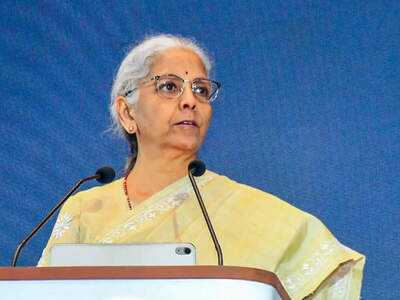
Addressing the 53rd National Management Convention of the All India Management Association in New Delhi, Sitharaman said India is at a “structural inflection point” as reforms and rising incomes reshape demand.
She said the next phase of consumption will increasingly move towards discretionary spending as household incomes rise, while changing demographics push spending towards healthcare, personal wellness, consumer durables and quality services.
But the opportunity extends well beyond India's formal urban economy, she said.
“Corporate leadership must nevertheless avoid designing only for the formal urban elite,” Sitharaman said, pointing to working families across agriculture, rural construction, transport and informal enterprises as the foundation of India's consumption base.
“If corporate India pursues premiumisation for the urban tier alone, growth will lose its structural durability,” she said.
The minister also called for a broader role for the private sector as the government opens sectors such as space and nuclear energy to greater private participation.
“More of India's development needs can be met through the market, and industry must step forward to meet them,” she said.
Sitharaman also highlighted the scale of India's public investment and digital infrastructure. Union capital expenditure has been raised to more than Rs 12 lakh crore for 2026-27, while effective capital expenditure, including grants to states for creating capital assets, has crossed Rs 17 lakh crore, she said.
India's railway network is now almost fully electrified, while freight loading has reached a record 1,670 million tonnes, Sitharaman said.
Digital public infrastructure, meanwhile, averaged around 79 crore transactions a day in August 2026, she said.
Sitharaman said the shift in public finances was also significant, arguing that India is increasingly borrowing to fund investment rather than consumption — a transformation she said few emerging economies could claim.
She also urged Indian companies to look beyond manufacturing scale as the country seeks to deepen its role in global value chains.
“Made in India” must increasingly give way to “imagined in India”, she said, with greater focus on design, engineering, patents, software, technology and know-how.
Addressing the 53rd National Management Convention of the All India Management Association in New Delhi, Sitharaman said India is at a “structural inflection point” as reforms and rising incomes reshape demand.
She said the next phase of consumption will increasingly move towards discretionary spending as household incomes rise, while changing demographics push spending towards healthcare, personal wellness, consumer durables and quality services.
But the opportunity extends well beyond India's formal urban economy, she said.
“Corporate leadership must nevertheless avoid designing only for the formal urban elite,” Sitharaman said, pointing to working families across agriculture, rural construction, transport and informal enterprises as the foundation of India's consumption base.
“If corporate India pursues premiumisation for the urban tier alone, growth will lose its structural durability,” she said.
The minister also called for a broader role for the private sector as the government opens sectors such as space and nuclear energy to greater private participation.
“More of India's development needs can be met through the market, and industry must step forward to meet them,” she said.
Sitharaman also highlighted the scale of India's public investment and digital infrastructure. Union capital expenditure has been raised to more than Rs 12 lakh crore for 2026-27, while effective capital expenditure, including grants to states for creating capital assets, has crossed Rs 17 lakh crore, she said.
India's railway network is now almost fully electrified, while freight loading has reached a record 1,670 million tonnes, Sitharaman said.
Digital public infrastructure, meanwhile, averaged around 79 crore transactions a day in August 2026, she said.
Sitharaman said the shift in public finances was also significant, arguing that India is increasingly borrowing to fund investment rather than consumption — a transformation she said few emerging economies could claim.
She also urged Indian companies to look beyond manufacturing scale as the country seeks to deepen its role in global value chains.
“Made in India” must increasingly give way to “imagined in India”, she said, with greater focus on design, engineering, patents, software, technology and know-how.
Next Story