
MLC polls: Counting begins in four states, BJP-led alliances face rebel challenges


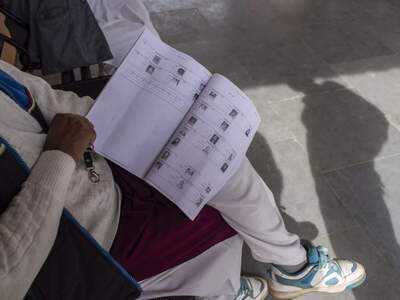
Counting of votes in 28 Legislative Council seats across the states of Uttar Pradesh, Bihar, Maharashtra and Karnataka began early on Tuesday, with results expected to test the organisational strength of the involved political parties, their alliance coordination and the impact of rebel candidates.
The contests include teacher and graduate seats, with ruling parties looking to consolidate their support among the electorates while the opposition is expecting to capitalise on internal difference.
19 seats are at stake in Uttar Pradesh and neighbouring Bihar, where contests are seeing overlapping candiates from opposition parties, rebel leaders and efforts by regional parties to challenge the established formations. In Karnataka, four seats are up for grabs with the ruling Congress pitted against the BJP-JD(S) alliance, whereas five seats in Maharashtra will show if signs of dissent have emerged either in the BJP-led Mahayuti alliance or the Maha Vikas Aghadi (MVA).
Bihar: Jan Suraaj enters the fray as JD(U) faces rebellion
Four teacher seats in Patna, Darbhanga, Tirhut and Saran while four other gradue seats in Patna, Darbhanga, Tirhut and Kosi are being counted. The ruling NDA has nominees equally split between BJP and JD(U). Among the BJP candidates seeking re-election are Nawal Kishore Yadav from Patna Teachers, NK Yadav from Kosi Graduates, Sarvesh Kumar from Tirhut Graduates and Narendra Kumar Singh from Tirhut Teachers.
The opposition is meanwhile seeing overlapping contests, with RJD fighting on six seats and the Congress on five. Ally CPI is also contesting on one sit. Former political strategist Prashant Kishor, who infamously won the Bankipur seat from Patna, has fielded candidates from his Jan Suraaj Party in all eight seats. The party has promised 10,000 local jobs for each constituency it wins and made late changes to its candidate list, fielding Shyam Nandan Yadav from Tirhut Teachers and Mohammad Imtiyaz (Noorani) from Darbhanga Graduates.
The Patna Graduates' constituency is among the closely watched contests, with JD(U) nominee Neeraj Kumar, a former minister and aide of former chief minister Nitish Kumar, seeking a fourth consecutive term.
The election campaign was also marked by a rebellion involving Anant Singh, the Mokama MLA expelled by the JD(U), who openly backed Jan Suraaj candidate Anuj Singh against his own party's nominee. The JD(U) expelled Anant Singh and his wife, Neelam Devi, for six years. Anant Singh subsequently declared the party finished and announced plans to launch his own political party.
Uttar Pradesh: BJP and SP face off across 11 seats
Uttar Pradesh accounts for 11 seats — five graduate constituencies in Lucknow, Varanasi, Agra, Meerut and Allahabad-Jhansi, and six teacher constituencies in Lucknow, Varanasi, Agra, Meerut, Bareilly-Moradabad and Gorakhpur-Faizabad.
The BJP has fielded candidates across all 11 constituencies, setting up contests against Akhilesh Yadav's Samajwadi Party. Among the BJP nominees are Kedar Nath Singh from Varanasi Graduates, Dinesh Goel from Meerut Graduates, Ashok Kumar Rathore from Allahabad-Jhansi Graduates and Dr Pramod Mishra from Varanasi Teachers.
The contests have been shaped by local rivalries and disgruntled aspirants who moved to rival parties after being denied tickets. In Varanasi Graduates, BJP candidate Kedar Nath Singh faces SP's Ashutosh Sinha.
The SP has also fielded former BJP ticket-seekers, including Dr Sanjayan Tripathi from Gorakhpur-Faizabad Teachers and Akash Agarwal from Agra, setting up direct contests against the BJP's official nominees.
The results will offer an indication of the organisational strength of the two parties among graduates and teachers, as well as the extent to which local factionalism and candidate defections have influenced the contests.
Karnataka: Congress takes on BJP-JD(S) alliance
Counting began on Tuesday for four Karnataka Legislative Council seats that went to polls on October 23. The constituencies are South-East Graduates, West Graduates, North-East Teachers and Bengaluru Teachers, where 43 candidates were in the fray.
The Congress is seeking to retain its lone seat and make gains in the other constituencies, while the BJP is looking to hold on to three seats it currently controls. The BJP has fielded candidates in South-East Graduates, West Graduates and North-East Teachers, while its ally JD(S) is contesting Bengaluru Teachers.
In South-East Graduates, Congress candidate Shashi Hulikunte Mutt faced BJP's K M Suresh. In West Graduates, Congress nominee Mohan Limbikai contested against sitting BJP MLC S V Sankanur. Congress candidate Sharanappa Mattur faced sitting BJP MLC Shashil G Namoshi in North-East Teachers, while Congress MLC Puttanna took on JD(S) candidate A P Ranganath in Bengaluru Teachers.
The Bengaluru contest is particularly significant because Puttanna switched from the JD(S) to the Congress ahead of the previous Assembly elections. Both Puttanna and Ranganath belong to the Vokkaliga community.
Turnout was highest in North-East Teachers at 86.97%, followed by Bengaluru Teachers at 81.98%, West Graduates at 75.62% and South-East Graduates at 73.58%.
The results will test the BJP-JD(S) alliance's ability to coordinate its support across constituencies, although the outcome is not expected to affect the stability of the state government. The 75-member Council currently has 38 Congress members, 24 from the BJP and six from the JD(S), along with one Independent and Chairman Saleem Ahmed. Five seats earmarked for government nominations are vacant.
Maharashtra: Mahayuti faces rebel challenge
Five Maharashtra Legislative Council seats are being contested, with 182 candidates in the fray across three graduate and two teacher constituencies. The constituencies together have 10,68,072 registered voters. Polling on October 23 recorded an overall turnout of around 72.96% across 2,419 polling stations.
The contests are being closely watched for signs of internal dissent within the BJP-led Mahayuti alliance and the ability of the opposition MVA to benefit from differences among its rivals.
In Nagpur Graduates, BJP candidate Sudhakar Kohale is challenging sitting Congress MLC Abhijit Wanjari. The BJP is seeking to reclaim the seat, which it held for nearly six decades before Wanjari won it in 2020.
Pune Graduates has emerged as a crowded contest, with BJP nominee Smita Jadhav facing NCP (Sharadchandra Pawar) candidate Harshada Deshmukh-Jadhav and Shiv Sena (UBT) nominee Sunil Modi. The constituency has around 3.88 lakh registered voters and 47 candidates.
In Pune Teachers, BJP candidate Kaustubh Gawde is contesting against sitting Congress MLC Jayant Asgaonkar, while the Shiv Sena led by Deputy Chief Minister Eknath Shinde is backing Independent candidate Sachin Sanap. Former MLC Dattatray Sawant of the Rashtriya Samaj Paksha is also in the fray.
In Chhatrapati Sambhajinagar Graduates, sitting MLC Satish Chavan, representing the NCP led by Sunetra Pawar, faces NCP (Sharadchandra Pawar) nominee Pratapsinh Patil, with Shiv Sena (UBT) also fielding a candidate.
Amravati Teachers is another contest marked by differences within the ruling alliance. Sitting MLC Kiran Sarnaik, the official candidate of the Shinde-led Shiv Sena, faces Congress nominee Aditi Pohare, while BJP rebels Sangeeta Shinde, Shekhar Bhoyar and Sumit Pawar are also contesting. Shiv Sena (UBT) has fielded Dattatraya Lahane.
Amravati recorded the highest turnout among the five constituencies at around 92.6%, followed by Pune Teachers at 85.86%, Nagpur Graduates at 64.84%, Pune Graduates at 62.76% and Chhatrapati Sambhajinagar Graduates at 59.12%.
The counting process is significant because the elections use a preferential voting system. If no candidate reaches the prescribed quota on first-preference votes, transfers of subsequent preferences may determine the winners.
The results across the four states will offer a measure of the parties' organisational strength among graduate and teacher voters, while highlighting the impact of defections, rebel candidacies and competing alliance interests on local political equations.
The contests include teacher and graduate seats, with ruling parties looking to consolidate their support among the electorates while the opposition is expecting to capitalise on internal difference.
19 seats are at stake in Uttar Pradesh and neighbouring Bihar, where contests are seeing overlapping candiates from opposition parties, rebel leaders and efforts by regional parties to challenge the established formations. In Karnataka, four seats are up for grabs with the ruling Congress pitted against the BJP-JD(S) alliance, whereas five seats in Maharashtra will show if signs of dissent have emerged either in the BJP-led Mahayuti alliance or the Maha Vikas Aghadi (MVA).
Bihar: Jan Suraaj enters the fray as JD(U) faces rebellion
Four teacher seats in Patna, Darbhanga, Tirhut and Saran while four other gradue seats in Patna, Darbhanga, Tirhut and Kosi are being counted. The ruling NDA has nominees equally split between BJP and JD(U). Among the BJP candidates seeking re-election are Nawal Kishore Yadav from Patna Teachers, NK Yadav from Kosi Graduates, Sarvesh Kumar from Tirhut Graduates and Narendra Kumar Singh from Tirhut Teachers.
The opposition is meanwhile seeing overlapping contests, with RJD fighting on six seats and the Congress on five. Ally CPI is also contesting on one sit. Former political strategist Prashant Kishor, who infamously won the Bankipur seat from Patna, has fielded candidates from his Jan Suraaj Party in all eight seats. The party has promised 10,000 local jobs for each constituency it wins and made late changes to its candidate list, fielding Shyam Nandan Yadav from Tirhut Teachers and Mohammad Imtiyaz (Noorani) from Darbhanga Graduates.
The Patna Graduates' constituency is among the closely watched contests, with JD(U) nominee Neeraj Kumar, a former minister and aide of former chief minister Nitish Kumar, seeking a fourth consecutive term.
The election campaign was also marked by a rebellion involving Anant Singh, the Mokama MLA expelled by the JD(U), who openly backed Jan Suraaj candidate Anuj Singh against his own party's nominee. The JD(U) expelled Anant Singh and his wife, Neelam Devi, for six years. Anant Singh subsequently declared the party finished and announced plans to launch his own political party.
Uttar Pradesh: BJP and SP face off across 11 seats
Uttar Pradesh accounts for 11 seats — five graduate constituencies in Lucknow, Varanasi, Agra, Meerut and Allahabad-Jhansi, and six teacher constituencies in Lucknow, Varanasi, Agra, Meerut, Bareilly-Moradabad and Gorakhpur-Faizabad.
The BJP has fielded candidates across all 11 constituencies, setting up contests against Akhilesh Yadav's Samajwadi Party. Among the BJP nominees are Kedar Nath Singh from Varanasi Graduates, Dinesh Goel from Meerut Graduates, Ashok Kumar Rathore from Allahabad-Jhansi Graduates and Dr Pramod Mishra from Varanasi Teachers.
The contests have been shaped by local rivalries and disgruntled aspirants who moved to rival parties after being denied tickets. In Varanasi Graduates, BJP candidate Kedar Nath Singh faces SP's Ashutosh Sinha.
The SP has also fielded former BJP ticket-seekers, including Dr Sanjayan Tripathi from Gorakhpur-Faizabad Teachers and Akash Agarwal from Agra, setting up direct contests against the BJP's official nominees.
The results will offer an indication of the organisational strength of the two parties among graduates and teachers, as well as the extent to which local factionalism and candidate defections have influenced the contests.
Karnataka: Congress takes on BJP-JD(S) alliance
Counting began on Tuesday for four Karnataka Legislative Council seats that went to polls on October 23. The constituencies are South-East Graduates, West Graduates, North-East Teachers and Bengaluru Teachers, where 43 candidates were in the fray.
The Congress is seeking to retain its lone seat and make gains in the other constituencies, while the BJP is looking to hold on to three seats it currently controls. The BJP has fielded candidates in South-East Graduates, West Graduates and North-East Teachers, while its ally JD(S) is contesting Bengaluru Teachers.
In South-East Graduates, Congress candidate Shashi Hulikunte Mutt faced BJP's K M Suresh. In West Graduates, Congress nominee Mohan Limbikai contested against sitting BJP MLC S V Sankanur. Congress candidate Sharanappa Mattur faced sitting BJP MLC Shashil G Namoshi in North-East Teachers, while Congress MLC Puttanna took on JD(S) candidate A P Ranganath in Bengaluru Teachers.
The Bengaluru contest is particularly significant because Puttanna switched from the JD(S) to the Congress ahead of the previous Assembly elections. Both Puttanna and Ranganath belong to the Vokkaliga community.
Turnout was highest in North-East Teachers at 86.97%, followed by Bengaluru Teachers at 81.98%, West Graduates at 75.62% and South-East Graduates at 73.58%.
The results will test the BJP-JD(S) alliance's ability to coordinate its support across constituencies, although the outcome is not expected to affect the stability of the state government. The 75-member Council currently has 38 Congress members, 24 from the BJP and six from the JD(S), along with one Independent and Chairman Saleem Ahmed. Five seats earmarked for government nominations are vacant.
Maharashtra: Mahayuti faces rebel challenge
Five Maharashtra Legislative Council seats are being contested, with 182 candidates in the fray across three graduate and two teacher constituencies. The constituencies together have 10,68,072 registered voters. Polling on October 23 recorded an overall turnout of around 72.96% across 2,419 polling stations.
The contests are being closely watched for signs of internal dissent within the BJP-led Mahayuti alliance and the ability of the opposition MVA to benefit from differences among its rivals.
In Nagpur Graduates, BJP candidate Sudhakar Kohale is challenging sitting Congress MLC Abhijit Wanjari. The BJP is seeking to reclaim the seat, which it held for nearly six decades before Wanjari won it in 2020.
Pune Graduates has emerged as a crowded contest, with BJP nominee Smita Jadhav facing NCP (Sharadchandra Pawar) candidate Harshada Deshmukh-Jadhav and Shiv Sena (UBT) nominee Sunil Modi. The constituency has around 3.88 lakh registered voters and 47 candidates.
In Pune Teachers, BJP candidate Kaustubh Gawde is contesting against sitting Congress MLC Jayant Asgaonkar, while the Shiv Sena led by Deputy Chief Minister Eknath Shinde is backing Independent candidate Sachin Sanap. Former MLC Dattatray Sawant of the Rashtriya Samaj Paksha is also in the fray.
In Chhatrapati Sambhajinagar Graduates, sitting MLC Satish Chavan, representing the NCP led by Sunetra Pawar, faces NCP (Sharadchandra Pawar) nominee Pratapsinh Patil, with Shiv Sena (UBT) also fielding a candidate.
Amravati Teachers is another contest marked by differences within the ruling alliance. Sitting MLC Kiran Sarnaik, the official candidate of the Shinde-led Shiv Sena, faces Congress nominee Aditi Pohare, while BJP rebels Sangeeta Shinde, Shekhar Bhoyar and Sumit Pawar are also contesting. Shiv Sena (UBT) has fielded Dattatraya Lahane.
Amravati recorded the highest turnout among the five constituencies at around 92.6%, followed by Pune Teachers at 85.86%, Nagpur Graduates at 64.84%, Pune Graduates at 62.76% and Chhatrapati Sambhajinagar Graduates at 59.12%.
The counting process is significant because the elections use a preferential voting system. If no candidate reaches the prescribed quota on first-preference votes, transfers of subsequent preferences may determine the winners.
The results across the four states will offer a measure of the parties' organisational strength among graduate and teacher voters, while highlighting the impact of defections, rebel candidacies and competing alliance interests on local political equations.
Next Story