
Monsoon deficit raises risk of lower Rabi crop acreage


New Delhi: Farmers across several regions may scale back rabi sowing this winter as deficient monsoon rainfall, falling soil moisture and depleted reservoir levels threaten irrigation supplies, raising the risk of lower output of winter staples such as wheat, pulses and oilseeds.
The potential shortfall comes amid renewed food-price pressures, with wholesale food inflation rising to 7.36% in September.
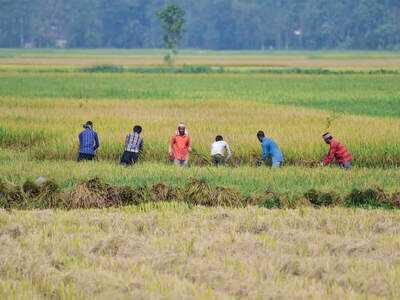
Acreage could decline by 25-30% in some crops, said Suresh Agrawal, president of Dal Mill Association. Lentils (masur) and gram (chana) could gain area if there is no rain until Diwali, he added. Wheat and mustard could suffer the most because they require multiple rounds of irrigation, unlike legumes and millets.
Soil moisture levels are below the average of the past decade across several major agricultural states, including Karnataka, Maharashtra, Andhra Pradesh, Telangana, Tamil Nadu, Rajasthan, Gujarat and Madhya Pradesh, according to a government official.
Parts of northern Bihar are also reporting below-average soil moisture, raising concerns about the extent of winter sowing and farmers' choice of crops.
The shortfall in soil moisture and irrigation reserves could influence planting decisions in the coming weeks, particularly in regions where farmers depend on rainfall, reservoirs and groundwater to sustain winter crops.
Reservoirs, a key source of irrigation during the rabi season, are also under pressure. A total of 36 reservoirs have water storage at 50% or less of their levels at the same time last year, while 26 are at 50% or less of their normal storage levels, according to the latest bulletin of the Central Water Commission (CWC).
Of the 741 districts that the India Meteorological Department (IMD) tracks, around 58% have received deficient or largely deficient precipitation compared with the long-period average (LPA), while 7% have recorded normal rainfall and 4% excess rainfall, according to the data provided.
The Centre and state governments have urged farmers to align crop choices with water availability, encouraging those in water-stressed areas to shift towards less water-intensive crops such as pulses and oilseeds.
The potential shortfall comes amid renewed food-price pressures, with wholesale food inflation rising to 7.36% in September.
Acreage could decline by 25-30% in some crops, said Suresh Agrawal, president of Dal Mill Association. Lentils (masur) and gram (chana) could gain area if there is no rain until Diwali, he added. Wheat and mustard could suffer the most because they require multiple rounds of irrigation, unlike legumes and millets.
Soil moisture levels are below the average of the past decade across several major agricultural states, including Karnataka, Maharashtra, Andhra Pradesh, Telangana, Tamil Nadu, Rajasthan, Gujarat and Madhya Pradesh, according to a government official.
Parts of northern Bihar are also reporting below-average soil moisture, raising concerns about the extent of winter sowing and farmers' choice of crops.
The shortfall in soil moisture and irrigation reserves could influence planting decisions in the coming weeks, particularly in regions where farmers depend on rainfall, reservoirs and groundwater to sustain winter crops.
Reservoirs, a key source of irrigation during the rabi season, are also under pressure. A total of 36 reservoirs have water storage at 50% or less of their levels at the same time last year, while 26 are at 50% or less of their normal storage levels, according to the latest bulletin of the Central Water Commission (CWC).
Of the 741 districts that the India Meteorological Department (IMD) tracks, around 58% have received deficient or largely deficient precipitation compared with the long-period average (LPA), while 7% have recorded normal rainfall and 4% excess rainfall, according to the data provided.
The Centre and state governments have urged farmers to align crop choices with water availability, encouraging those in water-stressed areas to shift towards less water-intensive crops such as pulses and oilseeds.
Next Story