
Rohit Sharma, Virat Kohli & the last dance


Thiruvananthapuram is not the cynosure of eyes in India’s sporting ecosystem. At least it wasn’t, with the Asian Games underway in Japan, until two ageing sportsmen reached the city earlier this week. From videos of them arriving to extra stands being opened up for spectators to watch practice sessions, everything changed.
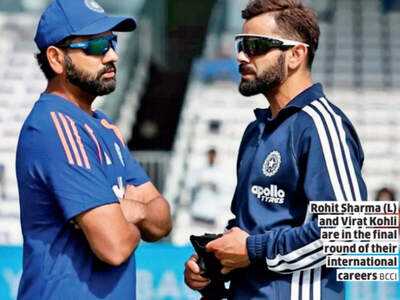
It sounds ridiculous to say, but Virat Kohli and Rohit Sharma have become de facto ambassadors of ODIs. Kohli is nearly 38, and Rohit is not far from 40.
The format has enjoyed the goodwill of fans for years in a sustained manner that Test cricket has failed to, and T20 cricket is aspiring to.
Read more: Virat Kohli says 2027 World Cup will be his last for India
Even as T20 cricket has become the game’s commercial engine and the most-watched format, 50-over cricket remains relevant.
When you said World Cup, in cricket it meant the 50- over game. So much so that the International Cricket Council (ICC) originally called the 20-over global tournament the ICC World T20, not the T20 World Cup.
 A recent poll of stakeholders in the game, with cricketers at the forefront, revealed that the 50-over World Cup was still viewed as the pinnacle of the limitedovers game.
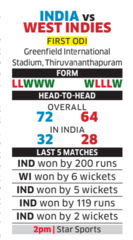
It is no wonder then that a Kerala town is abuzz even as India’s main team is in Japan. There may be a gold medal at stake there, and India are expected to bring it home, but the 50-over matches against West Indies in a bilateral series matter because they mark the start of the home stretch to the 2027 50-over World Cup in South Africa.
Kohli and Rohit play only one format now. And so, every appearance is like gold dust to their fans. And Kohli made his feelings on the subject quite clear.
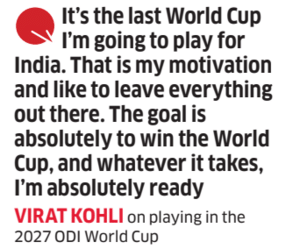
“For me, it’s the last World Cup I’m going to play for India,” Kohli told broadcaster JioStar. “That is my motivation and like, you know, to leave everything out there. And of course, the goal is absolutely to win the World Cup, and whatever it takes, I’m absolutely ready.”
Kohli’s words carry the assurance of a man who does not doubt his place in the scheme of things, or even his destiny. Kohli believes everything he is working towards in cricket right now is to do what he can to help India win the next World Cup. And the way he has been batting, there’s no reason to believe he won’t be the prize wicket for every opposition bowler when the time comes.
 Rohit is no less of a player than Kohli in 50-over cricket. He plays a different role, has devised different ways of playing at his position, and has some of the most dramatic centuries that have gone past 200 in the game’s history. But he does not speak with the same matter-of-fact tone about his vision for the 2027 World Cup.
Rohit, at least till now, has not been a certainty to make the cut for the next World Cup. It’s no secret that voices within the selection committee and the think tank have believed his fitness was unlikely to hold till then. And, with this being the case, it was prudent to take a call on Rohit’s future with enough time for the likes of Yashasvi Jaiswal to bed down into the opening position in 50-over cricket.
But as events have panned out, the Board of Control for Cricket in India did not back the change, and Ajit Agarkar, the chairman of selectors whose committee set the move in place, has moved on, not seeking the final annual extension he was eligible for.
This means that Rohit now plays his ODIs as just another member of the team: if he is performing and fit, he keeps his place.
He has, of course, been given a long rope, especially with fitness, because he is no ordinary player. And, while the going is good, Rohit is one of the greatest to play 50-over cricket. Rohit now plays as a batsman who simply needs to go out and do the job on the day. He no longer has to prove today that he will still be good enough and fit in late 2027.
Exactly what effect this will have on his approach to batting will be supremely interesting. But whether this clarity causes him to open up and attack at all costs, or fall back to his original template of starting solid but building big, this West Indian bowling attack has a tough job on its hands.
It sounds ridiculous to say, but Virat Kohli and Rohit Sharma have become de facto ambassadors of ODIs. Kohli is nearly 38, and Rohit is not far from 40.
The format has enjoyed the goodwill of fans for years in a sustained manner that Test cricket has failed to, and T20 cricket is aspiring to.
Read more: Virat Kohli says 2027 World Cup will be his last for India
Even as T20 cricket has become the game’s commercial engine and the most-watched format, 50-over cricket remains relevant.
When you said World Cup, in cricket it meant the 50- over game. So much so that the International Cricket Council (ICC) originally called the 20-over global tournament the ICC World T20, not the T20 World Cup.
It is no wonder then that a Kerala town is abuzz even as India’s main team is in Japan. There may be a gold medal at stake there, and India are expected to bring it home, but the 50-over matches against West Indies in a bilateral series matter because they mark the start of the home stretch to the 2027 50-over World Cup in South Africa.
Kohli and Rohit play only one format now. And so, every appearance is like gold dust to their fans. And Kohli made his feelings on the subject quite clear.
“For me, it’s the last World Cup I’m going to play for India,” Kohli told broadcaster JioStar. “That is my motivation and like, you know, to leave everything out there. And of course, the goal is absolutely to win the World Cup, and whatever it takes, I’m absolutely ready.”
Kohli’s words carry the assurance of a man who does not doubt his place in the scheme of things, or even his destiny. Kohli believes everything he is working towards in cricket right now is to do what he can to help India win the next World Cup. And the way he has been batting, there’s no reason to believe he won’t be the prize wicket for every opposition bowler when the time comes.
Rohit, at least till now, has not been a certainty to make the cut for the next World Cup. It’s no secret that voices within the selection committee and the think tank have believed his fitness was unlikely to hold till then. And, with this being the case, it was prudent to take a call on Rohit’s future with enough time for the likes of Yashasvi Jaiswal to bed down into the opening position in 50-over cricket.
But as events have panned out, the Board of Control for Cricket in India did not back the change, and Ajit Agarkar, the chairman of selectors whose committee set the move in place, has moved on, not seeking the final annual extension he was eligible for.
This means that Rohit now plays his ODIs as just another member of the team: if he is performing and fit, he keeps his place.
He has, of course, been given a long rope, especially with fitness, because he is no ordinary player. And, while the going is good, Rohit is one of the greatest to play 50-over cricket. Rohit now plays as a batsman who simply needs to go out and do the job on the day. He no longer has to prove today that he will still be good enough and fit in late 2027.
Exactly what effect this will have on his approach to batting will be supremely interesting. But whether this clarity causes him to open up and attack at all costs, or fall back to his original template of starting solid but building big, this West Indian bowling attack has a tough job on its hands.
Next Story