
SC suggests Sarfaesi Act update for clarity on creditors' priority


New Delhi: The Supreme Court on Thursday urged Parliament to consider amending the Securitisation and Reconstruction of Financial Assets and Enforcement of Security Interest Act, 2002 (Sarfaesi Act) to clarify the priority of secured creditors in recovering dues from properties mortgaged by defaulters.
The amendment would bring greater clarity to the recovery of dues from mortgaged properties that have also been attached under state laws protecting depositors, the court said, noting that uncertainty over the issue has led to prolonged litigations.
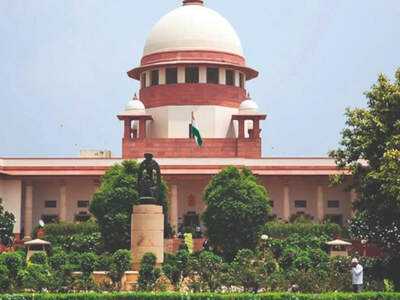
A bench of Justices J B Pardiwala and Ujjal Bhuyan made the suggestion while examining the conflict between two laws pertaining to 'recovery of dues': of secured creditors under the Sarfaesi Act, and of depositors under the Maharashtra Protection of Interest of Depositors (in Financial Establishments) Act, 1999 (MPID Act).
The bench was hearing an appeal by the State Bank of India against the Bombay High Court's 2025 order that upheld a designated court's order, refusing permission to SBI to appropriate Rs 3.5 crore obtained from sale of the property mortgaged by Peacock Media's promoters under the 2002 Act.
The High Court had held that the claims under the MPID Act were not subservient to those of the bank under the Sarfaesi Act, and directed that ₹3.5 crore along with interest be transferred to the bank account of the competent authority under the MPID Act.
The SC bench has referred the legal question to a larger bench, and directed the state "not to transfer, utilise, appropriate or disburse" the about ₹5.5 crore SBI has deposited. "We find it apposite to grant the interim reliefs as sought by the bank till this matter is finally resolved," it said.
The bench observed that a vacuum in the law regarding clarity on priority to secured creditors has given rise to several litigations.
Section 26E of the Sarfaesi Act gives secured creditors priority to recover their debts ahead of "all other debts" and all revenues, taxes, cesses and other rates payable to the central or state government or local authority.
The amendment would bring greater clarity to the recovery of dues from mortgaged properties that have also been attached under state laws protecting depositors, the court said, noting that uncertainty over the issue has led to prolonged litigations.
A bench of Justices J B Pardiwala and Ujjal Bhuyan made the suggestion while examining the conflict between two laws pertaining to 'recovery of dues': of secured creditors under the Sarfaesi Act, and of depositors under the Maharashtra Protection of Interest of Depositors (in Financial Establishments) Act, 1999 (MPID Act).
The bench was hearing an appeal by the State Bank of India against the Bombay High Court's 2025 order that upheld a designated court's order, refusing permission to SBI to appropriate Rs 3.5 crore obtained from sale of the property mortgaged by Peacock Media's promoters under the 2002 Act.
The High Court had held that the claims under the MPID Act were not subservient to those of the bank under the Sarfaesi Act, and directed that ₹3.5 crore along with interest be transferred to the bank account of the competent authority under the MPID Act.
The SC bench has referred the legal question to a larger bench, and directed the state "not to transfer, utilise, appropriate or disburse" the about ₹5.5 crore SBI has deposited. "We find it apposite to grant the interim reliefs as sought by the bank till this matter is finally resolved," it said.
The bench observed that a vacuum in the law regarding clarity on priority to secured creditors has given rise to several litigations.
Section 26E of the Sarfaesi Act gives secured creditors priority to recover their debts ahead of "all other debts" and all revenues, taxes, cesses and other rates payable to the central or state government or local authority.
Next Story