
The escalation trap tightens: A misstep can trigger a NATO-Russia face-off


The Russia-Ukraine war is increasingly threatening to spill into a direct confrontation between Moscow and NATO. Poland has asked NATO to consider shooting down Russian missiles over Ukrainian territory itself, while Russia's former president Dmitry Medvedev has openly argued that Moscow could launch a preventive nuclear strike under certain circumstances.
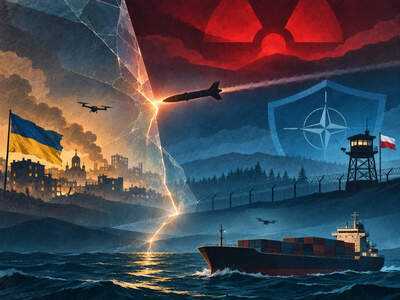
Russian missiles have landed in Poland, drones have crossed NATO airspace and Ukrainian attacks have reached Russian military vessels in the Baltic and Mediterranean. With Democrats preparing to take control of both chambers of the US Congress in January, pressure on Vladimir Putin could intensify even as Donald Trump pursues a negotiated settlement.
Also Read: NATO believes Russia is ready to launch nuclear-armed satellite: Reports
The risk is no longer limited to deliberate escalation. With an emboldened NATO, a more adventurous Ukraine and a cornered Russia, a miscalculation involving a missile, drone or naval vessel could bring Russian and NATO forces into direct confrontation.
Poland wants NATO to move beyond defending its own airspace
Poland has asked NATO to intercept Russian missiles and drones while they are still flying over Ukraine. According to Bloomberg, Poland raised the proposal during a meeting of NATO ambassadors in Brussels on November 23. The idea is to destroy Russian projectiles heading towards NATO territory before they cross the alliance's borders.
The proposal follows a series of incidents, including three Russian Kh-101 cruise missiles that landed in Polish territory on November 20. A Russian drone also briefly violated Polish airspace on November 23 before turning back towards Ukraine. Poland suspected the incursion was deliberate, although Russia had not publicly acknowledged responsibility.
Polish Foreign Minister Radosław Sikorski has argued that intercepting a missile over Ukraine, at Kyiv's request, could constitute self-defence. Defence Minister Władysław Kosiniak-Kamysz, however, acknowledged that NATO had not reached a decision.
NATO currently intercepts threats to allied territory. Destroying Russian weapons over Ukraine would take the alliance into the actual theatre of war and could expose its forces to Russian retaliation.
The new flashpoints
Poland is not the only NATO member facing growing friction with Moscow. On November 23, Russia accused Estonia of hostile actions that were supposedly bringing the countries close to open war. Moscow summoned Estonia's chargé d'affaires after it announced plans to close its land border crossings with Russia from December 1 for at least six months.
Estonia cited security concerns, including an alleged attempted arson attack on a defence company. Russia denied involvement in the incident and accused Estonia of allowing Ukrainian attacks through its airspace.
The Baltic Sea is becoming another potential flashpoint. On November 21, the Russian cargo ship Sparta II caught fire after a suspected Ukrainian drone attack. The vessel drifted into Finnish waters, prompting rescue operations by Finnish authorities. The 16 crew members were evacuated. Finland's military said Ukraine was likely responsible. Later, Ukrainian President Volodymyr Zelenskyy confirmed in an interview with Bloomberg that Ukraine had struck the Russian cargo ship Sparta II with a drone in the Gulf of Finland.
Though the incident did not involve a confrontation between Russian and Finnish forces, it brought a Russian military-linked vessel and a Ukrainian operation into the immediate vicinity of a NATO member.
Also Read: Start of World War 3? NATO chief Rutte reaffirms the Western alliance's Article 5 commitment after Russian missile incursions into Poland
NATO had convened an urgent meeting following the Polish missile incidents and other developments across Europe. Germany's Foreign Minister Johann Wadephul warned that Europe was no longer entirely at peace, referring to missiles and drones crossing into Poland and attacks on shipping.
Ukraine is taking the conflict into the Mediterranean
The geographical expansion is not limited to the Baltic. On November 23, Ukraine said it had sunk the Russian naval corvette Merkury at a port in Benghazi, Libya, using maritime drones. President Volodymyr Zelenskyy also acknowledged an attack on the Russian cargo ship MV Angara. Ukraine's foreign minister Andrii Sybiha defended the operation on November 24, describing Russian military shipping as legitimate targets under international law.
The operation has uncomfortable implications for European security. Russia maintains military and political interests in eastern Libya, while Italy expressed concern that the strikes could further destabilise the country. Libya's internationally recognised government also objected to being drawn into the conflict.
Such attacks could threaten Russian logistical routes supporting Moscow's operations in the Sahel.
The Mediterranean is not a NATO-Russia battlefield, but the operation demonstrates how Ukrainian strikes against Russian assets can create complications and even misinterpretation for European governments far beyond eastern Europe.
Medvedev's preventive nuclear warning raises the stakes
The most alarming political development came from Medvedev, currently deputy chairman of Russia's Security Council. In an article published in the Moscow Journal of International Law on November 23, Medvedev argued that catastrophic conventional attacks could justify a preventive nuclear strike by Russia. He also warned that secret Western supplies of nuclear weapons to Ukraine would provoke such a response. "The massive use of non-nuclear means that cause catastrophes makes a preventive nuclear attack by the Russian Federation possible," he wrote.
Medvedev went further, arguing that Russia could have an obligation to use nuclear weapons in certain circumstances.
He acknowledged that the Ukraine war had not yet created a situation of direct necessity for nuclear use. His comments are therefore a warning and an attempt to establish a justification for potential escalation, not evidence that Putin has ordered nuclear preparations.
Russia's November 2024 nuclear doctrine allows consideration of nuclear weapons under specified circumstances, including conventional aggression posing a critical threat to Russian sovereignty or territorial integrity. It does not explicitly establish a general right to launch preventive nuclear attacks in response to Western military assistance.
Nevertheless, Medvedev's comment indicates that Moscow wants Western governments to factor nuclear escalation into decisions about military support for Kyiv.
Democratic control of Congress could increase pressure on Putin
The political situation in Washington can add another complication. Democrats have secured control of both the House and Senate following the November midterm elections. Democratic lawmakers intend to make increased assistance to Ukraine a priority when the new Congress convenes in January.
Congressional Democrats could use defence spending legislation and budget measures to push for more weapons, financial assistance and tougher sanctions against Russia. They could also hold hearings and investigate the Trump administration's negotiations with Moscow.
However, Trump retains considerable executive authority over foreign policy and military operations. He can veto legislation, while Democrats lack the votes to override that veto. The Senate filibuster also means most ordinary legislation requires 60 votes to advance.
The result could be a divided American approach. Trump wants a negotiated settlement, while Democrats may seek to strengthen Ukraine's military position and increase economic pressure on Russia. For Putin, this could mean facing a tougher American congressional environment even as the White House seeks diplomatic engagement.
The danger lies in an incident neither side intended
The most plausible route to a wider confrontation need not begin with a deliberate NATO decision to enter the war. A Russian missile could kill civilians in Poland, a NATO aircraft intercepting a Russian weapon over Ukraine could be targeted in retaliation, or a Ukrainian drone operation could damage Russian shipping in waters close to Finland, prompting Moscow to accuse a NATO country of facilitating the attack.
Each incident would force governments to make decisions under pressure. Misattribution, incomplete intelligence and political demands for retaliation could make de-escalation harder.
NATO's Article 5 does not automatically require every member to declare war following an airspace violation. But a confirmed armed attack on an ally could trigger collective-defence consultations and potentially military action.
The coming months will test whether Trump can preserve a negotiating channel with Putin while managing pressure from Congress and European allies. Poland's proposal, Medvedev's nuclear rhetoric and the expanding maritime dimension of the conflict show how easily a regional war could generate a crisis involving nuclear-armed powers. The greatest danger may not be a decision by either side to start a wider war but the inability to stop one after a single incident crosses the wrong threshold.
Russian missiles have landed in Poland, drones have crossed NATO airspace and Ukrainian attacks have reached Russian military vessels in the Baltic and Mediterranean. With Democrats preparing to take control of both chambers of the US Congress in January, pressure on Vladimir Putin could intensify even as Donald Trump pursues a negotiated settlement.
Also Read: NATO believes Russia is ready to launch nuclear-armed satellite: Reports
The risk is no longer limited to deliberate escalation. With an emboldened NATO, a more adventurous Ukraine and a cornered Russia, a miscalculation involving a missile, drone or naval vessel could bring Russian and NATO forces into direct confrontation.
Poland wants NATO to move beyond defending its own airspace
The proposal follows a series of incidents, including three Russian Kh-101 cruise missiles that landed in Polish territory on November 20. A Russian drone also briefly violated Polish airspace on November 23 before turning back towards Ukraine. Poland suspected the incursion was deliberate, although Russia had not publicly acknowledged responsibility.
Polish Foreign Minister Radosław Sikorski has argued that intercepting a missile over Ukraine, at Kyiv's request, could constitute self-defence. Defence Minister Władysław Kosiniak-Kamysz, however, acknowledged that NATO had not reached a decision.
NATO currently intercepts threats to allied territory. Destroying Russian weapons over Ukraine would take the alliance into the actual theatre of war and could expose its forces to Russian retaliation.
The new flashpoints
Poland is not the only NATO member facing growing friction with Moscow. On November 23, Russia accused Estonia of hostile actions that were supposedly bringing the countries close to open war. Moscow summoned Estonia's chargé d'affaires after it announced plans to close its land border crossings with Russia from December 1 for at least six months.
Estonia cited security concerns, including an alleged attempted arson attack on a defence company. Russia denied involvement in the incident and accused Estonia of allowing Ukrainian attacks through its airspace.
The Baltic Sea is becoming another potential flashpoint. On November 21, the Russian cargo ship Sparta II caught fire after a suspected Ukrainian drone attack. The vessel drifted into Finnish waters, prompting rescue operations by Finnish authorities. The 16 crew members were evacuated. Finland's military said Ukraine was likely responsible. Later, Ukrainian President Volodymyr Zelenskyy confirmed in an interview with Bloomberg that Ukraine had struck the Russian cargo ship Sparta II with a drone in the Gulf of Finland.
Though the incident did not involve a confrontation between Russian and Finnish forces, it brought a Russian military-linked vessel and a Ukrainian operation into the immediate vicinity of a NATO member.
Also Read: Start of World War 3? NATO chief Rutte reaffirms the Western alliance's Article 5 commitment after Russian missile incursions into Poland
NATO had convened an urgent meeting following the Polish missile incidents and other developments across Europe. Germany's Foreign Minister Johann Wadephul warned that Europe was no longer entirely at peace, referring to missiles and drones crossing into Poland and attacks on shipping.
Ukraine is taking the conflict into the Mediterranean
The geographical expansion is not limited to the Baltic. On November 23, Ukraine said it had sunk the Russian naval corvette Merkury at a port in Benghazi, Libya, using maritime drones. President Volodymyr Zelenskyy also acknowledged an attack on the Russian cargo ship MV Angara. Ukraine's foreign minister Andrii Sybiha defended the operation on November 24, describing Russian military shipping as legitimate targets under international law.
The operation has uncomfortable implications for European security. Russia maintains military and political interests in eastern Libya, while Italy expressed concern that the strikes could further destabilise the country. Libya's internationally recognised government also objected to being drawn into the conflict.
Such attacks could threaten Russian logistical routes supporting Moscow's operations in the Sahel.
The Mediterranean is not a NATO-Russia battlefield, but the operation demonstrates how Ukrainian strikes against Russian assets can create complications and even misinterpretation for European governments far beyond eastern Europe.
Medvedev's preventive nuclear warning raises the stakes
The most alarming political development came from Medvedev, currently deputy chairman of Russia's Security Council. In an article published in the Moscow Journal of International Law on November 23, Medvedev argued that catastrophic conventional attacks could justify a preventive nuclear strike by Russia. He also warned that secret Western supplies of nuclear weapons to Ukraine would provoke such a response. "The massive use of non-nuclear means that cause catastrophes makes a preventive nuclear attack by the Russian Federation possible," he wrote.
Medvedev went further, arguing that Russia could have an obligation to use nuclear weapons in certain circumstances.
He acknowledged that the Ukraine war had not yet created a situation of direct necessity for nuclear use. His comments are therefore a warning and an attempt to establish a justification for potential escalation, not evidence that Putin has ordered nuclear preparations.
Russia's November 2024 nuclear doctrine allows consideration of nuclear weapons under specified circumstances, including conventional aggression posing a critical threat to Russian sovereignty or territorial integrity. It does not explicitly establish a general right to launch preventive nuclear attacks in response to Western military assistance.
Nevertheless, Medvedev's comment indicates that Moscow wants Western governments to factor nuclear escalation into decisions about military support for Kyiv.
Democratic control of Congress could increase pressure on Putin
The political situation in Washington can add another complication. Democrats have secured control of both the House and Senate following the November midterm elections. Democratic lawmakers intend to make increased assistance to Ukraine a priority when the new Congress convenes in January.
Congressional Democrats could use defence spending legislation and budget measures to push for more weapons, financial assistance and tougher sanctions against Russia. They could also hold hearings and investigate the Trump administration's negotiations with Moscow.
However, Trump retains considerable executive authority over foreign policy and military operations. He can veto legislation, while Democrats lack the votes to override that veto. The Senate filibuster also means most ordinary legislation requires 60 votes to advance.
The result could be a divided American approach. Trump wants a negotiated settlement, while Democrats may seek to strengthen Ukraine's military position and increase economic pressure on Russia. For Putin, this could mean facing a tougher American congressional environment even as the White House seeks diplomatic engagement.
The danger lies in an incident neither side intended
Each incident would force governments to make decisions under pressure. Misattribution, incomplete intelligence and political demands for retaliation could make de-escalation harder.
NATO's Article 5 does not automatically require every member to declare war following an airspace violation. But a confirmed armed attack on an ally could trigger collective-defence consultations and potentially military action.
The coming months will test whether Trump can preserve a negotiating channel with Putin while managing pressure from Congress and European allies. Poland's proposal, Medvedev's nuclear rhetoric and the expanding maritime dimension of the conflict show how easily a regional war could generate a crisis involving nuclear-armed powers. The greatest danger may not be a decision by either side to start a wider war but the inability to stop one after a single incident crosses the wrong threshold.
Next Story