
13 California teenagers collect 22,000 discarded tennis and pickleballs in just 24 hours to set a Guinness World Record; all collected balls sent for specialist recycling, kick-starting an environmental movement


Thirteen teenagers in California have collected 22,000 discarded tennis balls and pickleballs in just 24 hours, setting a Guinness World Record while drawing attention to the growing problem of sports equipment waste. The record-breaking collection took place at Reed Park in Santa Monica on September 19, 2026, as part of a youth-led environmental initiative called Another Bounce. The students gathered approximately 1,213 kg (2,674 lb) of used sports balls, which were sent for specialist recycling rather than being disposed of in landfills. What began as a student-led effort to address waste at local sports facilities has developed into a wider campaign involving schools, sports clubs, community members and local authorities.
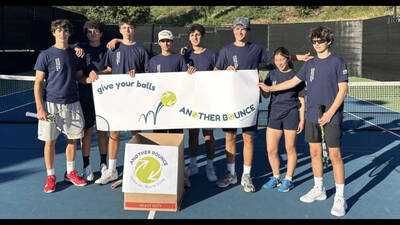
Another Bounce: How a student project to collect discarded tennis and pickleballs became a world record
The initiative, called Another Bounce, operates under the umbrella of Habits of Waste, a US-based environmental nonprofit. It was developed by student-athletes who noticed how frequently tennis balls and pickleballs were discarded after losing their bounce or becoming damaged.
The students began collecting used sports balls in February 2026, placing dedicated collection bins at tennis clubs, schools and other sports facilities across the Los Angeles area. The campaign gradually attracted support from local players, families and sports organisations, allowing the teenagers to expand their collection network.
The September 19 event at Reed Park brought the campaign to its record-breaking stage. Thirteen students representing five local high schools participated in the effort, with a Guinness World Records adjudicator present to verify the achievement. The final collection of 22,000 balls established a new record for the most sports balls collected for recycling in 24 hours.
Why discarded tennis balls and pickleballs are an environmental concern
Tennis balls and pickleballs are frequently replaced because of wear and tear, creating a waste problem that receives relatively little attention compared with other forms of plastic pollution.
Traditional tennis balls have a rubber core covered with synthetic felt, while pickleballs are generally manufactured from hard plastic. Tennis balls gradually lose their pressure and bounce, while pickleballs can crack or become damaged after repeated use. Once they are no longer suitable for playing, many end up being thrown away.
According to estimates cited by Habits of Waste, more than 500 million tennis balls and pickleballs are produced and sold annually. The organisation also estimates that approximately 125 million tennis balls enter US landfills every year.
The materials used in these products can persist in the environment for extended periods. Their disposal therefore presents a challenge for waste-management systems, particularly as participation in recreational sports such as tennis and pickleball continues to grow.
How the collected sports balls will be recycled
The collected balls were sent through a specialist recycling process in partnership with Ridwell, a waste collection and recycling company. The process is designed to recover usable materials rather than sending the discarded equipment directly to landfills.
Depending on the material and condition, the balls can be processed through different recycling pathways. Plastic components can be shredded, washed and converted into pellets that can serve as raw material for manufacturing. Recovered materials can also be used in products such as sports-court surfaces and other manufactured goods.
The initiative aims to demonstrate that sports equipment does not necessarily have to become waste once it is no longer suitable for regular play. By creating collection points at sports facilities, the students are also attempting to make recycling more accessible to players and clubs.
Teenagers push local authorities to address sports waste
Beyond the Guinness World Record, Another Bounce is campaigning for longer-term changes in how used sports equipment is collected and disposed of. The students have approached local authorities in Malibu, Santa Monica, Beverly Hills and Los Angeles, encouraging them to introduce measures that support sports-ball recycling.
In August 2026, officials in Malibu expressed support for the students' proposal and invited them to submit a draft ordinance addressing sports-ball waste. The teenagers also want sports-equipment manufacturers to take greater responsibility for products once they reach the end of their useful lives.
One of their proposals involves establishing take-back programmes through which customers could return used tennis balls and pickleballs to manufacturers for recycling. Such systems could help create a more organised collection network and reduce the volume of discarded sports equipment entering landfills.
Habits of Waste and its wider environmental campaigns
Another Bounce is supported by Habits of Waste, founded by environmental campaigner Sheila Morovati. The nonprofit works to reduce unnecessary waste through public awareness campaigns, community initiatives and policy advocacy.
Morovati has also founded Crayon Collection, a programme that redirects unused crayons from businesses and restaurants to schools and children. Habits of Waste has previously worked on campaigns addressing single-use plastics and unnecessary disposable items.
Through Another Bounce, the organisation is extending its work to sports equipment, encouraging young people, recreational players, schools and manufacturers to reconsider how used products are handled. The students' campaign combines community participation with an effort to establish more permanent recycling practices for an often-overlooked category of waste.
Next Story