
50 years after Nepal banned cannabis, SC orders regulated cultivation within 3 months


Fifty years after Nepal banned all cannabis cultivation, Supreme Court has directed govt to frame regulations within three months to allow its controlled cultivation for medicinal, scientific and industrial purposes, potentially opening the door to a legal cannabis industry in the Himalayan nation. The court held that successive govts had failed to implement provisions of a law enacted in 1976 that already allowed limited cultivation under regulation.
The verdict, delivered on May 18, 2025, remained unpublished for nearly 18 months after court records were destroyed in an arson attack during the violent Gen Z protests on Sept 9, 2025. Its full text emerged only last week, bringing renewed attention to a ban Nepal imposed in 1976 under international pressure, particularly from the US.
The court criticised successive govts for failing to implement provisions of the Narcotic Drugs (Control) Act, 1976, which permits certain forms of regulated cultivation and medicinal use. "The failure to do so amounts to a refusal or neglect by govt to discharge its legal obligations," the court observed. It directed authorities to frame rules for licensing and monitoring the cultivation, processing, storage, sale, distribution, import and export of cannabis within three months of receiving the order.
"It is therefore the duty of state authorities to formulate such rules without delay," the judgment said in a published English translation. The order did not permit recreational use, which remains illegal, and left any wider relaxation of cannabis laws to parliament.
The ruling could bring new opportunities for farmers in Nepal's mountainous regions, where cannabis grows naturally and cultivation has continued illegally despite the ban. Campaigners have argued for years that prohibition did little to stop production while denying farmers a source of income. They believe a regulated industry could give growers access to legal markets and create jobs in processing, medicine and other cannabis-based products.
Rajiv Kafle, a prominent cannabis legalisation campaigner, has long called for Nepal to replace prohibition with regulation. "In fact, regulation is a better policy option," he told TOI, pointing to the economic opportunities that countries with legal cannabis industries had already begun exploiting.
Former health minister Birodh Khatiwada, another advocate of legalisation, has questioned why Nepal continued to criminalise a crop that several other countries had begun permitting. "It is not justifiable that a poor country like ours has to treat cannabis as a drug," he said earlier, criticising the difference between restrictions in developing countries and changing policies in wealthier nations.
Saurav Dhakal of Green Growth Nepal has also argued that cannabis cultivation could help rural communities, but warned that large companies should not be allowed to corner the benefits. "We need to make sure that legalising cannabis benefits the neediest Nepalis," he said, calling for small farmers and cooperatives to have a meaningful share in any future legal industry.
Nepal has made several attempts to ease its cannabis restrictions, but little has changed on the ground. A parliamentary Bill introduced in 2020 failed to make progress, while a 2024 govt announcement allowing medicinal cannabis cultivation produced few results. Gandaki Province passed legislation in July 2026 permitting regulated cultivation for medicinal and industrial purposes, but federal restrictions continued to complicate its implementation.
Grass Roots: How ban came about
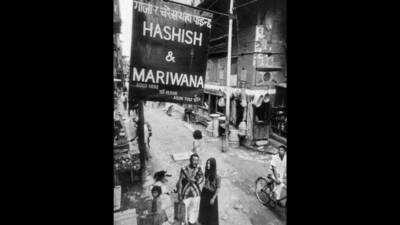
During the 1960s and early 1970s, Kathmandu's Freak Street became a prominent stop on the hippie trail, attracting Western backpackers, counterculture travellers and Americans seeking to avoid conscription during the Vietnam War. Govt-licensed shops openly sold marijuana and hashish. As then US President Richard Nixon intensified the 'War on Drugs', Nepal faced mounting pressure to shut down the trade.
In 1973, Nepal revoked cannabis trading licences, closing the licensed hashish shops. The Narcotic Drugs (Control) Act, 1976, subsequently criminalised cultivation, sale and consumption, although it retained limited exceptions for regulated activities that successive govts failed to implement.
Ironically, several US states have legalised recreational marijuana years ago, while Nepal continues to criminalise unauthorised cultivation and consumption.
Next Story