
A US partnership turned 2.5 million pounds of unsold food and drinks into renewable energy and fertiliser in 15 months; here's how the waste recovery process works


A US partnership between refrigerated storage company US Cold Storage and food waste recovery company Divert has turned unsold food and beverage products into renewable energy , fertiliser and recovered water. The programme covered seven facilities in California in its first 15 months and processed more than 2.5 million pounds of products that could no longer be sold.
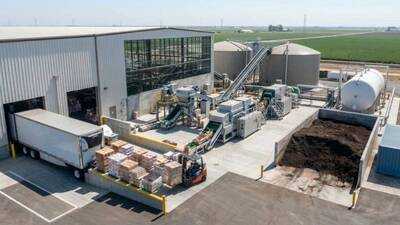
Instead of sending these goods to landfill, the companies found a way to recover useful resources from them. According to Divert’s press release, the products were transported to its Integrated Diversion & Energy Facility in Turlock, California. At the facility, specialised machines separated the food from its packaging before anaerobic digestion technology processed the material to produce renewable energy, fertiliser and recovered water.
How Divert and US Cold Storage partnered to process unsold food
The partnership brought together Divert, a circular economy company, and United States Cold Storage, a provider of refrigerated warehousing and logistics. Unsold products from seven US Cold facilities in California were sent to Divert's Turlock facility.
The arrangement covered products that could no longer be sold. Its platform was designed to respond to customer needs and recover value from unsold goods rather than treating them only as waste.
The company said the programme helped US Cold expand its sustainable product destruction work across several locations. This was supported by dynamic pricing and routing materials to suitable facilities. The partnership was presented as a way to support brands' sustainability commitments through the end of the supply chain.
How the food waste recovery system produces renewable energy and fertiliser
Once opportunities to sell or donate products had been exhausted, US Cold sent the material to Divert's Integrated Diversion & Energy Facility in Turlock, California. There, the company used proprietary High-Recovery Depackaging technology and anaerobic digestion to process it. The treatment produced renewable natural gas, nutrient-rich agricultural fertilisers and recovered water.
It supplied fertiliser and soil amendments to regional partners, including Western Milling and Crème Brulee Farming Co. These products supported local farms growing new food. The process was intended to keep value circulating locally while providing US Cold and its customers with secure handling, documentation, and environmental benefits.
The partnership processed 2.5 million pounds of unsold products in 15 months
The partnership processed more than 2.5 million pounds of unsold food and beverage products in its first 15 months. Divert reported that the material generated more than 8,500 MMBtu of renewable natural gas. The work also avoided about 450 metric tons of carbon dioxide equivalent emissions.
The company said this was equal to about 40 trips around the equator for an average gasoline-powered vehicle. Oatly products moving through US Cold's network were also included.
The partnership processed 126,000 pounds of Oatly products, generating nearly 80 MMBtu of renewable natural gas and avoiding about 4 metric tons of CO2 equivalent emissions.
Divert plans to turn food waste into enough energy for thousands of homes
Reportedly, its Turlock facility could produce several resources when operating at full capacity. It could generate enough renewable energy each year to power more than 4,000 homes. Its output could also include enough liquid nitrogen fertiliser to support 112 million pounds of strawberries and enough soil amendment to treat up to 2,000 acres of farmland.
The company estimated that the facility could offset 23,000 metric tons of carbon dioxide equivalent emissions annually. More than 7,800 customer locations across the food supply chain were already using its Circularity Platform.
Instead of sending these goods to landfill, the companies found a way to recover useful resources from them. According to Divert’s press release, the products were transported to its Integrated Diversion & Energy Facility in Turlock, California. At the facility, specialised machines separated the food from its packaging before anaerobic digestion technology processed the material to produce renewable energy, fertiliser and recovered water.
How Divert and US Cold Storage partnered to process unsold food
The partnership brought together Divert, a circular economy company, and United States Cold Storage, a provider of refrigerated warehousing and logistics. Unsold products from seven US Cold facilities in California were sent to Divert's Turlock facility.
The arrangement covered products that could no longer be sold. Its platform was designed to respond to customer needs and recover value from unsold goods rather than treating them only as waste.
The company said the programme helped US Cold expand its sustainable product destruction work across several locations. This was supported by dynamic pricing and routing materials to suitable facilities. The partnership was presented as a way to support brands' sustainability commitments through the end of the supply chain.
How the food waste recovery system produces renewable energy and fertiliser
It supplied fertiliser and soil amendments to regional partners, including Western Milling and Crème Brulee Farming Co. These products supported local farms growing new food. The process was intended to keep value circulating locally while providing US Cold and its customers with secure handling, documentation, and environmental benefits.
The partnership processed 2.5 million pounds of unsold products in 15 months
The company said this was equal to about 40 trips around the equator for an average gasoline-powered vehicle. Oatly products moving through US Cold's network were also included.
The partnership processed 126,000 pounds of Oatly products, generating nearly 80 MMBtu of renewable natural gas and avoiding about 4 metric tons of CO2 equivalent emissions.
Divert plans to turn food waste into enough energy for thousands of homes
Reportedly, its Turlock facility could produce several resources when operating at full capacity. It could generate enough renewable energy each year to power more than 4,000 homes. Its output could also include enough liquid nitrogen fertiliser to support 112 million pounds of strawberries and enough soil amendment to treat up to 2,000 acres of farmland.
The company estimated that the facility could offset 23,000 metric tons of carbon dioxide equivalent emissions annually. More than 7,800 customer locations across the food supply chain were already using its Circularity Platform.
Next Story