
An unnamed Pennsylvania girl was taken to relatives for 45 cents in 1913; rural carrier James Byerly reportedly delivered her safely that afternoon


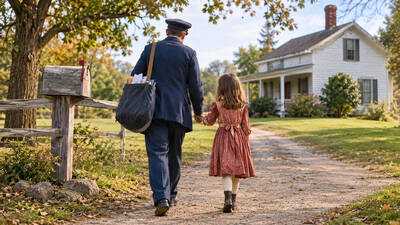
In Pennsylvania in January 1913, a little girl became part of an unusual story in the annals of the U.S. Postal Service . At her parents' request, she rode with a rural mail carrier to visit relatives. After her parents paid 45 cents in postage, mail carrier James Byerly took the youngster safely to her destination that afternoon. The United States had, at the time, only recently instituted its Parcel Post system, and people were still getting used to how the new extended service worked.
A new service changes rural deliveries
The Post Office Department launched the Parcel Post service on January 1, 1913, changing how Americans sent and received packages. Before its introduction, the department generally did not accept packages weighing more than four pounds, and in most cases heavier goods had to be carried by an express or rail package company, particularly in rural areas.
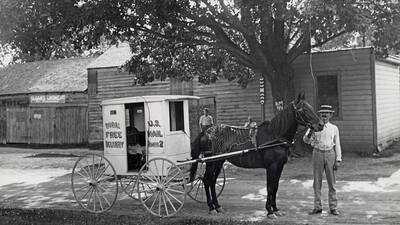
With the introduction of Parcel Post, American families could send and receive packages through the federal postal system. According to the National Postal Museum, approximately 300 million parcels were mailed during the first six months of service. The introduction of the Rural Free Delivery meant that parcel and letter carriers delivered mail right to the door of rural customers instead of requiring them to pick it up at the local post office or town centre.
Years before the extension, there was a long-standing debate regarding the state's involvement in Parcel Post transportation. Kielbowicz, writing in Rural History, explains that proponents of Parcel Post envisaged it as a means of broadening the consumer's choice and reducing the gulf between town and country, while critics felt that it would devastate the small-town merchants. In essence, the debate over parcel post was just one of the many concerning commercial accessibility.
Byerly’s unusual Pennsylvania delivery
One of the earliest documented examples of a child being transported through the postal system occurred in Pennsylvania. The National Postal Museum also notes that the event is dated January 27, 1913, when Mr. and Mrs. J. W. Savis of Pine Hollow paid a rural carrier to take their daughter to relatives in Clay Hollow . Carrier James Byerly, who worked out of a sharpville, brought her to Clay Hollow that afternoon for the sum of 45 cents. The child's name and age were not provided in the museum history, nor were the specifics of the parcel post.
This unusual delivery drew attention because it involved a child being transported through the parcel system. Similarly, earlier that month, Jesse and Mathilda Beauge of Glen Este, Ohio, sent their young son to his grandmother, who lived a little over a mile away, by Rural Free Delivery. Carrier Vernon Little delivered the child, postage at 15 cents, and insured him for $50.
 Why the practice came to an end
These cases show the close relationship rural mail carriers developed with the communities in which they worked. As carriers routinely made their regular rounds and visited isolated homes, they became familiar local personalities in some instances. To households with limited means of transport, familiar carriers would have seemed reasonable and cheap. The Journal of Global History notes Parcel Post as part of broadening world trade and relationships, while in America it helped build connections between rural householders and businesses. However, the episode in Pennsylvania indicates how such a system can be employed for other purposes.
Otherwise, the practice did not remain acceptable. In February 1914, following a report and an inquiry about sending a child through the mail. Albert S. Burleson, Postmaster General, told postmasters that the service of carrying human beings could no longer be afforded. The statement came after the trip of May Pierstorff of Idaho to visit her grandparents that had gained national notoriety. A few cases were reported after that, but the practice died out by 1915. Thus, the story of an unnamed girl from Pennsylvania remains a curious footnote in American transportation history.
A new service changes rural deliveries
The Post Office Department launched the Parcel Post service on January 1, 1913, changing how Americans sent and received packages. Before its introduction, the department generally did not accept packages weighing more than four pounds, and in most cases heavier goods had to be carried by an express or rail package company, particularly in rural areas.
With the introduction of Parcel Post, American families could send and receive packages through the federal postal system. According to the National Postal Museum, approximately 300 million parcels were mailed during the first six months of service. The introduction of the Rural Free Delivery meant that parcel and letter carriers delivered mail right to the door of rural customers instead of requiring them to pick it up at the local post office or town centre.
Years before the extension, there was a long-standing debate regarding the state's involvement in Parcel Post transportation. Kielbowicz, writing in Rural History, explains that proponents of Parcel Post envisaged it as a means of broadening the consumer's choice and reducing the gulf between town and country, while critics felt that it would devastate the small-town merchants. In essence, the debate over parcel post was just one of the many concerning commercial accessibility.
Byerly’s unusual Pennsylvania delivery
One of the earliest documented examples of a child being transported through the postal system occurred in Pennsylvania. The National Postal Museum also notes that the event is dated January 27, 1913, when Mr. and Mrs. J. W. Savis of Pine Hollow paid a rural carrier to take their daughter to relatives in Clay Hollow . Carrier James Byerly, who worked out of a sharpville, brought her to Clay Hollow that afternoon for the sum of 45 cents. The child's name and age were not provided in the museum history, nor were the specifics of the parcel post.
This unusual delivery drew attention because it involved a child being transported through the parcel system. Similarly, earlier that month, Jesse and Mathilda Beauge of Glen Este, Ohio, sent their young son to his grandmother, who lived a little over a mile away, by Rural Free Delivery. Carrier Vernon Little delivered the child, postage at 15 cents, and insured him for $50.
These cases show the close relationship rural mail carriers developed with the communities in which they worked. As carriers routinely made their regular rounds and visited isolated homes, they became familiar local personalities in some instances. To households with limited means of transport, familiar carriers would have seemed reasonable and cheap. The Journal of Global History
Otherwise, the practice did not remain acceptable. In February 1914, following a report and an inquiry about sending a child through the mail. Albert S. Burleson, Postmaster General, told postmasters that the service of carrying human beings could no longer be afforded. The statement came after the trip of May Pierstorff of Idaho to visit her grandparents that had gained national notoriety. A few cases were reported after that, but the practice died out by 1915. Thus, the story of an unnamed girl from Pennsylvania remains a curious footnote in American transportation history.
Next Story