
Bengaluru firm emerges L1 for army's 600 software-defined radio order


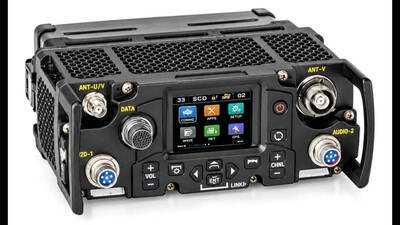
BENGALURU: Bengaluru-based defence equipment manufacturer Alpha Design Technologies has emerged as the lowest bidder (L1) for an Indian Army requirement for 600 indigenous man-pack software-defined radios (SDR).
Alpha Design, controlled by Adani Group, and defence PSU Bharat Electronics Ltd (BEL) were the two companies to qualify the technical evaluation. “The third competitor, a joint venture involving Astra and Rafael, did not technically qualify and its commercial bid was not opened,” a source told TOI.
The technical evaluation included user trials, field trials, high-altitude trials and desert trials. All three companies had submitted techno-commercial bids, but only those that cleared the technical evaluation were considered for the commercial stage.
The commercial bids were opened on Monday. The immediate order — expected to be worth around Rs 100 crore — is part of a much larger requirement for man-pack radios . While Alpha has tie-ups with foreign companies, the SDRs have algorithms that were built in-house.
“While the company has imported components and has technology partnerships, the internal software was developed indigenously in accordance with the Government of India’s requirement in the RFP. That was one of the conditions by the Army and the firm wouldn’t qualify otherwise,” another source said.
According to sources, the Army’s next requirement is for approximately 16,000 sets, while the overall requirement could be around 50,000 man-pack radios over the next five to 10 years.
The Army is expected to look at multiple firms again for the 16,000 sets, but any party that wins that bid may be considered for larger orders in the future given that compatibility would become key. “Whoever wins the 16,000 is mostly likely to be the single vendor for the remaining ones, because the Army cannot change the algorithms and encryption and all that,” the source said.
The larger requirement is also linked to interoperability between different versions of software-defined radios. The system comprises man-pack, handheld and armoured fighting vehicle (AFV) versions. Alpha had earlier received an order for 400 AFV radios, which were fitted on T-72 tanks, primarily in the Leh-Ladakh region.
Radio systems built by different organisations or firms use different software algorithms and encryption, creating interoperability issues between them. In other words, a man pack radio cannot speak to a tank radio, a handheld radio cannot speak to a tank radio when they are all not designed using the same systems.
Alpha Design, controlled by Adani Group, and defence PSU Bharat Electronics Ltd (BEL) were the two companies to qualify the technical evaluation. “The third competitor, a joint venture involving Astra and Rafael, did not technically qualify and its commercial bid was not opened,” a source told TOI.
The technical evaluation included user trials, field trials, high-altitude trials and desert trials. All three companies had submitted techno-commercial bids, but only those that cleared the technical evaluation were considered for the commercial stage.
The commercial bids were opened on Monday. The immediate order — expected to be worth around Rs 100 crore — is part of a much larger requirement for man-pack radios . While Alpha has tie-ups with foreign companies, the SDRs have algorithms that were built in-house.
“While the company has imported components and has technology partnerships, the internal software was developed indigenously in accordance with the Government of India’s requirement in the RFP. That was one of the conditions by the Army and the firm wouldn’t qualify otherwise,” another source said.
According to sources, the Army’s next requirement is for approximately 16,000 sets, while the overall requirement could be around 50,000 man-pack radios over the next five to 10 years.
The Army is expected to look at multiple firms again for the 16,000 sets, but any party that wins that bid may be considered for larger orders in the future given that compatibility would become key. “Whoever wins the 16,000 is mostly likely to be the single vendor for the remaining ones, because the Army cannot change the algorithms and encryption and all that,” the source said.
The larger requirement is also linked to interoperability between different versions of software-defined radios. The system comprises man-pack, handheld and armoured fighting vehicle (AFV) versions. Alpha had earlier received an order for 400 AFV radios, which were fitted on T-72 tanks, primarily in the Leh-Ladakh region.
Radio systems built by different organisations or firms use different software algorithms and encryption, creating interoperability issues between them. In other words, a man pack radio cannot speak to a tank radio, a handheld radio cannot speak to a tank radio when they are all not designed using the same systems.
Next Story