What Happened At Bondi Beach? Timeline Of Australia’s Deadliest Terror Attack

Australia has been shaken by one of the deadliest mass shootings in its modern history after a terrorist attack unfolded near Bondi Beach in Sydney during a Jewish Hanukah celebration. The Bondi beach mass shooting has left at least 16 people dead and dozens injured, sending shockwaves across the country and beyond.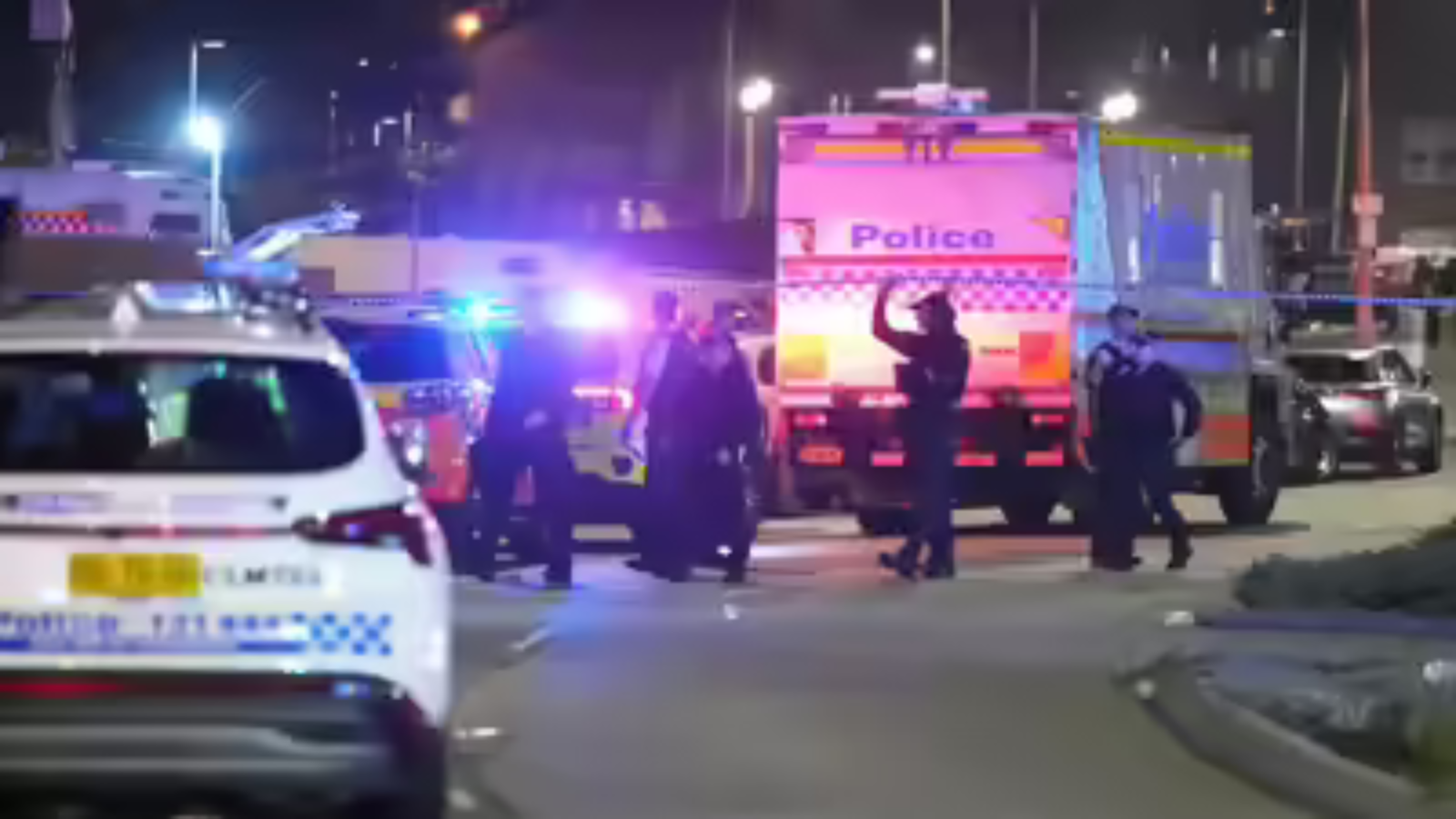
Below is a detailed account of what is known so far about the Sydney terrorist attack.
On Sunday evening at 6.47pm local time, police and emergency services rushed to Archer Park, located close to Sydney’s iconic Bondi Beach, following reports of gunfire. Videos circulating on social media showed two gunmen firing repeatedly at a large crowd gathered for Hanukah celebrations.
Casualties and Injuries
Police said the alleged attackers were a 50-year-old man, who was shot dead at the scene by police, and his 24-year-old son, who sustained critical injuries and remains under police guard in hospital.
While police have not officially named them, Australian media identified the suspects as Naveed Akram and his father Sajid Akram. Home affairs minister Tony Burke confirmed that Naveed Akram was Australian-born, while his father arrived in Australia in 1998 on a student visa before later obtaining residency.
Prior Intelligence and Weapons
Prime Minister Anthony Albanese revealed that the younger suspect first came to the attention of the Australian Security Intelligence Organisation (Asio) in October 2019 and was assessed “on the basis of being associated with others”.
New South Wales Police Commissioner Mal Lanyon said the father was a licensed firearms holder and legally owned six guns. Authorities also confirmed that two active improvised explosive devices (IEDs) were removed from the scene, while a third device was located at Bondi the following day.
Government Response
Describing the tragedy, Albanese said the attack was “an act of pure evil”. He added: “An act of terror, an act of antisemitism. An attack on the first day of Hanukah targeted at the Jewish community. A dark day in Australia’s history on what should have been a day of light.”
Acts of Bravery
Amid the horror, stories of courage emerged. Ahmed al-Ahmed, 43, was praised by the prime minister after footage showed him tackling and disarming one of the shooters while gunfire continued. Volunteer surf lifesavers from a nearby club also rushed in to provide emergency aid to the injured.
World leaders expressed shock and solidarity following the Sydney mass shooting. Messages of condolence were sent by King Charles, US President Donald Trump, UN Secretary-General António Guterres, UK Prime Minister Keir Starmer, and former US President Barack Obama.
A Grim Milestone
The Bondi beach terror attack is the deadliest mass shooting in Australia since the 1995 Port Arthur massacre, where 35 people were killed, a tragedy that led to sweeping gun law reforms nationwide. Once again, the incident has reignited debate around gun control, extremism and public safety in Australia.
Below is a detailed account of what is known so far about the Sydney terrorist attack.
How the Attack Unfolded
On Sunday evening at 6.47pm local time, police and emergency services rushed to Archer Park, located close to Sydney’s iconic Bondi Beach, following reports of gunfire. Videos circulating on social media showed two gunmen firing repeatedly at a large crowd gathered for Hanukah celebrations.
Casualties and Injuries
Police said the alleged attackers were a 50-year-old man, who was shot dead at the scene by police, and his 24-year-old son, who sustained critical injuries and remains under police guard in hospital.
While police have not officially named them, Australian media identified the suspects as Naveed Akram and his father Sajid Akram. Home affairs minister Tony Burke confirmed that Naveed Akram was Australian-born, while his father arrived in Australia in 1998 on a student visa before later obtaining residency.
Prior Intelligence and Weapons
Prime Minister Anthony Albanese revealed that the younger suspect first came to the attention of the Australian Security Intelligence Organisation (Asio) in October 2019 and was assessed “on the basis of being associated with others”.
New South Wales Police Commissioner Mal Lanyon said the father was a licensed firearms holder and legally owned six guns. Authorities also confirmed that two active improvised explosive devices (IEDs) were removed from the scene, while a third device was located at Bondi the following day.
You may also like
 New BJP working minister Nitin Nabin leaves for Delhi to assume charge
 Bangladesh: Police detain another journalist amid rising press freedom concerns
- "Sonia Gandhi should apologise": Nadda slams Congress over "Kabar Khudegi" remarks
 'Guilty must be punished accordingly': Leaders on NIA charge sheet in Pahalgam terror attack case
- How illustrated calendars issued by the Punjab and Sind Bank became an archive of Sikh history
Government Response
Describing the tragedy, Albanese said the attack was “an act of pure evil”. He added: “An act of terror, an act of antisemitism. An attack on the first day of Hanukah targeted at the Jewish community. A dark day in Australia’s history on what should have been a day of light.”
Acts of Bravery
Amid the horror, stories of courage emerged. Ahmed al-Ahmed, 43, was praised by the prime minister after footage showed him tackling and disarming one of the shooters while gunfire continued. Volunteer surf lifesavers from a nearby club also rushed in to provide emergency aid to the injured.
Global Condemnation and Condolences
World leaders expressed shock and solidarity following the Sydney mass shooting. Messages of condolence were sent by King Charles, US President Donald Trump, UN Secretary-General António Guterres, UK Prime Minister Keir Starmer, and former US President Barack Obama.
A Grim Milestone
The Bondi beach terror attack is the deadliest mass shooting in Australia since the 1995 Port Arthur massacre, where 35 people were killed, a tragedy that led to sweeping gun law reforms nationwide. Once again, the incident has reignited debate around gun control, extremism and public safety in Australia.






More from our partners


Loving Newspoint? Download the app now
