
Can Beijing Slow Down India's Strategic Border Tunnels?


Following its aggressive export controls on critical rare earth minerals, China has escalated its trade-weaponization playbook by clamping strict export curbs on heavy construction machinery, with a sharp focus on 5,000-tonne Tunnel Boring Machines (TBMs) and specialized high-altitude shotcrete gear. With Beijing commanding an estimated 70 percent global market share in tunneling apparatus, the newly introduced regulatory hurdles explicitly target "dual-use" civilian-and-military equipment heading toward disputed frontier zones.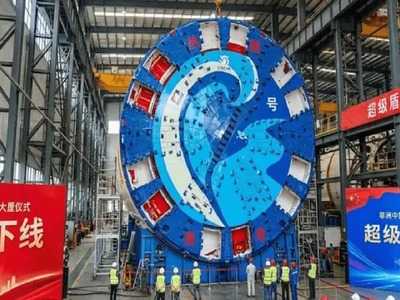 The strategic move is directly calibrated to apply economic and logistical friction on its primary Asian rival, India, which relies on heavy tunneling platforms to execute high-stakes civil metro developments and critical defense transport arteries across the northern Himalayan frontiers.Targeting Himalayan Readiness: TBM Restrictions Put Focus on Border Logistics and Supply ChainsThe timing of Beijing's export chokehold intersects with renewed friction along the Line of Actual Control (LAC), where India has dramatically accelerated the construction of all-weather roads, strategic railway corridors, and deep underground ammunition and troop shelters.Because tunneling across unforgiving mountainous terrain demands heavy boring assemblies and continuous replacement components, sudden bans on finished machinery and vital aftermarket spare parts risk slowing critical down-hole operations. Citing the geopolitical rationale behind Beijing’s regulatory barrier, Sun Chenghao, a fellow at Tsinghua University’s Center for International Security and Strategy, noted that China is hyper-focused on preventing its domestic manufacturing supremacy from enhancing another sovereign power's frontier military infrastructure, particularly where high-altitude machinery enables rapid border troop deployment.Past Precedents and Global Repercussions: The Herrenknecht AG Case and Supply MonopoliesThis regulatory crackdown is not unprecedented; China has previously deployed supply vetoes to disrupt Indian megaprojects.In 2024, Beijing successfully obstructed German engineering giant Herrenknecht AG from exporting TBMs assembled inside its Chinese subsidiaries to India, directly squeezing contractors working on the Mumbai-Ahmedabad High-Speed Rail Corridor and Delhi Metro expansion lines. With dominant state conglomerates like China Railway Engineering Equipment Group Co. Ltd. (CREG) operating equipment across 36 nations, international alternatives from Germany, Japan, and the United States remain technically viable but face extensive production lead times, leaving infrastructure developers exposed to near-term procurement crunches during ongoing project phases.Building Domestic Sovereignty: Nitin Gadkari Champions $1.2B Incentive to Manufacture Local TBMsWhile Bloomberg Economics assesses that China's curbs could inflict transient project delays on high-altitude defense belts, the supply shock is poised to accelerate India’s evolution into an autonomous heavy-engineering hub.With Union Minister for Road Transport and Highways Nitin Gadkari confirming an expansive $9.6 billion national investment pipeline dedicated purely to tunneling over the next five years, the central government is formulating a $1.2 billion production-linked incentive scheme to spur indigenous fabrication of heavy tunneling rigs. By encouraging global conglomerates to establish standalone manufacturing plants within India and subsidizing domestic heavy-machinery builders, New Delhi aims to permanently dismantle Beijing’s equipment monopoly while securing supply-chain resilience for its long-term border and urban transit goals.
Next Story