
New Research Reveals That Early Humans Created Extensive Ocean Networks Across the Philippines Over 40,000 Years Ago

New archaeological discoveries are transforming our understanding of early human life in Southeast Asia. Evidence from Mindoro Island reveals that humans living more than 40,000 years ago were far more advanced than once believed. Rather than being isolated groups cut off by vast oceans, they were skilled navigators who built strong maritime networks and travelled confidently across open waters.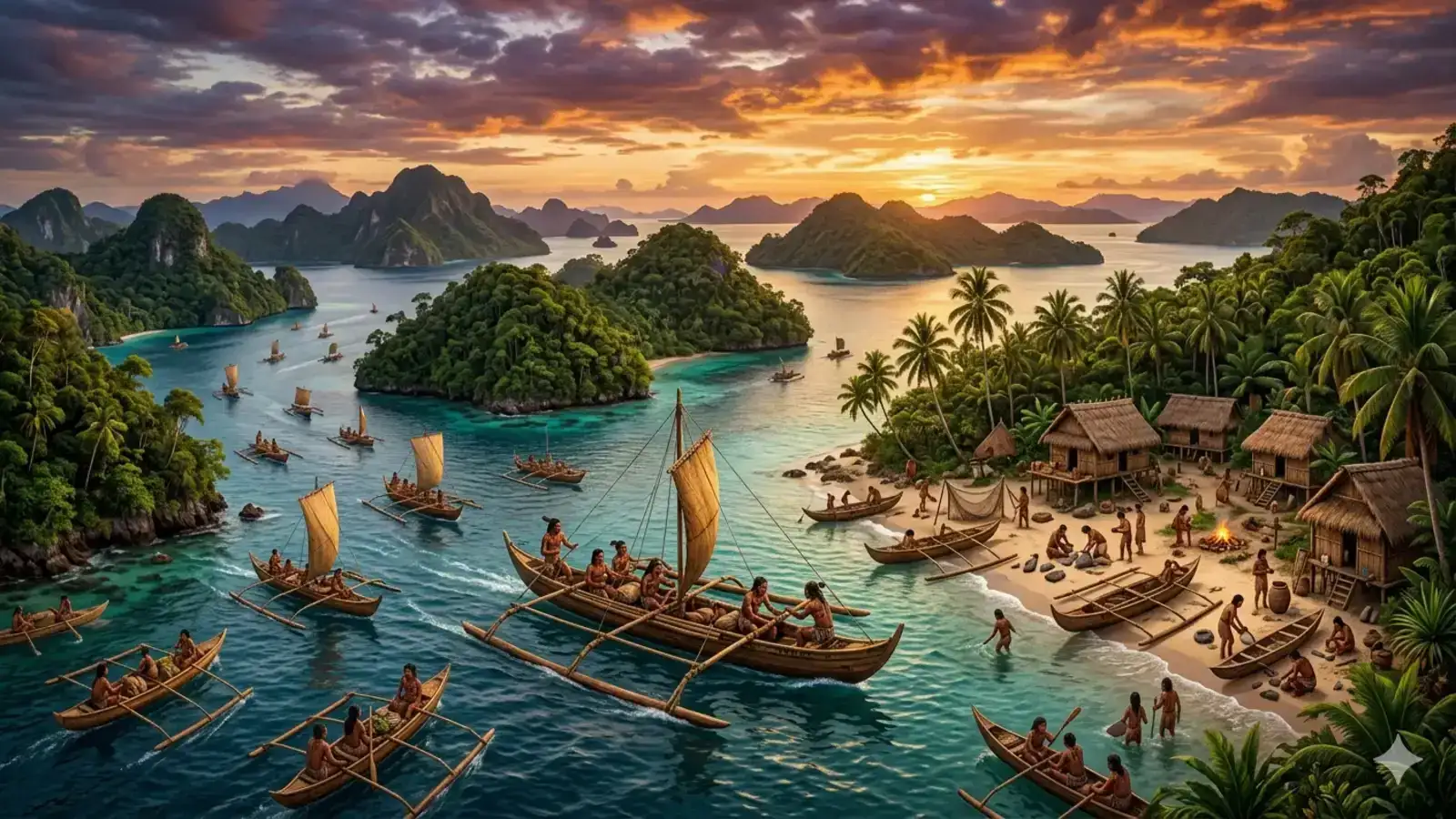
These findings challenge the long-standing idea that early humans reached remote islands by accident. Instead, it now appears that they had the knowledge, tools, and intent to explore and connect distant lands.
From isolation to connection
For decades, researchers assumed that early island populations lived in separation due to geographical barriers. The Philippines, made up of scattered islands, was thought to have been reached only by chance.
However, recent studies paint a very different picture. Early humans were actively moving between islands, forming connections that allowed them to exchange resources, share knowledge, and develop cultural ties. The ocean, once seen as a barrier, was actually a pathway that linked communities together.
Evidence of long-distance sea travel
One of the strongest pieces of evidence comes from the discovery of marine remains. Archaeologists have found traces of large pelagic species such as tuna and sharks, which are typically found far from coastal areas.
This suggests that early humans were capable of venturing into deep waters and not just staying close to shore. Such journeys would have required planning, navigation skills, and reliable watercraft, pointing to a high level of maritime expertise.
Research associated with Ateneo de Manila University highlights how these early communities likely developed techniques for building boats and fishing equipment. Microscopic analysis of tools indicates the use of plant fibres to create ropes and nets, essential for both fishing and seafaring.
Smart use of natural resources
Innovation played a key role in their survival and expansion. Early settlers used materials available in their environment to create practical tools. One notable example is the use of giant clam shells to make adzes, which are tools used for shaping wood.
These tools would have been crucial for building paddles, shelters, and parts of boats. The ability to shape wood efficiently allowed them to construct vessels capable of travelling across open waters and maintaining connections between islands.
A network of interconnected communities
The Mindoro Archaeology Project provides evidence that early settlements were not isolated clusters. Caves and rock shelters were part of a wider network of habitation sites that showed continuous human activity for over 35,000 years.
This long-term presence indicates stable communities that were linked through shared systems of trade, communication, and cultural exchange. Materials, ideas, and techniques likely moved between islands, creating a dynamic and interconnected society.
Life during the Ice Age
During the Ice Age, sea levels were lower, but many Philippine islands still remained separated by water. This means that reaching them would have required organised sea travel rather than accidental drifting.
The ability to cross these waters suggests that early humans had developed not only physical tools but also the knowledge and coordination needed for such journeys. It highlights their adaptability in using the coastal environment to overcome natural limitations.
Redefining early human capabilities
These discoveries are prompting scientists to rethink what early humans were capable of. Far from being simple survivalists, they were innovators who understood their environment and used it to their advantage.
Their ability to fish in deep seas, build watercraft, and maintain long-distance connections shows a level of sophistication that changes how we view prehistoric societies.
A legacy of exploration and innovation
The findings from the Philippines offer a powerful reminder that human curiosity and the desire to explore are not modern traits. Even tens of thousands of years ago, people were pushing boundaries, building networks, and connecting with others across vast distances.
This new perspective not only reshapes our understanding of the past but also highlights the enduring human spirit of discovery and adaptation.
These findings challenge the long-standing idea that early humans reached remote islands by accident. Instead, it now appears that they had the knowledge, tools, and intent to explore and connect distant lands.
From isolation to connection
For decades, researchers assumed that early island populations lived in separation due to geographical barriers. The Philippines, made up of scattered islands, was thought to have been reached only by chance.However, recent studies paint a very different picture. Early humans were actively moving between islands, forming connections that allowed them to exchange resources, share knowledge, and develop cultural ties. The ocean, once seen as a barrier, was actually a pathway that linked communities together.
Evidence of long-distance sea travel
One of the strongest pieces of evidence comes from the discovery of marine remains. Archaeologists have found traces of large pelagic species such as tuna and sharks, which are typically found far from coastal areas.This suggests that early humans were capable of venturing into deep waters and not just staying close to shore. Such journeys would have required planning, navigation skills, and reliable watercraft, pointing to a high level of maritime expertise.
Research associated with Ateneo de Manila University highlights how these early communities likely developed techniques for building boats and fishing equipment. Microscopic analysis of tools indicates the use of plant fibres to create ropes and nets, essential for both fishing and seafaring.
Smart use of natural resources
Innovation played a key role in their survival and expansion. Early settlers used materials available in their environment to create practical tools. One notable example is the use of giant clam shells to make adzes, which are tools used for shaping wood. These tools would have been crucial for building paddles, shelters, and parts of boats. The ability to shape wood efficiently allowed them to construct vessels capable of travelling across open waters and maintaining connections between islands.
You may also like
- Iran fires at ship in Hormuz after Trump's ceasefire announcement
- Terror can never be justified: EU expresses solidarity with India on Pahalgam attack anniversary
- "Break blockade we will negotiate": Iran sets lifting Hormuz blockade as precondition for talks, tensions prevail
- US military seeks $54B funding for drones in 2027 budget
- Map quest: Virginia vote leaves Trump seeing red – and blue
A network of interconnected communities
The Mindoro Archaeology Project provides evidence that early settlements were not isolated clusters. Caves and rock shelters were part of a wider network of habitation sites that showed continuous human activity for over 35,000 years. This long-term presence indicates stable communities that were linked through shared systems of trade, communication, and cultural exchange. Materials, ideas, and techniques likely moved between islands, creating a dynamic and interconnected society.
Life during the Ice Age
During the Ice Age, sea levels were lower, but many Philippine islands still remained separated by water. This means that reaching them would have required organised sea travel rather than accidental drifting. The ability to cross these waters suggests that early humans had developed not only physical tools but also the knowledge and coordination needed for such journeys. It highlights their adaptability in using the coastal environment to overcome natural limitations.
Redefining early human capabilities
These discoveries are prompting scientists to rethink what early humans were capable of. Far from being simple survivalists, they were innovators who understood their environment and used it to their advantage.Their ability to fish in deep seas, build watercraft, and maintain long-distance connections shows a level of sophistication that changes how we view prehistoric societies.
A legacy of exploration and innovation
The findings from the Philippines offer a powerful reminder that human curiosity and the desire to explore are not modern traits. Even tens of thousands of years ago, people were pushing boundaries, building networks, and connecting with others across vast distances. This new perspective not only reshapes our understanding of the past but also highlights the enduring human spirit of discovery and adaptation.






More from our partners


Loving Newspoint? Download the app now
