
Explained: Why The US Attacked Caracas And Captured President Nicolás Maduro

In a dramatic and unprecedented escalation of foreign policy, the United States military carried out a series of pre-dawn airstrikes across Caracas on Friday. Shortly after explosions rocked the city, Donald Trump announced the US captures Maduro operation was a success. The Venezuelan leader and his wife were seized by special forces and immediately transported out of the country, leaving the future of the socialist regime in total disarray.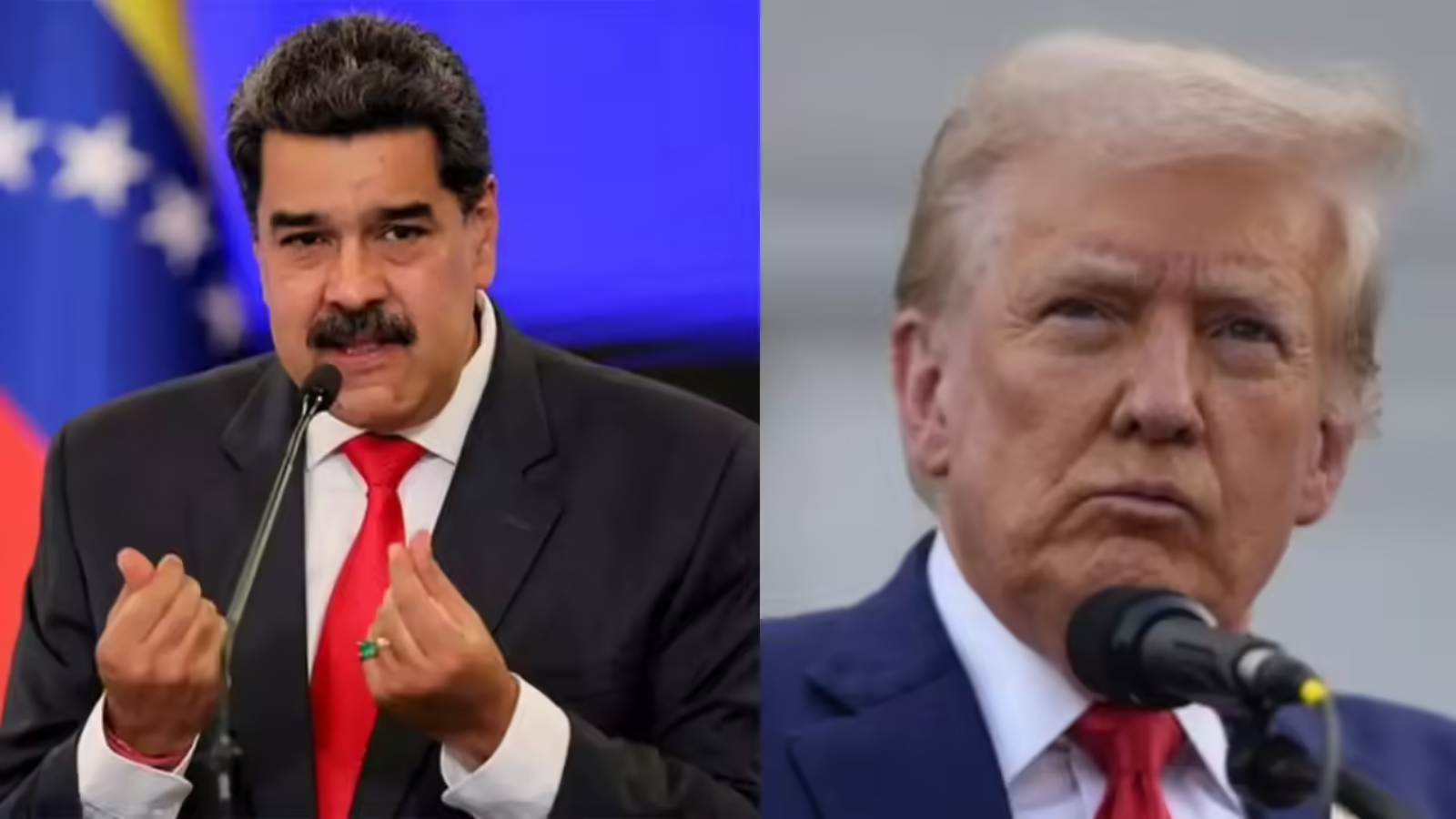
The Road to Capture: The 'Trump Corollary'
This "decapitation" strike follows months of a high-pressure US military intervention in Venezuela. Since September, the US Navy has maintained a massive fleet off the coast, seizing oil tankers and targeting boats in the Caribbean.
The legal and political justification for the raid stems from the "Trump Corollary" published in December. This doctrine asserts that the Western Hemisphere must be controlled by the US "politically, economically, commercially, and militarily." Under this new policy, the US military is authorised to secure energy and mineral resources, a move critics say is aimed directly at Venezuela’s oil reserves, the largest in the world.
The animosity between the two leaders has reached a boiling point during Trump’s second term. The US administration has consistently labelled the Maduro government as illegitimate, especially following the disputed 2024 election. Key reasons for the Donald Trump Venezuela policy shift include:
Maduro’s refusal to step down following the 2024 landslide defeat verified by independent experts who favoured opposition candidate Edmundo González likely served as the final straw for Washington.
While Nicolás Maduro detained marks a massive victory for the Trump administration, the situation on the ground remains volatile.
As the smoke clears over Caracas, the world waits to see if this was a one-off extraction or the start of a broader conflict in South America.
The Road to Capture: The 'Trump Corollary'
This "decapitation" strike follows months of a high-pressure US military intervention in Venezuela. Since September, the US Navy has maintained a massive fleet off the coast, seizing oil tankers and targeting boats in the Caribbean.The legal and political justification for the raid stems from the "Trump Corollary" published in December. This doctrine asserts that the Western Hemisphere must be controlled by the US "politically, economically, commercially, and militarily." Under this new policy, the US military is authorised to secure energy and mineral resources, a move critics say is aimed directly at Venezuela’s oil reserves, the largest in the world.
Why Did Trump Target Maduro?
The animosity between the two leaders has reached a boiling point during Trump’s second term. The US administration has consistently labelled the Maduro government as illegitimate, especially following the disputed 2024 election. Key reasons for the Donald Trump Venezuela policy shift include:
- Narco-Terrorism Charges: In July, the US placed a $50m bounty on Maduro, accusing him of being a leading narco-trafficker.
- The Ultimatum: In November, Trump gave Maduro an ultimatum to leave power peacefully. Maduro refused, famously stating he did not want "a slave’s peace."
- Border Security: Trump has repeatedly accused Maduro of deliberately sending criminals and drugs into the US, though experts have often questioned the evidence behind these claims.
A Legacy of Conflict
The US-Venezuela tensions are not new; they date back to the 1999 election of Hugo Chávez. However, under Maduro's rule since 2013, the relationship has spiralled. The US has frequently condemned Venezuela's human rights record, citing UN estimates that thousands have been killed in extrajudicial executions.Maduro’s refusal to step down following the 2024 landslide defeat verified by independent experts who favoured opposition candidate Edmundo González likely served as the final straw for Washington.
What Happens Next for Venezuela?
While Nicolás Maduro detained marks a massive victory for the Trump administration, the situation on the ground remains volatile.
- Military Response: Venezuela’s defence minister has called the operation a foreign "invasion" and urged citizens to resist.
- Opposition Hopes: Nobel Peace Prize winner María Corina Machado has called for an uprising to reclaim democracy.
- Potential Chaos: US war games have previously predicted that a "decapitated" Venezuelan leadership could lead to prolonged civil war and a massive refugee crisis.
As the smoke clears over Caracas, the world waits to see if this was a one-off extraction or the start of a broader conflict in South America.
Next Story